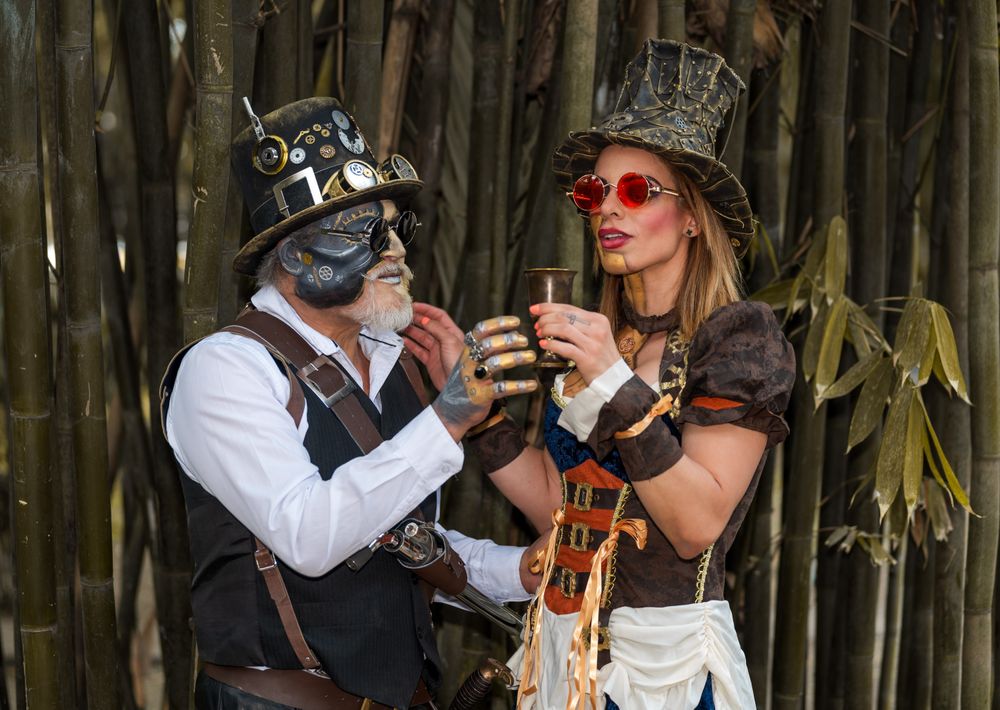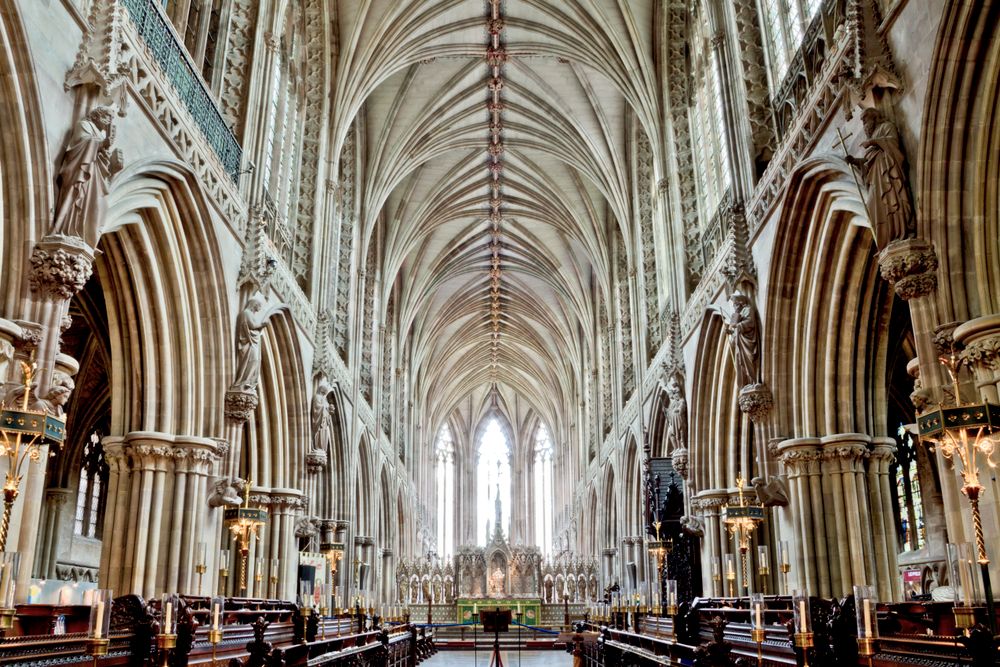
The Weekend at the Asylum is the steampunk festival in Lincoln, and its organiser calls it the biggest steampunk event in the world. Over the August bank holiday weekend it fills the old town on top of the hill, around the castle and the cathedral, with people in top hats, goggles, bustles and brass. If you have been searching for steampunk Lincoln 2026, that weekend has now been and gone: it ran from 28 to 31 August 2026. The organiser's site gives the next one as 27 to 30 August 2027.
This guide explains what the weekend is, who runs it and where to check the dates, the castle and cathedral at its heart, what happens over the four days, the games such as tea duelling, how to get there and where to stay, and what to wear and bring. A note on dates and details: everything here comes from the organiser's own website as it stood when we checked on 12 November 2026, and much of it describes the 2026 weekend, because the 2027 programme had not been published. Check the organiser's site before you travel.
What the weekend is
The Weekend at the Asylum is a four-day steampunk festival held in Lincoln's historic quarter. Its organiser, the Ministry of Steampunk, describes it as the biggest steampunk event in the world, and Wikipedia calls it likely the largest steampunk festival in the world and one of the longest running. People call it the Asylum for short, and each one has a number: the 2026 weekend was Asylum 16, and the 2027 weekend will be Asylum 17.
Why it is called the Asylum
The name comes from its first home. According to Wikipedia, the first festival was held from 11 to 13 September 2009 at The Lawn, the building that had been the Lincoln Lunatic Asylum, and 432 people came. The Lawn opened as an asylum in April 1820, in a Greek Revival building designed by Richard Ingleman, and it has a real place in the history of medicine: in the 1830s Robert Gardiner Hill, who worked there, developed a way of caring for patients that had ended the use of mechanical restraints there by 1838. Renamed The Lawn Hospital in 1921, it closed in 1985. It stands about half a kilometre west of the cathedral. The festival later moved out of The Lawn, but the name stayed, and it is used with affection rather than as a joke at anyone's expense.
How it grew
Wikipedia records that almost 1,000 people came in 2010 and more than 2,000 in 2014. Lincoln Castle was added in 2011, when the market ran from the old Victorian prison inside its walls, and by 2015 the festival spread across the cathedral quarter, the castle and Bailgate, the old street at the top of the hill. By 2017 the organisers were estimating 35,000 to 40,000 people a day, though that is their own figure. Wikipedia describes the festival's market, the Bazaar Eclectica, as the largest steampunk market in the world.
Do you need a costume?
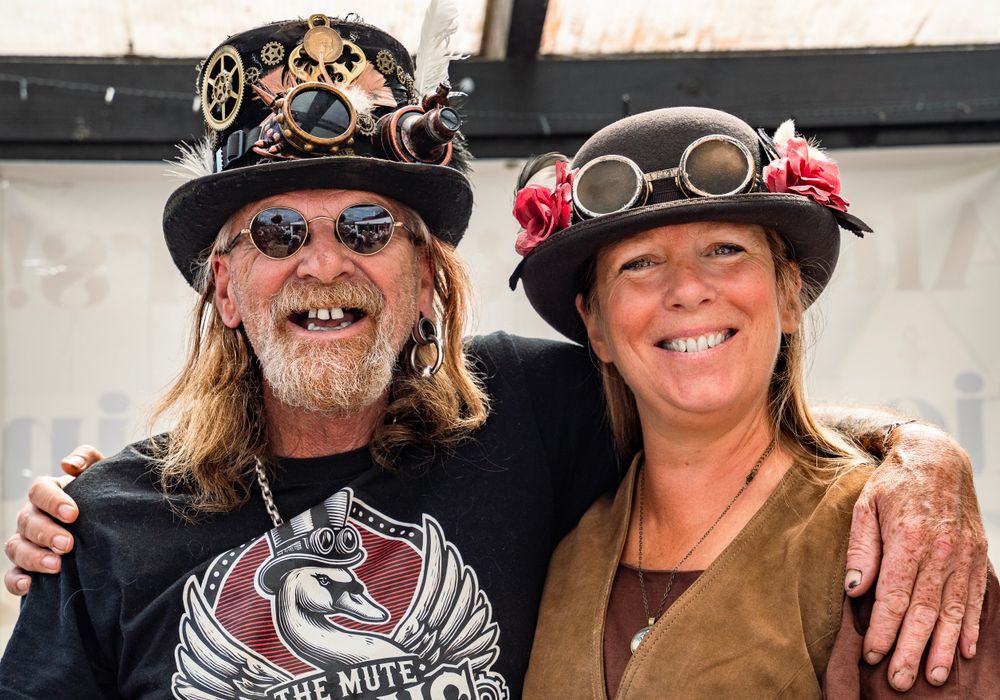
No. The organiser's FAQ says everyone is welcome, in costume or out of it. Many people come in ordinary clothes to look round the market and watch the parades, and many more wear a single piece, a hat or a pair of goggles, the first time. The town itself is half the show, and plenty of the best things to see are free to walk past.
Who runs it, and where to check the dates
The festival is run by the Ministry of Steampunk, which says it has created and hosted it in Lincoln since 2009. Wikipedia describes it as a not-for-profit event, run by the organisation that was earlier called the Victorian Steampunk Society. The Ministry describes itself, with tongue in cheek, as a somewhat amorphous organisation with various offices and bureaux, and says it makes no attempt to define steampunk. Its aim, in its own words, is to make chances for steampunks to gather and share their imagination, creativity and friendship.
The dates, as the organiser gives them
- Asylum 16 ran from Friday 28 to Monday 31 August 2026, the August bank holiday weekend, with an evening event for early arrivals on Thursday 27 August.
- Asylum 17 is given as 27 to 30 August 2027, in Lincoln's historic quarter. The organiser's page says the evening events were already being planned and the daytime programme would be planned from after Christmas. The optional theme for 2027 is a unicorn, following the dragon of 2026, and it appears on the year's collectable medal.
Check the organiser's site before you travel. Dates, places and programmes change, and the details of the 2027 weekend will appear there first.
Where news appears
The Ministry of Steampunk's website has a page for each weekend, with its FAQ, maps, evening events and wristbands. It also names a Facebook group, Welcome to the Asylum, for news. Listings on other websites often repeat last year's dates, so treat any date you find elsewhere as a guess until the organiser's own site confirms it.
The organiser's other events
The same organiser runs smaller events through the year, among them a steampunk New Year in Leicester and a steampunk Halloween weekend. Our guide to steampunk events in the UK covers those and other regular events around the country.
Lincoln's old town: the castle and the cathedral
Lincoln, the county town of Lincolnshire, is informally split into two parts, uphill and downhill. Downhill is the modern city centre beside the River Witham and Brayford Pool. Uphill is the historic quarter, known locally as the Bail, where the castle and the cathedral stand close together. The festival lives uphill, and the setting is a large part of why people come back every year.
Lincoln Castle
Lincoln Castle's own history page tells its story. After winning at Hastings in 1066, William the Conqueror ordered a castle at Lincoln, and in 1068 the Normans built one on the hilltop where the Roman town had stood, reusing Roman stone. Two battles were fought here, in 1141 and 1217. The castle holds one of the four surviving original copies of Magna Carta of 1215; the copy sent to Lincoln was read out at the sheriff's court in the castle. It is kept in a vault with the Charter of the Forest, built during a restoration between 2010 and 2015 that also opened the Medieval Wall Walk around the top of the walls; the castle's own site says whether the walk is open.
For a steampunk the most striking building inside is the Victorian prison. A red-brick Georgian gaol was built in 1788, and in 1848 its felons' wing was replaced by a new Victorian prison designed for the separate system, in which prisoners were kept apart from each other in the hope of reforming them. The castle says the system was never fully carried out, and the prison closed about thirty years later. The castle's own site calls the prison's chapel extraordinary, and a chaplain once held services there every day. Next to it stands the courthouse of 1826, built in the Gothic Revival style and still a working Crown Court.
Lincoln Cathedral
The cathedral's own timeline says Bishop Remigius began it in 1072, and it was consecrated in 1092. An earthquake in 1185 left only the West Front standing, and Hugh of Avalon, bishop from 1186, began organising the rebuilding. In 1311 a new central tower with a spire, about 160 metres tall, made it the tallest building in the world, a record it held for 238 years until a storm blew the spire down in 1548. The cathedral added two bells in 1880 and a new organ by Father Willis in 1898, both in Queen Victoria's reign. Our guide to Gothic Revival architecture explains how the Victorians copied buildings like it.
Steep Hill and Bailgate
Steep Hill joins the two halves of the city. Wikipedia gives its average gradient as about one in seven, rising to one in five in the middle stretch, which is closed to traffic and has a handrail. It is lined with independent shops, tea rooms and two Norman houses, and the Academy of Urbanism gave it an award in 2011. At the top it comes out near the entrance to the cathedral and Bailgate.
What happens over the weekend
The programme changes every year, so this section describes the 2026 weekend as the organiser's pages showed it. The 2027 programme will be on the organiser's site.
Day by day
In 2026 the weekend opened on the Thursday evening with the Advance Guard, an evening event for early arrivals. The daytime programme ran from Friday to Monday. On the Friday it was based at the County Assembly Rooms on Bailgate and at Westgate Academy nearby; from the Saturday the castle grounds became the main centre, with marquees and a stage. It closed on the Monday evening with the Dead Dog Party for those staying on. The organiser's FAQ says there are more than a hundred features: performances, races, talks, tea duelling, teapot racing, markets, the uniform parade on Sunday morning and the Grand Promenade on Monday.
Wristbands, and what is free
For 2026 the organiser sold day and weekend wristbands, which could be ordered ahead and had to be collected in person. They opened the castle grounds and marquees, the seating by the castle stage, some rooms in the Victorian prison, Westgate Academy and the County Assembly Rooms. Much is free: the FAQ says the streets around the castle and cathedral, Bailgate and Westgate, the market stalls in public areas and the Monday Grand Promenade need no wristband. It adds that an ordinary castle admission ticket opens the castle grounds but none of that money goes to the festival, so a wristband or an evening ticket is the way to support it. Adult wristband holders could have a free daytime wristband for a carer on showing a PIP or DLA letter.
Markets
The markets are the heart of the daytime. As well as the Bazaar Eclectica, the Ministry runs the Illicit Market, a market played as a game: traders smuggle in their goods in one trip, lookouts whistle when the authorities, played by staff, come near, and everyone freezes and looks innocent. The money from it goes to the Ministry's charitable fund. Since 2024, local businesses that offer wristband holders a little something, usually a discount, have shown one of the Ministry's spoof blue plaques, and about forty were listed in 2026.
The Great Exhibition
The Great Exhibition is the festival's art show and competition. Anyone may enter their own work that has never been shown before, in person or online: pictures, models, textiles and poems, each with a card of up to 100 words. An independent panel judges every entry without knowing whose it is, and the winners receive numbered medals at the closing ceremony on the Monday afternoon. The awards carry names such as Brunel, Jules Verne, Pugin and Ruskin. Photography has its own prize, the Cameron Award.
Evenings
Every night from Thursday to Monday has its own ticketed event. In 2026 they included a steam pirate night and a time travellers' night at the Engine Shed, in the lower town near the University of Lincoln, and the DecoDance, a night for dieselpunk, the related style built on the age of diesel, at the County Assembly Rooms. The organiser's dress rules for the evenings are worth knowing: no weapons at all, no enormous skirts, because the seats are made for ordinary clothes, and no huge hats that block the view. It suggests saving the most elaborate outfits for the daytime, since evening audiences sit mostly in the dark.
Tea duelling and other games
Steampunks have invented their own sports, and Lincoln is where the best known of them reaches its peak.
Tea duelling
The Ministry of Steampunk says tea duelling was invented in 2010 over a mug of tea, and has since been played at countless steampunk events in Britain and abroad. It is played with mugs of tea and malted milk biscuits, under a set of rules the Ministry publishes, and a tiffin master or mistress signs up the players, usually up to sixteen of them. As the rules are usually played, two duellists sit facing each other, dunk a biscuit on the word of command, lift it out after a count of three, and then choose the moment to eat it before it breaks. A biscuit that falls on the table or into the tea loses, and the last clean bite wins. It is far harder than it sounds, and the crowd is half the fun.
Lincoln is the summit of the game. The Ministry runs duels at most of its events through the year, and their winners are invited to the annual championship at the Asylum. The UK champion is then invited to the world championship, also held at the Asylum.
Teapot racing
The Ministry says teapot racing began in New Zealand in 2014. A teapot, or a model of one, is mounted on a remote-controlled vehicle and driven round an obstacle course against the clock, with penalties for missed markers or a stuck teapot. The slowest lap can win a prize of its own, the Tea Cosy of Doom. At the Asylum there has been a promenade of racing teapots before the Sunday parade, and a hill climb in which motorised teapots race up a grassy slope.
Parasol duelling
Parasol duelling is meant to be elegant. Two duellists start back to back, walk the number of paces the overseer calls, turn, and on the word present their parasols in one of three positions: the plant, the snub or the twirl. The twirl beats the plant, the plant beats the snub and the snub beats the twirl, much like rock, paper, scissors, and a twirl must turn the parasol right round.
The uniform parade
The uniform parade, held on Sunday morning, is for military-style, pretend-military and uniformed groups. The Ministry says it has run since 2010 and grew from fewer than thirty people at the third festival to more than 250 at the sixth. It ends with the Last Post, the Ode to the Fallen, an act of remembrance and the march off. If you would like to join one day, the Ministry's advice is to form a group with friends; our guide to steampunk names and characters has ideas for a regiment of your own.
Getting there and staying
Lincoln sits about 32 miles north-east of Nottingham. The Roman town stood near the northern end of the Fosse Way, the Roman road that the A46 follows today.
By train
Lincoln Central station, opened in 1848 in a yellow-brick Tudor style, is downhill, and some trains run direct from London King's Cross. The organiser's FAQ puts the walk from the station to the castle at about sixteen minutes, including Steep Hill. Allow longer in costume, and longer still with luggage.
By road
The organiser's FAQ says the car parks get very busy over the weekend and points visitors to the city's own visitor information for details. Arriving early, or parking further out and walking or taking a bus, saves a lot of circling.
Getting about
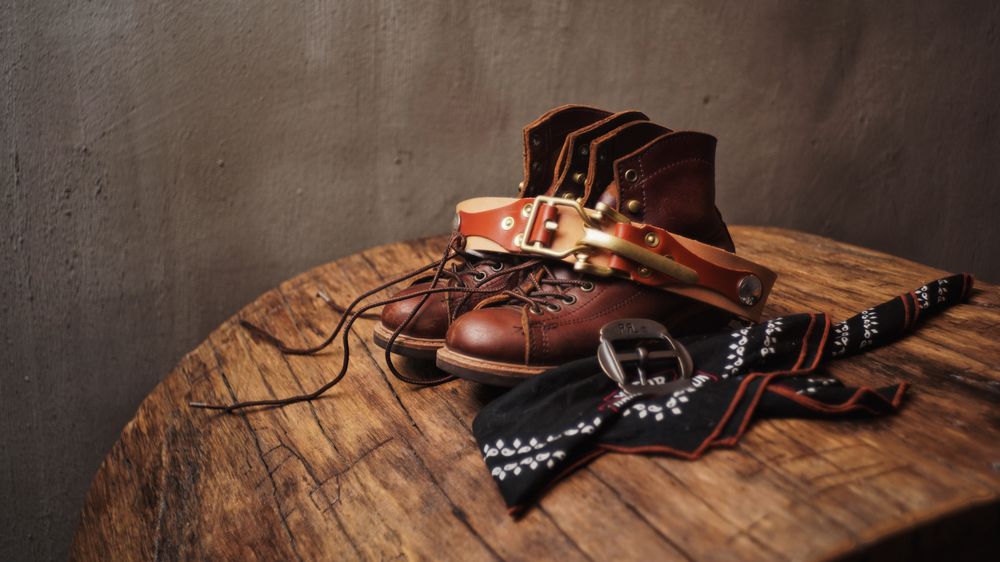
The FAQ says the venues themselves are accessible, but Steep Hill is very steep and not advised in a wheelchair, and cobbles and uneven pavements are everywhere uphill. It recommends sturdy shoes, and mentions a Facebook group, the Steampunk Accessibility Squadron, for help. It also lists quiet places to rest, among them the grassy slope inside the castle, the County Assembly Rooms and the cathedral. Our guide to steampunk boots explains how to choose a pair that will carry you up the hill all day.
Where to stay
The organiser's FAQ says Lincoln has a limited number of hotels and they book up early. For 2026 it arranged student rooms at the University of Lincoln, in the lower town near the Engine Shed. The same FAQ advised against non-refundable bookings for 2027 until the organiser had confirmed the arrangements, so check its site before you book, and book as soon as the details are out.
Dogs
For 2026 the FAQ allowed only accredited assistance dogs at the castle features, Westgate Academy, the indoor market in the Methodist church and every event run by the Ministry, including the evenings. Pets and emotional support animals were not allowed, so most dogs are better left at home.
What to wear and bring
Dress for a long day outdoors on a hill in late August, which in Lincoln can mean hot sun, a cool evening or rain, sometimes all three. Our guide to what to wear to your first steampunk event goes through it step by step; these are the points that matter most here.
Clothes
- Layers. A waistcoat and shirt under a coat you can take off and carry.
- A hat that stays on. A hilltop can be windy. A hat pin or a hidden cord helps.
- Shoes for cobbles. Comfortable boots with a good grip, worn in before the weekend.
- Two outfits, if you can. Save the grandest for the daytime, and wear something narrower to the evening events, where large skirts and tall hats are not welcome.
- A corset you can breathe in. It should never be laced so tight that breathing or moving is hard; loosen it or take it off if you feel faint.
Props and replica weapons
The Ministry welcomes steampunk weapons as part of the style, but asks people to carry them to and from events in a bag, case or cover, to keep them locked away when not in use, to show them only where it is appropriate, and not to wear large swords or axes of the kind used in live role-play. No weapons at all are allowed at the evening events. It also reminds people that even a replica can alarm someone in public. Our guide to making steampunk props safely explains the law on imitation firearms and blades.
Photographs
The Ministry's photography page asks photographers to ask first, especially on private ground such as the castle grounds, and to accept a polite no. It suggests swapping details before any photographs are taken, never going off alone with a photographer, and bringing a friend if they want a different backdrop. Ask before photographing anyone yourself, and photograph children only with a parent's yes.
What to bring
- Water, and food for the queues. The FAQ mentions street food in the castle and at Westgate Academy, and tea rooms for wristband holders.
- A card as well as some cash. The FAQ says most traders take cards, but there are few cash machines uphill and they sometimes run out.
- Something for rain, and sun cream.
- A small repair kit: safety pins, needle and thread, a spare bootlace.
- A charged phone and a place to meet if your group is split up in the crowds.
Then check the organiser's site once more before you set off. The Asylum is the biggest date in the British steampunk year, and arriving with the right shoes, a hat that stays on and the latest programme makes the most of it.