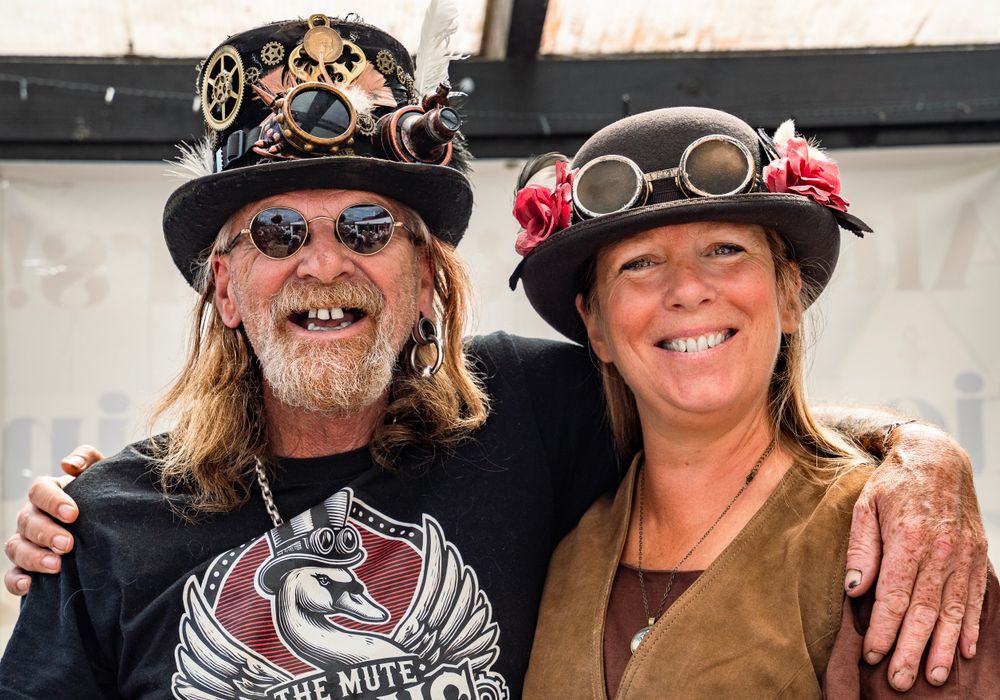
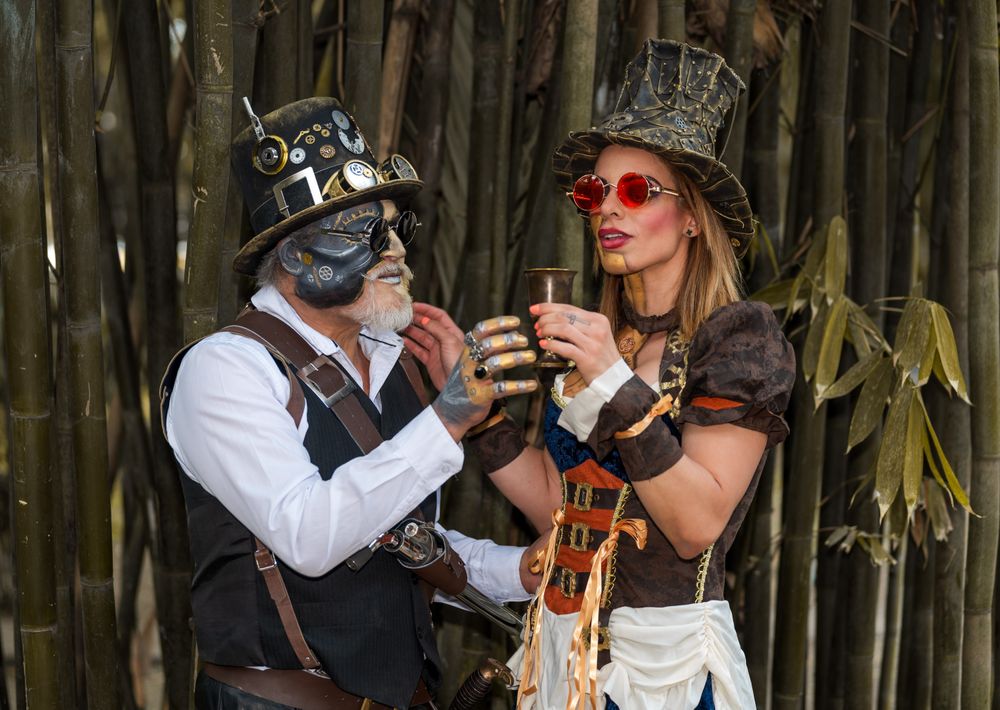
Steampunk events in the UK are where the costumes, the props and the characters come out into the open. They range from a single Sunday at a railway museum, with a few dozen stalls and a steam train running, to a long weekend that fills the historic quarter of a city with thousands of people in top hats and goggles. A steampunk fair is the easiest way to see the style properly: the clothes in daylight, the makers selling what they have made, and the odd games and contests that steampunks have invented for themselves.
This guide explains what happens at a steampunk event, the different kinds of event, the larger ones that come round regularly, how to find events near you, what to bring, which events suit families, and how to start a meet-up of your own. A note on dates: every date here comes from the organiser's own website as it stood when we checked on 12 November 2026. Dates and places change, so check the organiser's site before you travel. Where we could not read an organiser's site, we give no dates at all.
What happens at a steampunk event
No two events are the same, but most are built from the same few parts. Knowing them helps you plan a day.
A market of makers and traders
Almost every steampunk event has a market. Hopetown Darlington's steampunk weekend, for example, describes a marketplace of steampunk traders and makers, and the East Anglian Railway Museum's steampunk fair fills its exhibition hall and events field with stalls. Many of the stallholders make what they sell, so a market is also a good place to ask how something was made. At the largest event of all, Lincoln's Weekend at the Asylum, Wikipedia describes the Bazaar Eclectica as the largest steampunk market in the world.
Games and contests
Steampunks have invented their own sports, and the best known is tea duelling. The Ministry of Steampunk, which runs the Lincoln weekend, says the game was invented in 2010 and is played with mugs of tea and malted milk biscuits. As the rules are usually played, two duellists sit facing each other with a cup of tea, dunk a biscuit in it on the umpire's word, lift it out after a count of three, and then try to eat it before it breaks; a biscuit that drops on the table or into the cup loses, and the last clean bite wins. It is far harder than it sounds, and it draws a crowd. The East Anglian Railway Museum's fair also lists teapot racing, and other events have their own contests, parades and competitions for the best costume or the best made object. The Ministry of Steampunk's own list of the features at its events includes parasol duelling, a market it calls the Illicit Market, a uniform parade, and a dance for dieselpunk, the related style built on the age of diesel rather than steam. At the Lincoln weekend it also holds the Great Exhibition, a competition to which visitors can submit steampunk objects they have made.
Music, talks and performers
Many events have live music, talks, comedy, poetry and demonstrations. Hopetown's weekend lists live music on both days, comic poetry and a session of steampunk drawing. Our guide to steampunk music and bands explains the kinds of music you are likely to hear.
Evenings
The larger weekends add evening events: balls, concerts and parties, usually with their own tickets. The Ministry of Steampunk sells evening tickets for the Lincoln weekend separately from the daytime wristbands, and Wikipedia's account of the festival mentions a grand ball among its evening events.
Weekends, fairs, conventions and markets
Steampunk events in Britain come in four main kinds, and the kind decides how much time and money a visit takes.
Weekends and festivals
A steampunk weekend runs over two or more days, often with a full programme in several buildings, a market, and evening events. The Lincoln weekend runs over the August bank holiday weekend, with an evening event the night before and another on the Monday for those who stay on. Weekends are the most rewarding to visit, but they take the most planning, because you will need somewhere to stay.
Fairs and days out
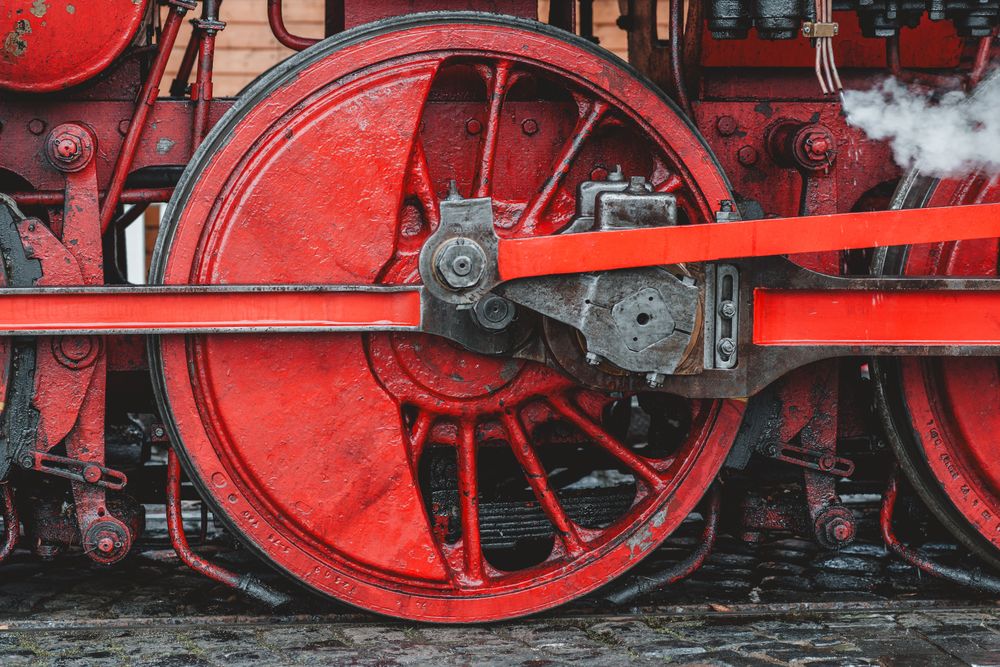
A steampunk fair is usually a single day, or a weekend you can drop into for an afternoon, often held at a heritage site. Railways and museums suit the style perfectly, because they already have the steam engines, the brick buildings and the platforms. The East Anglian Railway Museum, a volunteer-run charity at Chappel and Wakes Colne station in Essex, holds its fair with heritage trains running, and the Ministry of Steampunk has held events at a heritage railway, a Victorian town museum and castles.
Conventions
Steampunk also appears at larger conventions for comics, films and games, where steampunk groups put on displays among everything else. The Ministry of Steampunk lists displays at such conventions in Dublin and London. These are good places to see the style beside its cousins, and to meet the groups who run the dedicated events.
Markets
Some events are mostly a market, with a few contests and performers round the edge. They are a good first event if you want to look and buy rather than dress up, and many people go to one in ordinary clothes with a single steampunk piece, a hat or a pair of goggles, to see how it feels.
The larger regular events
These are the events that come round regularly and whose organisers keep their own websites. The list is not complete, and new events start every year.
Lincoln: the Weekend at the Asylum
The Weekend at the Asylum in Lincoln is run by the Ministry of Steampunk, which has hosted it since 2009 and calls it the biggest steampunk event in the world. Its name comes from its first home: Wikipedia records that the first festival, in September 2009, was held at The Lawn, the former Lincoln Lunatic Asylum, with 432 people. It has since grown to fill the historic quarter of the city. The organiser's site gives the next one, the seventeenth, as 27 to 30 August 2027 in Lincoln's historic quarter. Check the organiser's site before you travel. Our guide to Lincoln's Weekend at the Asylum covers it in full.
Whitby: the Whitby Steampunk Weekend
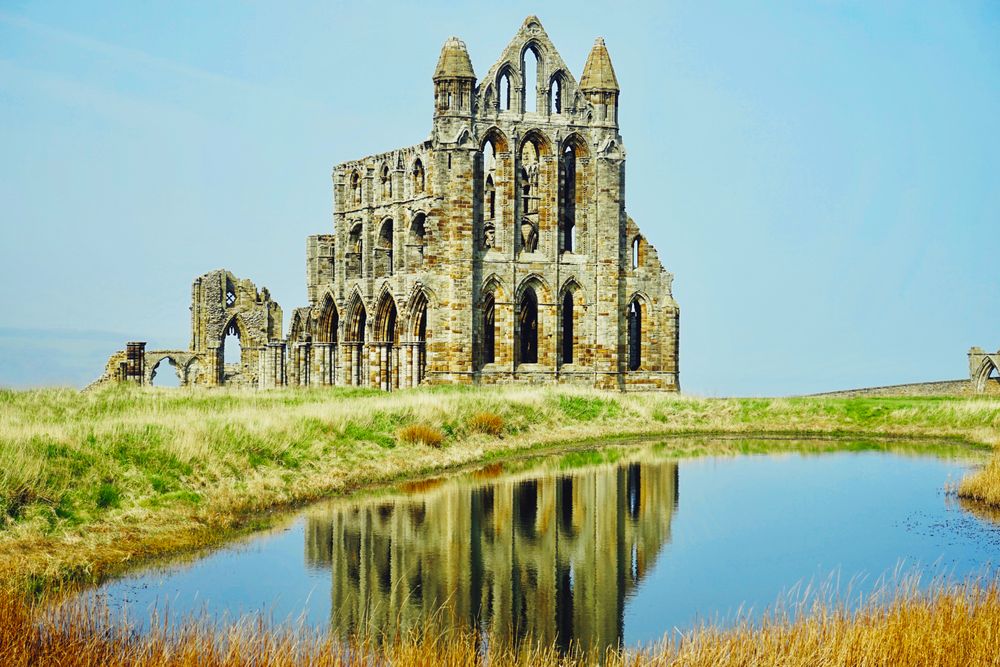
The Whitby Steampunk Weekend is held in Whitby, the seaside town on the North Yorkshire coast with the ruined abbey on its cliff, and is run by WSW Events. We could not read the organiser's own website when we checked on 12 November 2026, so we give no dates for it here. Check the organiser's site before you travel. Our guide to the Whitby Steampunk Weekend explains what we could find out, and why the town suits the style so well.
The Ministry of Steampunk's other events
The same organiser holds smaller events through the year. Its site lists a Steampunk New Year in Leicester from 29 December 2026 to 1 January 2027, and it has held a steampunk Halloween weekend in each of the last three autumns. Check the organiser's site before you travel.
Hopetown Darlington
Hopetown Darlington, a railway heritage attraction in Darlington with the North Road Station Museum and steam train rides, lists a Steampunk Weekend on Saturday 14 and Sunday 15 November 2026, from 10am to 4pm, with traders and makers, live music, tea duelling, games and competitions. Check the organiser's site before you travel.
The East Anglian Railway Museum
The East Anglian Railway Museum holds an annual steampunk fair, Steampunk Shenanigans, with a local steampunk group, the League of Essextraordinary Gentlemen. Its site gives the next one as Sunday 4 July 2027, with tea duelling, teapot racing, a market and train rides. Check the organiser's site before you travel.
Others
Other heritage railways hold steampunk days from time to time. The Ribble Steam Railway in Preston held a Steampunk Saturday in June 2026; its own events calendar is the place to look for the next one. Many smaller events are run by local steampunk groups and are announced only a few months ahead.
Finding events near you
There is no single official list of steampunk events in Britain, so finding them takes a little digging. These are the places that work.
- Organisers' own websites. The most reliable source of dates. Once you know who runs an event, check its site rather than a listing copied from it, because listings often repeat last year's dates.
- Organisers' social media groups. Many organisers post news in a group first. The Ministry of Steampunk, for example, names a group for news of the Lincoln weekend.
- Heritage railways and museums. Their what's on pages are where steampunk days are announced. If there is a heritage railway or industrial museum near you, check its calendar.
- Local steampunk groups. Many towns and counties have a group that meets, travels to events together and sometimes runs its own. A search for steampunk and the name of your county usually finds one.
- Council and tourist board listings. Useful for finding events, though the dates should still be checked with the organiser.
- Other steampunks. The best way of all. At any event, ask people where they are going next.
When you search, phrases such as steampunk fair, steampunk weekend and steampunk market, with the name of a town or county, bring up most events. If a page gives a date without a year, or a year that has already passed, treat it as out of date until the organiser's own site confirms it.
Reading an event page
Once you have found an event, its page should answer a few questions before you set off. Is the date given with its year? Where exactly is it held, and is it in one building or spread across a town? What is free, and what needs a ticket or wristband? Are there separate evening events, and do they have an age limit? What are the rules on props and replica weapons, and on photography? Is there step-free access, and somewhere to sit? If the page does not say, the organiser usually has a contact page or a social media group where you can ask. A short message before you travel saves a wasted journey.
Tickets, costume and what to bring
Tickets
Every event handles entry in its own way. Some are free to walk into; Hopetown's weekend is free but asks visitors to book a ticket online or collect one on the day. Others charge admission, sometimes with train rides or museum entry included. The largest weekends sell wristbands for the daytime venues and separate tickets for evening events; for the Lincoln weekend the Ministry of Steampunk sells wristbands, merchandise and evening tickets subject to availability, so book early if there is something you particularly want to see. The organiser's site always has the current arrangements.
Staying over
For a weekend event, book somewhere to stay as soon as the dates are confirmed, because the rooms nearest the venues go first. The Ministry of Steampunk's pages for the Lincoln weekend include a page about accommodation, and other organisers often do the same. Staying close by means you can change out of a heavy costume between the daytime and the evening, and leave props safely locked away when you do not need them.
Costume
You do not need a full costume for a first event. Wear what is comfortable, with one or two steampunk pieces, and add more as you go. Comfortable shoes matter more than anything else, because most events involve a lot of walking and standing. Our guide to what to wear to your first steampunk event goes through it in detail. If you wear a corset, it should never be laced so tight that breathing or moving is hard; loosen it or take it off if you feel faint.
Props and replica weapons
Props are part of the fun, but every event sets its own rules, and the law applies too. The Ministry of Steampunk's policy, for example, asks people to carry replica weapons in a bag, case or cover when travelling, to keep them locked in a car or room when not in use, to show them only where it is appropriate, not to wear large swords or axes of the kind used in live role-play, and to bring no weapons at all to its evening events. Read each organiser's rules before you go, and see our guide to making steampunk props safely for the law on imitation firearms and blades. A prop gun painted in bright colours and carried covered is far less likely to alarm anyone.
What to bring
- Water and something to eat, because queues for food can be long at busy events.
- A bag that suits the costume and holds everything: a satchel or a leather case looks the part.
- Layers and something for rain, since many events are partly outdoors.
- A small repair kit: safety pins, a needle and thread, and a spare bootlace.
- A charged phone, and a plan for where to meet if your group is split up.
- A way to pay at the stalls. Ask the organiser whether traders take cards.
Events for families
Many steampunk events welcome children, and a steampunk day out is a good way to show a child steam trains, music and dressing up all at once. Hopetown's weekend has games and competitions alongside the market, and the site itself has a railway museum and steam train rides. The East Anglian Railway Museum describes its fair as family friendly and has a train-themed playground. A listing for a past Whitby weekend described it as family friendly too.
A few things make the day easier. Children tire quickly in heavy costumes, so dress them in layers that come off easily. A child's costume should have nothing long enough to trip over, and no small loose parts for the very young; our guide to steampunk for Halloween has more on children's costumes. Agree a meeting place in case anyone gets lost in a crowd, and check the organiser's site for anything aimed at children, such as workshops or costume contests. Props carried by children follow the same rules as everyone else's.
Evening events are a different matter. Balls and concerts often have age limits, and the organiser's site will say what they are.
Starting your own meet-up
If there is nothing near you, start something. Every regular event started somewhere, and a meet-up needs very little to get going.
Plain points for a first meet-up
- Choose a public place. A cafe, a tea room, a museum, a park or a heritage railway on an ordinary running day. Somewhere with a Victorian building or a steam engine makes the best photographs.
- Ask the venue first. Tell them what you are planning, how many people might come and that you will be in costume. Most places are glad of the custom; a few will have rules about groups, photography or costumes.
- Follow the venue's rules and the event rules on props. A cafe or museum is not a steampunk event, and a replica weapon can frighten people who do not know what it is. Leave realistic replicas at home, carry anything that looks like a weapon covered, and read our guide to making steampunk props safely for the law.
- Keep the first one small and simple. A set time, a place, and perhaps a theme, such as airship crews or Victorian explorers.
- Ask before photographing people, especially children and anyone who is not part of the group.
- Make it easy to join. Say plainly that people are welcome in ordinary clothes, and that nobody needs a character or a full costume.
Ideas for a first meet-up
A meet-up works best with one simple thing to do. A tea party is the obvious choice, and it gives you the chance to try tea duelling with a packet of biscuits. A walk round the Victorian part of a town, with a stop for photographs under a railway arch or outside a grand old building, costs nothing. A visit to a museum with working machines makes a good outing for a group interested in engines; our guide to cogs, gears and machines names some of the places in Britain where you can see them. A costume swap or a making afternoon, where people bring half-finished pieces and help each other, suits a group just starting out.
Growing it
Once a meet-up has a regular crowd, it can grow into something more: an outing to a heritage railway, a stall at a local fete, a tea duelling contest. At that point, talk to the venue about what it needs from you, and look at how the established organisers run their events and set their rules. A group with a name, an invented regiment or airship crew, gives people something to belong to; our guide to steampunk names and characters has ideas for those. And when your group goes to one of the larger weekends together, look out for the other groups there; many will have started in much the same way.