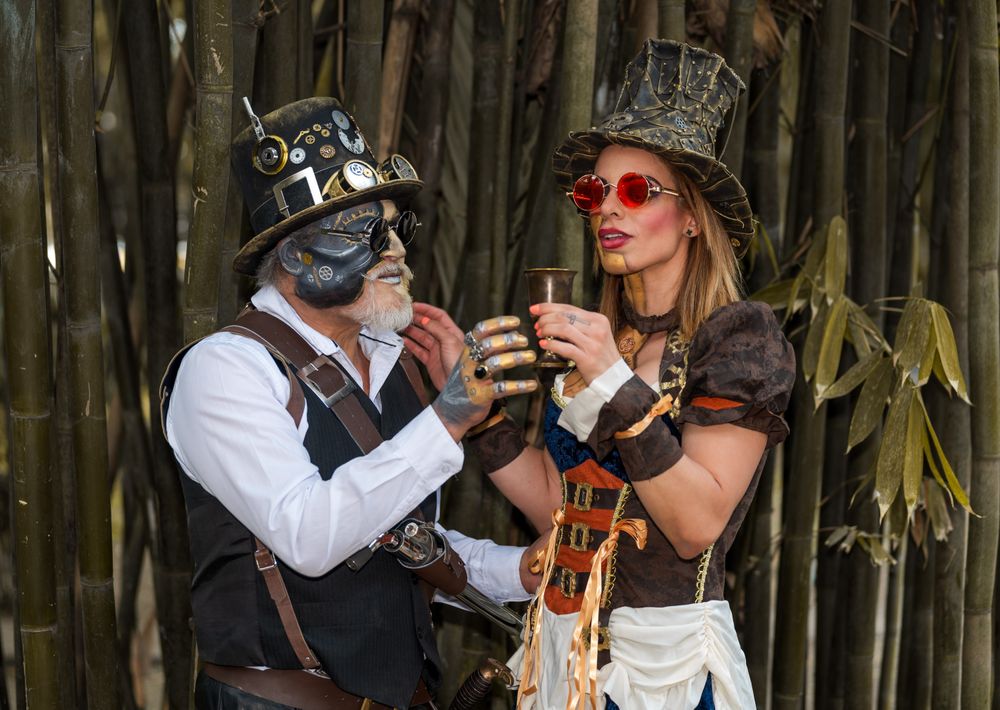
Going to your first steampunk event is exciting and, for many people, a little nerve-racking. You will see people in astonishing costumes, brass-covered top hats, bustles, coats with a dozen pockets, and it is natural to wonder whether you will fit in. The good news is that steampunk events are among the friendliest gatherings there are, and what to wear to your first one is far simpler than it looks.
This guide answers the questions people ask before a first event: whether you have to dress up at all, what a simple first outfit looks like, how to dress for the weather and a long day, which shoes to wear, what to carry, the rules on props and replica weapons, and the manners of taking photographs and being in them. It is written for any steampunk fair, market or weekend in Britain, from a Sunday at a railway museum to a long weekend in Lincoln or Whitby.
Do you have to dress up?
No. At almost every steampunk event, people in ordinary clothes are welcome, and plenty come that way. The organiser of Lincoln's Weekend at the Asylum, the largest steampunk festival of all, says plainly in its FAQ that everyone is welcome in costume or out of it. The same is true of most fairs and markets. Nobody checks your outfit at the door, and nobody minds.
Why dressing up is still worth it
That said, most people who come back a second time come back in something. Dressing up is half the fun: it gives you a way into conversations, a reason to be photographed and a sense of being part of the event rather than watching it. Strangers at steampunk events talk to each other, and a costume, even a very small one, is the easiest opening there is. People will ask about your hat, and you will ask about theirs.
Starting small
The best first costume is a small one. A single steampunk piece, worn with clothes you already own, is enough to feel part of things: a hat, a pair of goggles, a waistcoat, a pocket watch on a chain, a leather belt with a pouch. Many steampunks build their costumes over several years, adding a piece at each event, and a first outfit that is modest and comfortable is far better than an ambitious one that hurts by lunchtime.
Going with a friend
A first event is easier with company. Going with a friend, or with a local steampunk group if there is one near you, means someone to hold your bag while you try on a hat, someone to take your photograph and someone to tell you honestly whether the goggles work. If you go alone, do not worry: stallholders and other visitors are usually glad to talk, and a question about how something was made is the easiest way to start.
What steampunk is, in one line
If you are new to the style, it helps to know what you are aiming at. Steampunk imagines the Victorian age with its machines on show and its future running a different way: brass, leather, dark wood, gears and goggles on clothes of the 1800s. Our guide to steampunk fashion explains the whole look from head to foot.
A first outfit that works
A good first outfit has three parts: a Victorian base, one or two pieces that say steampunk, and something that finishes the look. Most of it can come from your own wardrobe or a charity shop.
The base
Start with clothes that have a Victorian shape. For a man, or anyone who prefers a tailored look, that means a plain shirt with a collar, dark trousers, and braces or a waistcoat. For a woman, or anyone who prefers skirts, a blouse with a high neck or full sleeves and a long skirt in a dark or earthy colour, or the same shirt, waistcoat and trousers. Black, brown, grey, deep red, dark green and cream all work. Avoid bright modern colours and logos, which pull the eye away from everything else.
One or two steampunk pieces
Then add one or two of the things that make the outfit steampunk rather than simply Victorian:
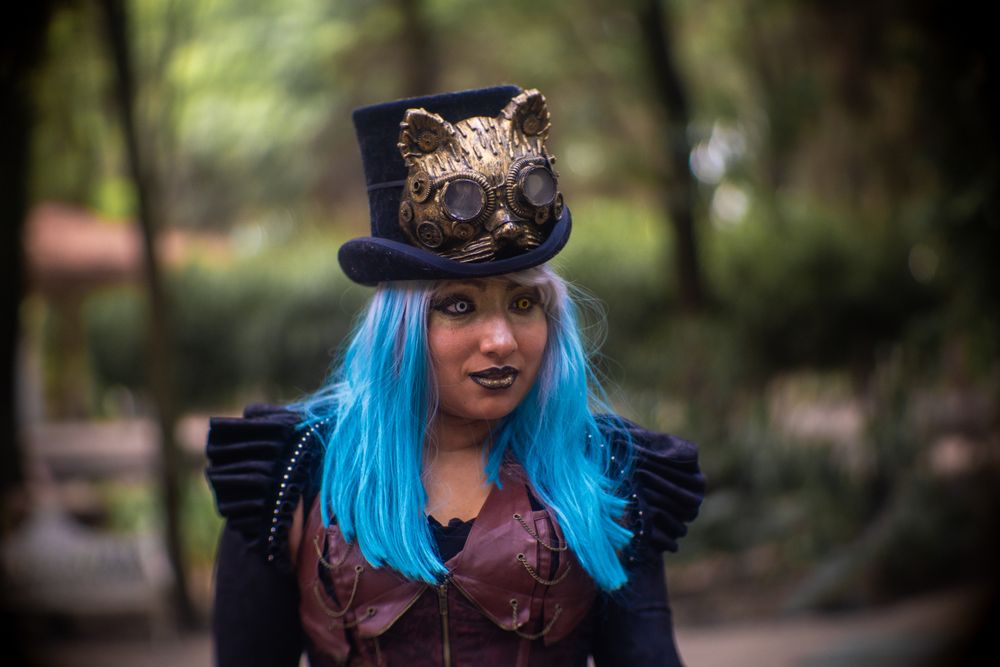
- a hat: a top hat, a bowler or a small decorated hat;
- a pair of goggles, worn on the hat or round the neck;
- a waistcoat with brass buttons, or a leather one;
- a leather belt with a pouch or two;
- a pocket watch on a chain.
One good piece is better than five cheap ones. A well-made hat or a real waistcoat will last for years and suit any outfit you build later.
Finishing the look
Last comes one finishing touch: a brooch, a cravat or a scarf, a pair of gloves, a satchel instead of a modern rucksack. Our guide to a steampunk costume on a budget shows how to put all of this together cheaply, from charity shops and your own wardrobe.
Three first outfits
- The traveller. A shirt, a waistcoat and dark trousers, a long coat, a hat with goggles on the brim, a satchel and comfortable boots.
- The lady adventurer. A blouse, a long dark skirt, a fitted jacket or waistcoat, a small hat, gloves, a leather belt with a pouch, and boots.
- The engineer. A collarless shirt with the sleeves rolled, braces, work trousers, a leather apron, goggles pushed up on the forehead and a rag in the back pocket.
Any of these can be worn by anyone. Steampunk is relaxed about who wears what, and a character of any kind is welcome.
Corsets
Corsets are a favourite steampunk piece, but they are not needed for a first outfit. If you do wear one, it should never be laced so tight that breathing or moving is hard; loosen it or take it off if you feel faint. Our guide to steampunk corsets and waistcoats explains how to wear one comfortably all day.
Dressing for the weather and a long day
Most steampunk events in Britain are at least partly outdoors, and many last all day. A costume that looks wonderful at ten in the morning must still be bearable at five in the afternoon, after hours of walking and standing, in whatever weather the day brings.
Layers
The single most useful thing is layers. A shirt, a waistcoat and a coat can be put on and taken off as the day warms up and cools down, and indoor halls are often warmer than you expect. A layer you can take off and carry, or tie round a bag, is better than one heavy piece you are stuck with.
Rain and wind
Victorian clothes were made for a cold, wet country, and a long coat, a wool waistcoat and a hat do well in rain. A cape, a long oilskin-style coat or a duster keeps out the worst of it. Leather goods and painted props do not like water, so bring a bag or cover for anything that might spoil. Wind is the enemy of hats: a hat pin, an elastic cord hidden under the hair or a smaller hat that sits close to the head will save you chasing it across a field.
Heat and sun
Many events fall in summer, and Victorian clothes can be hot. The NHS advises, in hot weather, staying in the shade, avoiding the sun between 11am and 3pm where you can, wearing a hat and light, loose-fitting clothes, wearing sun cream, and drinking extra fluids regularly while avoiding alcohol. A costume can follow all of that: a straw boater or a wide-brimmed hat, a linen or cotton shirt, a light waistcoat instead of a coat, and a parasol, which is both Victorian and practical.
The NHS lists the signs of heat exhaustion as including tiredness, dizziness, a headache, feeling sick, heavy sweating with pale clammy skin, cramps and intense thirst. Its advice is to move to a cool place, take off any clothing that is not needed, drink plenty of water, and cool the skin, and it says the person should start to feel better within half an hour. If they do not, or if they show signs of heatstroke such as confusion, hot skin that is not sweating or fast breathing, call 999. In practice that means a heavy coat, a tight corset and a leather mask can all make a hot day harder, so plan an outfit you can strip down quickly.
A long day
Even in mild weather, an event day is long. Plan to sit down now and then, eat properly, and drink water through the day rather than all at once. If your outfit is complicated, think about how you will use the toilet in it, how you will sit in it and how you will eat in it, because each of those matters more by the afternoon than how it looked in the mirror. If you are staying over, a change of clothes between the day and the evening makes both more comfortable.
Evenings
Larger weekends have evening events, and they are different from the daytime. Halls are warm, seats are close together and the lights are low. Lincoln's organiser asks for no weapons at all at its evening events, no enormous skirts, because the seats are made for ordinary clothes, and no huge hats that block other people's view, and it suggests saving the most elaborate outfits for the daytime, when people can see them. A narrower, lighter outfit for the evening, with a waistcoat or a smart jacket in place of a heavy coat, is usually the right choice.
Shoes you can walk in all day
If there is one rule for a first event, it is this: comfortable shoes matter more than anything else you wear. Most events involve far more walking and standing than people expect, across grass, gravel, cobbles, station platforms and stairs. Lincoln's organiser, for example, warns visitors about its steep hill, cobbles and uneven pavements and recommends sturdy shoes.
What works
Boots suit steampunk perfectly, and the best are the ones you already own and have walked in. Lace-up leather boots, work boots, riding boots or plain ankle boots in black or brown all look right with almost any outfit. Choose a low, broad heel and a sole with some grip. If you buy new boots for an event, wear them in for a few weeks beforehand, around the house and on short walks, so that the first long day in them is not the first day.
What to avoid
Avoid thin soles, high narrow heels and anything that rubs, however good it looks. Bring plasters in your bag, and consider a second pair of socks. If you are wearing a long skirt, check the hem clears the ground when you walk, so that you do not trip on steps or drag it through mud. Our guide to steampunk boots explains the styles and how to dress up a plain pair.
Goggles and stairs
Costume goggles look best pushed up on a hat or hung round the neck, and that is also the safest place for them. Tinted or decorated lenses make it hard to see where you are putting your feet, especially on steps, in crowds and in dim halls. Lift them off your eyes before you walk anywhere uneven, and wear your own glasses if you need them; round frames suit the style perfectly.
Spats and covers
If your only comfortable shoes are modern trainers or walking boots, spats or boot covers can hide them. A pair of spats over plain dark shoes looks entirely Victorian, and nobody will know what is underneath.
What to carry: bags, water and a phone
Victorian clothes have few pockets, and a costume full of props has even fewer hands to carry things. A good bag solves most of the problems of a first event.
The bag
Choose one bag that suits the outfit and holds everything: a leather satchel, a doctor's bag, a small case or a belt with pouches. A bag worn across the body leaves both hands free, which matters when you are holding a cup of tea, a programme and a cane at the same time. Keep anything valuable inside it, closed, because events can be crowded.
What to put in it
- Water, and something to eat. Queues for food at busy events can be long.
- A charged phone, and a plan for where to meet if your group is split up.
- A way to pay. At Lincoln, the organiser says most traders take cards but cash machines nearby are few and sometimes run out, so carry a little cash too.
- A small repair kit: safety pins, a needle and thread, a spare bootlace, a little glue for props.
- Plasters, any medicines you need, and sun cream or something for rain.
- The event's own details: the programme, the map, and the organiser's rules on props and evening events.
Tickets and wristbands
Check before you go what is free and what needs a ticket. Some events are free to walk into, some charge at the gate, and the larger weekends sell wristbands for the daytime venues and separate tickets for the evenings. Keep your ticket or wristband somewhere you can reach it easily. Our guide to steampunk events in the UK explains the kinds of event and how to find one.
Props and the event's own rules
Props are part of the fun. Ray guns, clockwork arms, canes and parasols turn up at every event, and many are works of real craftsmanship. But every event sets its own rules on props, and the law applies too.
Each event's own rules
Read the organiser's rules before you pack, because they differ. Lincoln's organiser, the Ministry of Steampunk, asks people to carry replica weapons to and from events in a bag, case or cover, to keep them locked away when not in use, to show them only where it is appropriate, not to wear large swords or axes of the kind used in live role-play, and to bring no weapons at all to its evening events. The Whitby Goth Weekend, a different event in the same town as the Whitby steampunk weekend, sets a maximum width of one metre for any costume and a maximum length of five feet for props, which must be lightweight with no sharp edges or points, and it bans metal blades of any kind. Other events have other rules, and an organiser can ask you to take something back to your car.
The law
The Firearms Act 1968 makes it an offence to have an imitation firearm with you in a public place without lawful authority or a reasonable excuse, and the Act's meaning of a public place includes any place the public are allowed into at the time, whether they pay or not, so a ticketed event can count. A prop that looks like a real gun can frighten people and bring armed police. Paint a prop gun in bright colours, carry it covered when you are not at the event, and leave anything that looks real at home. Our guide to making steampunk props safely sets out the law on imitation firearms and blades in full.
Size and crowds
Think about how big your costume is. Wings, wide skirts, long canes and large backpacks are lovely in an open field and a nuisance in a crowded hall or a narrow street, and Lincoln's organiser asks for no enormous skirts or huge hats at its evening events, where people sit close together. Our guide to the finishing touches covers wings, canes and gauntlets, and when to stop.
Photographs: taking them and being in them
Steampunk events are wonderful to photograph, and you will be photographed yourself, often by strangers. A few plain manners make it pleasant for everyone.
Taking photographs
Ask before you photograph someone. Most steampunks are glad to pose, and asking gives them the chance to stand properly and show off the costume. If someone says no, accept it with good grace. The Whitby Goth Weekend's own guidance asks visitors to ask the subject before taking the shot, because many people do not want their picture taken, and Lincoln's organiser asks photographers to respect a polite no. Never photograph a child without a parent's yes.
Being photographed
If you are in costume, people will ask to take your picture, and you may say yes or no as you please. Lincoln's organiser offers sensible advice for anyone being photographed: ask who the photographer is and how they mean to use the pictures, swap details before any are taken, end the session whenever you like, never go off alone with a photographer, and bring a friend if they want a different backdrop. A fair exchange, it suggests, is to let them take your picture if they take a few on your phone too.
Sharing them
Before you post a photograph of someone else online, especially a close portrait, ask whether they mind. Never post pictures of other people's children. If you take a good picture of someone, offering to send it to them is a kind thing to do and a good way to make a friend.
After your first event
Most people go home from a first event with a list of things they want to make or find for the next one. Write it down while you remember. Our guide to Lincoln's Weekend at the Asylum describes the largest event of all, if you want somewhere to aim for next.