The Whitby Steampunk Weekend is a gathering of steampunks in Whitby, the seaside town on the North Yorkshire coast where a ruined abbey stands on the cliff above the harbour. Whitby steampunk is one of the most searched-for steampunk events in Britain, and it is easy to see why: few towns could suit the style better. Whitby has a Victorian seafront, a harbour, steep streets and cliff-top views, a long history of black jet jewellery, and a place in Bram Stoker's Dracula.
This guide explains what the weekend is, why Whitby suits it, who runs it and where to check the dates, what has happened at past weekends, how to get there and where to stay, what to wear, and the town's other weekends, including the Whitby Goth Weekend. One thing first. The organiser's own website could not be read when we checked on 12 November 2026, so this guide gives no dates for the steampunk weekend. Check the organiser's site before you travel.
What the weekend is
The Whitby Steampunk Weekend is a steampunk event spread over a weekend in the town. Like most steampunk weekends, it mixes a market, talks and demonstrations by day with music in the evenings, and like most of them it is as much about meeting people in costume as about any single item on the programme. A listing for one past weekend, on the Yorkshire coast radio station This is the Coast's website, called it one of the largest steampunk events in the UK, with free entry to the daytime programme and a ticketed concert in the evening.
For many visitors the town itself is half the point. A steampunk weekend in a sports hall would be fun; one in Whitby, with the abbey on the skyline, the harbour full of boats and Victorian terraces on the West Cliff, is something else. People dress up to walk the streets, climb to the abbey and take photographs on the piers as much as to visit the stalls.
Whitby steampunk, gothic and Victorian
Whitby sits where the three styles meet. Its Victorian history gives steampunk its period, Dracula gives it a gothic shadow, and the town has its own famous gothic weekend as well. Our guide to steampunk, gothic and Victorian explains how the three differ and where they overlap, which is useful to know before a visit, because at Whitby you will see all three side by side.
Do you need a costume?
No. Plenty of visitors come in ordinary clothes to look, to shop and to enjoy the town, and nobody minds. If you would like to join in without a full outfit, one piece is enough to start: a hat, a pair of goggles, a waistcoat or a piece of jet. Many people build their costume over several visits, adding something new each time.
Why Whitby: the abbey, the jet and Dracula
The abbey
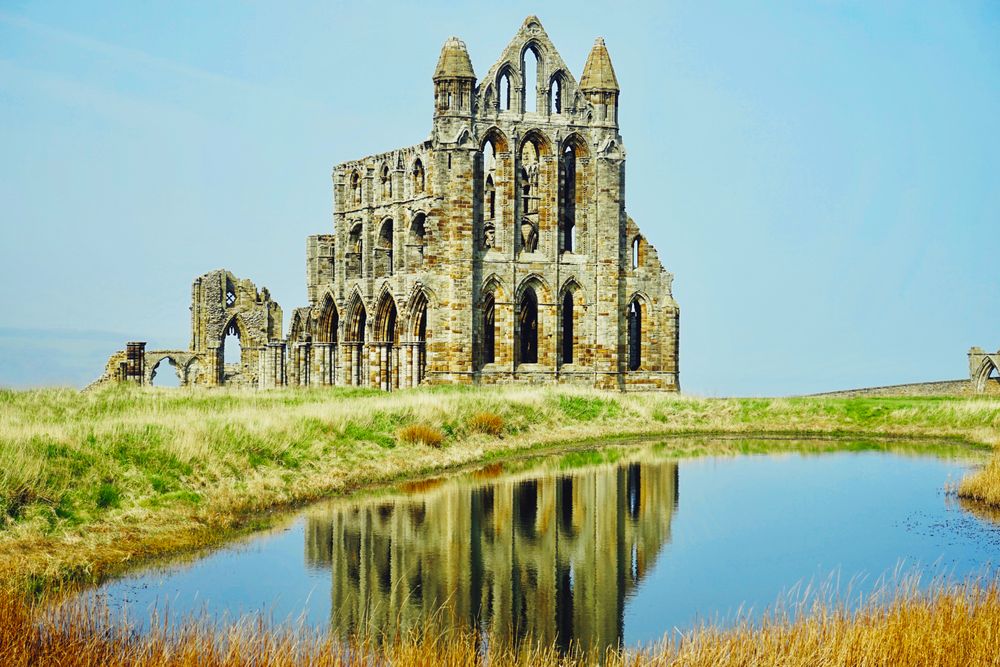
Whitby Abbey stands on the East Cliff, high above the harbour, and its ruins are cared for by English Heritage. The first monastery there was founded in about 657 by Hild, with the support of King Oswiu, and in 664 it hosted the Synod of Whitby, a meeting that settled how the date of Easter would be calculated. The early monastery was abandoned by the ninth century, and a new community was founded on the headland in about 1078. The church whose ruins stand today was rebuilt in the Gothic style from about 1225 to 1250, with the nave finished in the fifteenth century. The abbey was closed in 1539, and in 1914 shells fired by the German fleet damaged its west front. The great empty arches against the sky are the picture most people carry home.
The jet
Whitby jet is a black gemstone made from fossilised driftwood that has soaked up bitumen; Whitby Museum explains that the jet found here formed about 183 million years ago. It became hugely fashionable in the Victorian age, above all after Prince Albert died in 1861 and Queen Victoria wore mourning, with jet, for the rest of her life. Whitby Museum says that between 1860 and 1880 there were more than 200 jet factories in the town employing 1,500 people, supplied by around 300 mines. The museum adds that the trade had passed its peak by about 1870 and then collapsed, though people have used jet as a gemstone for at least 5,500 years. The museum, founded in 1823, holds more than 500 pieces of Victorian jet, and it says eight makers still work jet in Whitby today, a craft it calls critically endangered. A jet brooch or pendant is the most local thing a steampunk can wear here; our guide to steampunk jewellery explains jet, and how to tell it from the glass and rubber sold in its place.

Dracula
Bram Stoker, then the business manager of the actor Henry Irving, arrived in Whitby at the end of July 1890 and stayed at a guesthouse in Royal Crescent. English Heritage explains that on 8 August 1890 he found the name Dracula in a book in Whitby's public library, published in 1820 by William Wilkinson, about the lands of Wallachia and Moldavia; a footnote said the word meant devil. A few years before his visit, a Russian ship, the Dmitry, had run aground on Tate Hill Sands below the East Cliff, and in the novel it becomes the Demeter, which carries Dracula to Whitby and runs aground below the East Cliff with its crew gone. One of the novel's diaries, Mina Murray's, describes the ruined abbey, and in the book a large dog runs up the 199 steps to St Mary's church after the wreck. Stoker even took a name for one of Dracula's victims from a headstone in the churchyard. Dracula was published in 1897.
The 199 steps are still there, climbing from the old town by the harbour towards the church and the abbey, and they make one of the best backdrops in town for a photograph in costume. Our guide to steampunk for Halloween looks at the darker, gothic side of the style that Dracula belongs to.
Who runs it, and where to check the dates
The Whitby Steampunk Weekend is run by WSW Events. The organiser sells tickets for its evening shows through its own page on an online ticket website, under the name WSW Events, and that page lists those shows at the Whitby Pavilion Theatre on the West Cliff. The Pavilion, built in the 1870s, is the town's theatre and events hall.
Why this guide gives no dates
The dates, the times and the places for each part of the weekend belong on the organiser's own website, and that is the only place we take them from. When we tried to read the organiser's website on 12 November 2026 it refused our requests, so we cannot give dates, say how often the weekend is held or say where each part of it takes place. Other listings for the weekend exist, on tourist and accommodation websites and in local newspapers, but they are copies, and they often carry dates from a weekend that has already happened.
How to check
- Go to the organiser's own website and its social media page, and look for the next weekend's dates and programme.
- Check again a week or two before you travel. Programmes change, and an event can move or be cancelled.
- Look at what is free and what needs a ticket. A past listing described free entry by day and a ticketed concert in the evening, but the current arrangements are on the organiser's site.
- Read the organiser's rules on costume and props before you pack.
We will add the dates to this guide when the organiser's own website can be read.
What happens over the weekend
We cannot give the programme for the next weekend, but the listing for one past weekend, in February 2025, gives an idea of the shape. It described activities, talks and demonstrations through the day, a steampunk retail market, free entry, a family friendly welcome, and an evening concert by visiting bands with its own tickets. Our guide to steampunk events in the UK explains each of these parts and the games, such as tea duelling, that many steampunk events share.
Around the town
Whatever is on the programme, much of a Whitby weekend happens in the streets. The town sits on both sides of the mouth of the River Esk: the West Cliff, with its Victorian terraces, the statue of Captain Cook and the whalebone arch, and the East Cliff, with the old town, the 199 steps, St Mary's church and the abbey. Most places are within walking distance of each other, though the walk from one cliff to the other goes down to the harbour and up again.
A few places suit a steampunk visitor particularly well:
- Whitby Abbey, English Heritage's ruin on the East Cliff, for the view and the photographs.
- The 199 steps and St Mary's church, for Dracula.
- Whitby Museum, founded in 1823, for its collection of Victorian jet.
- The harbour, a reminder that Whitby was a working port. Captain Cook learned seamanship here, and HMS Endeavour, later his ship, was built in Whitby in 1764 as a coal carrier called the Earl of Pembroke and bought by the Royal Navy in 1768. The whalebone arch on the West Cliff remembers the town's whaling industry.
Opening times and charges for each of these are on their own websites.
A first visit
If this is your first steampunk weekend, start with the daytime programme. Walk round the market, talk to the stallholders, some of whom may have made what they sell, and watch a talk or a demonstration. Then go out into the town. Many steampunks are glad to talk about their costumes and to pose for a photograph if you ask first, and a compliment on a well-made hat is the easiest way to start a conversation. If there is an evening concert you want to see, check on the organiser's site whether it needs a ticket bought in advance.
Getting there and staying
Whitby is on the North Yorkshire coast, about 47 miles from York and 22 miles from Middlesbrough, with the North York Moors inland. Every route in crosses open country, which makes it a beautiful journey, and not a quick one.
By train
Whitby has a railway station on the Esk Valley line, which runs for about 35 miles from Middlesbrough to Whitby along the valley of the River Esk, with 17 stations, operated by Northern. The North Yorkshire Moors Railway, a heritage railway run by a charitable trust, runs steam trains across the moors from Pickering, and over the Esk Valley line from Grosmont into Whitby. For a steampunk, arriving by steam is hard to beat, but check the heritage railway's own website for which stretch is running and when.
By road
The A171 runs through Whitby between Scarborough and Guisborough, and the A169 crosses the North York Moors to Pickering. The A169 crosses open moorland, so check the weather before you set out in winter. The organisers of the Whitby Goth Weekend, writing for their own visitors, mention pay-and-display car parks and a park and ride on the western edge of town, and warn that taxis are in high demand on busy weekend evenings, so book one early.
Getting about in costume
Once you arrive, leave the car. Whitby's old town is a place of narrow streets, cobbles and steps, and the walk from the West Cliff to the abbey goes down to the harbour, across the river and up the 199 steps on the other side. Allow more time than the map suggests, carry what you need in one bag rather than in your hands, and keep anything long or wide, a parasol, a cane, a large prop, under control on the steps, where other people are climbing too.
Where to stay
Whitby has hotels, guesthouses, holiday cottages and caravan parks, and the villages around it have more. On a busy weekend the town fills up, so book as early as you can, and check the event dates on the organiser's site before you do. Staying near the side of town where most of the events are held saves a lot of walking in costume.
What to wear
Dress for the coast first and the costume second. Whitby faces the North Sea, and the cliff tops can be windy at any time of year. A steampunk outfit that works here is one you can wear all day outdoors, up and down steps, in wind and perhaps in rain.
Head to foot for Whitby
- Hats. A top hat on a windy cliff needs help: a hat pin, an elastic cord hidden under the hair, or a smaller hat that sits closer to the head.
- Coats. A long coat or greatcoat is warm and looks right on the piers. Our guide to steampunk coats and jackets goes through the kinds.
- Layers. Indoor venues can be warm and the cliffs cold, so wear layers you can take off and carry.
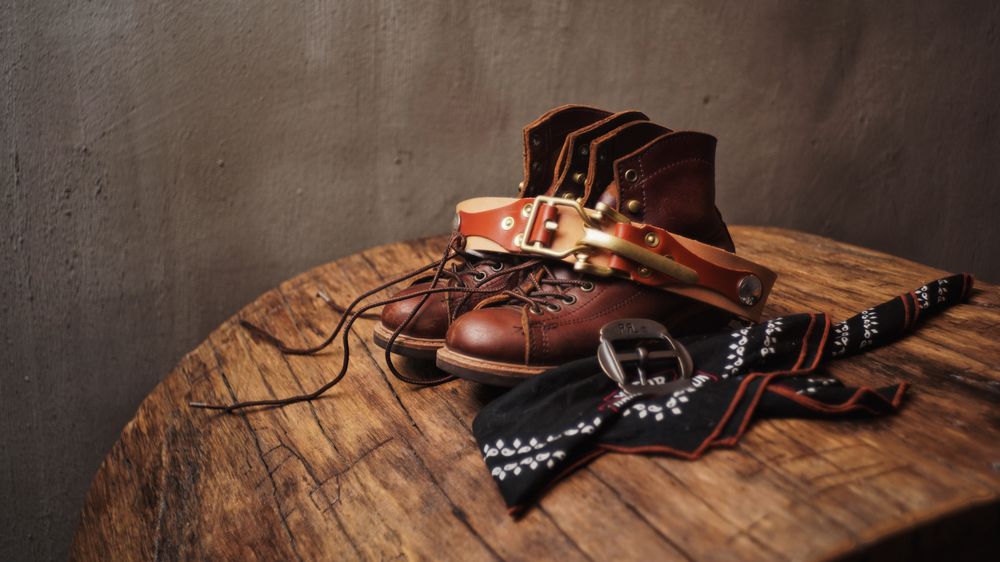
- Boots. The 199 steps, the cobbles of the old town and the cliff paths all need comfortable boots with a good grip. Our guide to steampunk boots has more.
- Jet. A piece of jet, real or imitation, is the most Whitby thing you can wear.
- Skirts. A long skirt is lovely on the West Cliff and awkward on wet steps; a pick-up or high-low skirt keeps the hem clear.
Characters that suit Whitby
A character drawn from the town's own history fits the place well. A sea captain or a ship's engineer suits the harbour where the Endeavour was built. A jet carver, with a leather apron and a tray of black brooches, belongs to the Victorian trade that filled the town's workshops. A whaler suits the town that raised the whalebone arch. A Victorian lady on a visit to the seaside, with a parasol and a guidebook, needs nothing more than a good dress. And Dracula's Whitby suits a monster hunter, with a long coat, a satchel of curious instruments and a nervous look at every large dog.
The gothic side
Because of Dracula and the abbey, Whitby suits the darker side of steampunk: black, deep red, lace, mourning jewellery and the dress of the Victorian age at its most sombre. Our guide to Victorian mourning dress explains where that look comes from.
Comfort and safety
A corset should never be laced so tight that breathing or moving is hard, and on a day of steps and hills that matters more than usual; loosen it or take it off if you feel faint. Props and replica weapons follow the organiser's rules, so read them before you pack, carry anything that looks like a weapon covered, and leave anything realistic at home. Our guide to what to wear to your first steampunk event has a full checklist.
Whitby's other weekends
The steampunk weekend is not the only time Whitby fills with people in costume. The town's best-known alternative event is the Whitby Goth Weekend, which is separate from the steampunk weekend and run by a different organiser.
The Whitby Goth Weekend
On its own website, the Whitby Goth Weekend describes itself as an alternative festival, begun in 1994, which has grown into one of the world's leading goth events. It includes an alternative market, the Bizarre Bazaar, with more than 100 indoor stalls, and the organisers say admission to all the trading areas is free. They describe it as a family event, and children have come for years. Its website lists its next spring weekend as 30 April to 2 May 2027, and an autumn weekend at the end of October, with no year given. Check the organiser's site before you travel.
The Goth Weekend has its own rules, set out on its website, and they are worth reading even if you only go to the steampunk weekend, because they show the kind of things organisers ask. They ask for costumes suitable for a family event, costumes no more than a metre wide, props no longer than five feet and light in weight, no weapons, and no uniforms that could be mistaken for those of the armed forces or the emergency services. Its information stall is in Whitby Leisure Centre.
Steampunks and goths together
The two weekends share a town, a love of dressing up and a fondness for the Victorian age, and many people enjoy both. They are still different events with different organisers, different dates and different rules, so check each organiser's own website for its own weekend.
Making a trip of it
Whitby rewards a longer stay. The abbey, the museum, the harbour and the moors behind the town fill a day or two either side of any event, and a steam train across the moors makes the journey part of the holiday. Whichever weekend you choose, check the dates with the organiser, book your room early, and bring good boots for the 199 steps.