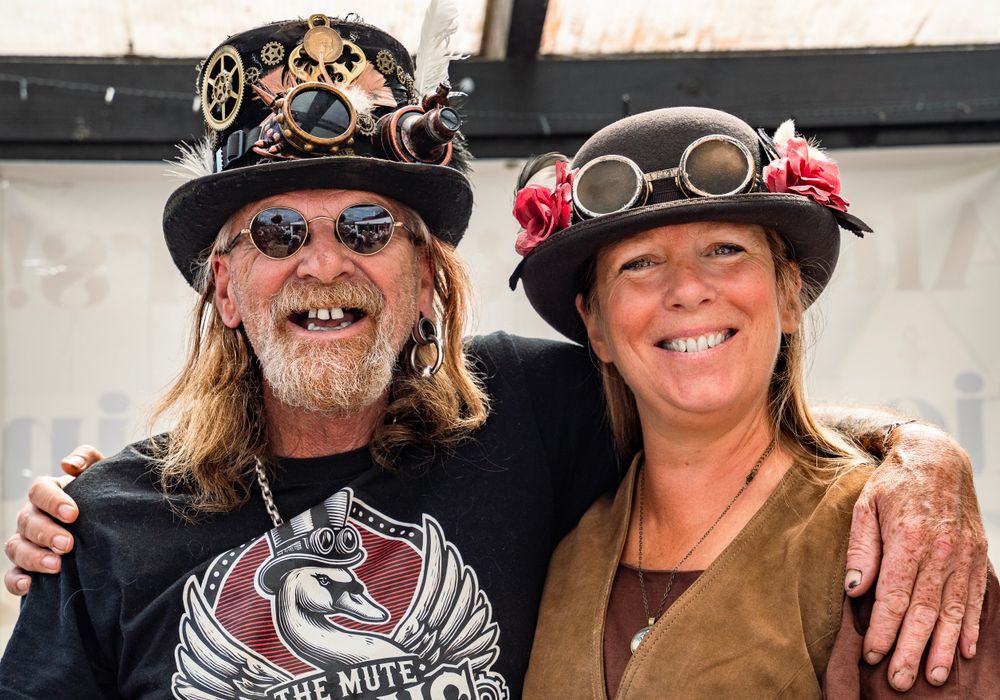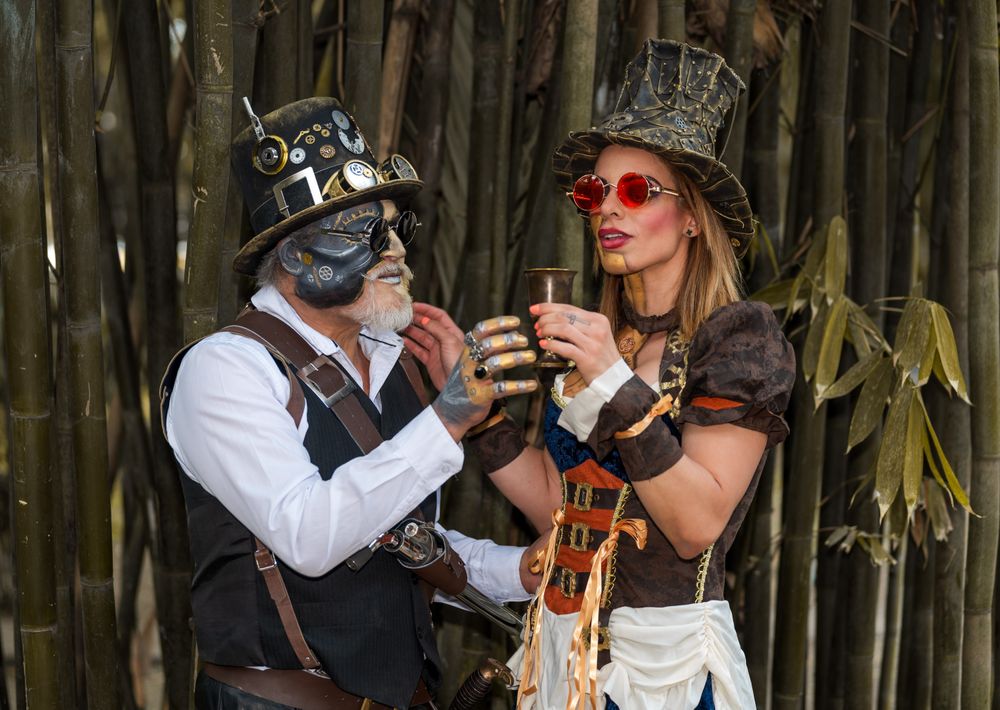
Steampunk names and characters are where a costume turns into a person. At a steampunk event many people do not simply wear a top hat and goggles; they wear them as someone, an airship captain, a lady inventor, a professor of improbable sciences, and that someone has a name, a rank and a reason for carrying a brass telescope. This guide is about steampunk characters and how to build one: the names Victorian families really gave their children, the titles and ranks of the period, the trades a character might follow, the famous characters from books and films, and how to write a short story that holds all of it together.
None of this is compulsory. Plenty of steampunks go to events as themselves in a good coat, and they are just as welcome. But a character gives you something to talk about, a reason for every piece of the costume, and a way into the games and contests that many events run. It also helps when you are deciding what to make or buy, because a character tells you what belongs and what does not.
Why a steampunk character has a name and a story
Steampunk began in books. The American writer K. W. Jeter used the word in a letter to Locus magazine in April 1987, to describe a handful of novels that he and his friends were writing about an invented Victorian age. When people began dressing in the style, they brought the habit of storytelling with them, and a costume borrowed from a story naturally became a character in a story of its own.
A character does three useful jobs. First, it decides the costume. An airship navigator needs a coat that stands up to wind, a case for maps and perhaps a pair of goggles; a society hostess needs none of those, but might carry a fan with a hidden pocket. Every piece has a reason, and pieces without one can stay at home. Our guide to steampunk fashion goes through the pieces from head to foot, and your character tells you which of them you need.
Second, it gives you something to say. At an event, strangers ask about costumes. Saying that you captain a cargo airship out of Hull, carrying tea and trouble, is an easier answer than a list of where each item came from, and it starts a conversation instead of ending one. Third, it lets you play. Many events run contests, games and parades, and having a name ready, and knowing how your character would behave, makes them more fun.
A character, not a disguise
Most steampunk characters are a version of the person wearing them, with the dial turned up: your own interests, moved to an age of steam. A keen cook might become the chef on a luxury airship, a teacher the head of a school for young aeronauts, a nurse a field surgeon with a bag of brass instruments. Characters built this way are easier to keep up for a whole day, because you already know what they care about. They also suit people who feel awkward acting. You are not playing a stranger, only yourself in a better hat.
Victorian names for women
The quickest way to make a character sound Victorian is to give her a name that Victorian families really used, and the evidence is easy to find. The National Archives explains that the census of 1841 was the first to list the name of every person in England and Wales, and a census has been taken every ten years since then, except in 1941. The censuses from 1841 to 1921 can now be searched online. Reading a page of an old census for your own town is one of the best ways to find real names, together with the ages and occupations that went with them.
For a ranked list, the earliest official one is the Office for National Statistics' table of the top 100 baby names in England and Wales, which begins with 1904, three years after Queen Victoria died. Those children were born to parents who had grown up under Victoria, so the list gives a fair picture of the names in fashion as her reign ended. The ten most common names for girls in 1904 were Mary, Florence, Doris, Edith, Dorothy, Annie, Margaret, Alice, Elizabeth and Elsie. Further down the top forty come Gladys, Winifred, Ethel, Hilda, Lilian, Ivy, Violet, Kathleen, Ellen, Lily, Sarah, Nellie, Emily, Mabel, Ada, Beatrice, Marjorie, May, Rose, Olive, Evelyn, Phyllis, Gertrude, Catherine, Agnes, Jessie, Frances, Grace, Irene and Eva.
Royal names
The royal family was another source of names. Queen Victoria, who reigned from 1837 to 1901, had nine children, and her five daughters were Victoria, Alice, Helena, Louise and Beatrice. Alice and Beatrice both appear in the top forty for 1904. A character called Beatrice or Helena sounds of the period without any further effort, and Victoria itself is an obvious choice for a character who wants to be noticed.
Pet names, middle names and surnames
Victorian names were often shortened in everyday use, and some short forms became names in their own right: Nellie and Elsie both sit in the 1904 list beside the longer names they come from. A character might be Margaret on her calling card and Maggie to her crew. Two first names together, such as Ada Florence or Edith Mabel, sound very much of the time. For a surname, the census is again the best guide. Many ordinary surnames come from trades and places, and a plain surname with a grand first name and a rank often works better than an invented one that tries too hard.
Our guide to women's steampunk outfits has five complete outfits for characters such as the lady adventurer and the engineer.
Victorian names for men
The same table from the Office for National Statistics gives the boys' names. The ten most common in 1904 were William, John, George, Thomas, Arthur, James, Charles, Frederick, Albert and Ernest. The top forty goes on with Alfred, Edward, Joseph, Harold, Robert, Frank, Henry, Harry, Walter, Reginald, Herbert, Leonard, Stanley, Leslie, Richard, Cyril, Sidney, Francis, Percy, David, Wilfred, Samuel, Norman, Cecil, Eric, Sydney, Horace, Fred, Jack and Edwin. The ONS counts each spelling separately, which is why Sidney and Sydney both appear, and why Fred has a place of its own apart from Frederick.
Royal names
Queen Victoria's four sons were the future Edward VII, Alfred, Arthur and Leopold, and her husband, Prince Albert, died in 1861. Albert, Alfred, Arthur and Edward are all in the top dozen for 1904, which shows how far the royal family's choices reached. Leopold never became common, which makes it a good name for a character who is meant to stand out: a foreign count, perhaps, or a man with grand ideas about himself.
Choosing a name that sounds right
Some of these names now sound comically old-fashioned, which can be useful. Horace, Percy, Cecil and Reginald suit a fussy professor or a pompous rival inventor. Plain names such as John, George and Thomas suit a working engineer or a ship's stoker. A Victorian gentleman was usually addressed by his rank or title and his surname, not by his first name, so the surname matters more than you might think. A character called Captain Thomas Ashworth will be Captain Ashworth to almost everyone he meets, and only his oldest friends will call him Tom.
Our guide to men's steampunk outfits has five outfits that suit these characters, from the explorer to the engineer.
Titles, ranks and trades
Victorian Britain was a society of ranks, and a title tells everyone at once where a character stands. There are three main kinds to choose from: the titles of the nobility, ranks in the army or the navy, and the trades and professions that most people actually followed.
Titles and courtesy titles
The peerage, Britain's ranked nobility, has five ranks, from highest to lowest: duke, marquess, earl, viscount and baron. Their children use courtesy titles, names given by custom rather than held in their own right, and the rules are precise. The eldest son of a duke, marquess or earl uses one of his father's lesser titles. Younger sons of dukes and marquesses are Lord followed by their first name and surname, as in Lord Henry Ashworth. Younger sons of earls, and all the sons and daughters of viscounts and barons, are the Honourable, usually shortened to the Hon. The daughters of dukes, marquesses and earls are Lady followed by their first name, as in Lady Alice Ashworth, never Lady followed by the surname alone, which is the form used for the wife of a knight or a baronet.
An invented title is fine for a steampunk character, but it helps to choose a level and keep to its rules. A younger son with a courtesy title and no fortune, forced to earn his living building airships, is a story ready made.
Army and navy ranks
In the British Army of the early Victorian years, officers in the cavalry and infantry bought their commissions, the documents that made them officers. The ranks that could be bought ran from cornet in the cavalry or ensign in the infantry, through lieutenant, captain and major, to lieutenant colonel. Buying commissions was abolished on 1 November 1871 as part of the Cardwell Reforms, so a character who bought his captaincy belongs to the first half of the reign.
In the Royal Navy, a midshipman was an officer in training rather than a commissioned officer. Above him came lieutenant, commander and captain, and above those the flag officers: rear admiral, vice admiral and admiral. The navy also had warrant officers, among them the master, the purser and the surgeon, and standing officers such as the gunner, the boatswain and the carpenter. Every one of these titles fits an airship as easily as a ship at sea. Many steampunks invent their own regiments and air services, with badges of their own design, which avoids any confusion with real uniforms and real medals.
Trades and professions
Most Victorians were neither nobles nor officers, and the census recorded every adult's occupation from 1841. A trade gives a character a working life and a set of tools to carry: a clockmaker with a magnifying eyeglass, a telegraph operator with a brass key, a photographer with a folding camera, a chemist with labelled bottles, a railway engineer with a pocket watch on a chain. Many of the best steampunk characters are tradespeople and engineers, because the style is about machines and the people who build and mend them.
Building a character: inventor, explorer, aviator and others
Most steampunk characters start from one of a handful of types. Each has its own shape, its own set of objects and a real Victorian or two behind it, which makes the type easy to research and easy for other people to recognise.
The inventor
The inventor is the heart of steampunk, and real models are easy to find. Ada Lovelace, the daughter of the poet Lord Byron and later Countess of Lovelace, translated an article about Charles Babbage's proposed calculating machine, the Analytical Engine, and added a set of notes of her own, published in 1843. One of them sets out a method for calculating a series of numbers on the machine and is often called the first published computer program. An inventor's costume shows the work: a leather apron, a roll of tools, goggles pushed up on the forehead, scorched gloves and a notebook full of designs.
The explorer
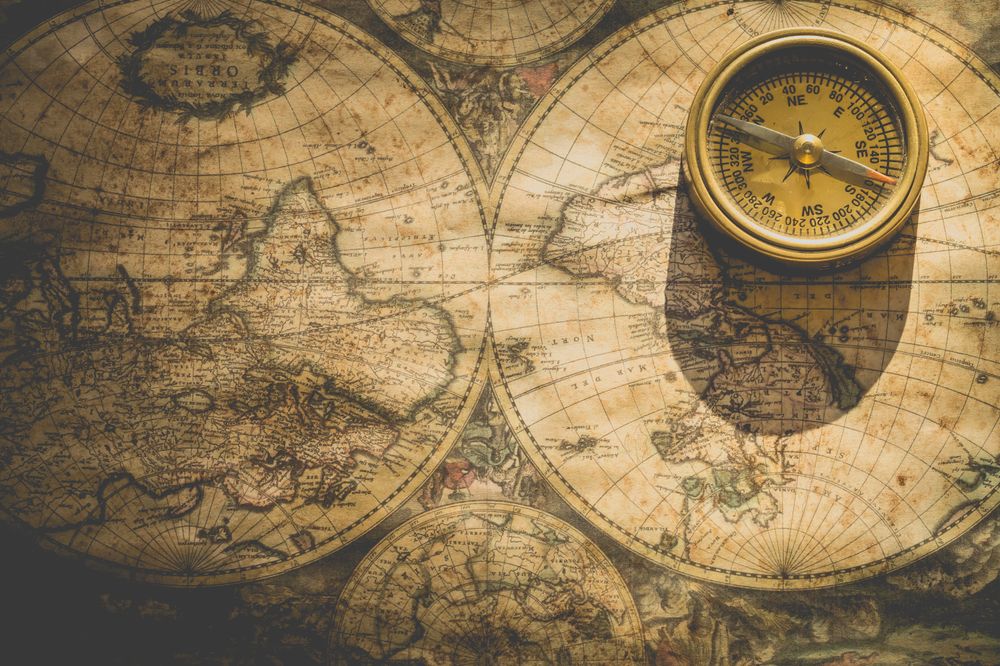
The explorer carries maps, a compass, a telescope and a hat for hot sun. Isabella Bird, an English traveller who lived from 1831 to 1904, journeyed through North America, the Pacific, the Middle East and Asia and wrote books such as A Lady's Life in the Rocky Mountains (1879). In 1892 she became the first woman Fellow of the Royal Geographical Society. A character modelled on travellers like her has been everywhere, writes everything down and is never surprised by anything.
The aviator
The aviator, or aeronaut in the Victorian word, commands the skies. The Victorians flew in balloons, and on 5 September 1862 the meteorologist James Glaisher and the aeronaut Henry Coxwell rose so high that Glaisher lost consciousness at about 8,800 metres. Coxwell, whose hands had lost all feeling, climbed into the rigging to open the gas valve before he too passed out, and the balloon came down. An aviator's character carries goggles, a flying coat or leather jacket, gauntlets and a long scarf, and has a store of near misses to tell. Our guide to steampunk airships has the craft to go with them.
Other types to try
Other types turn up at every event: the sky pirate in sashes and borrowed finery; the scientist or doctor with a bag of strange instruments; the society lady or gentleman who may secretly be a spy; the officer of an imaginary regiment; the engineer or stoker in working clothes and soot; the detective; and the monster hunter, from the darker, gothic side of the style. Mixing two types often works best: an explorer who is secretly an inventor, a society hostess who flies her own airship. Whatever the type, give the character one flaw and one secret, because those are what make a story.
Famous characters from books and films
Some characters have shaped steampunk so much that people dress as them, or borrow from them. Naming the book or film helps other people recognise the costume, and reading the original is the surest way to get the details right. Our guide to steampunk books covers the books in more depth.
From Victorian books
- Captain Nemo, commander of the submarine Nautilus in Jules Verne's Twenty Thousand Leagues Under the Seas (1870). He returns in The Mysterious Island (1875), where he is revealed as Prince Dakkar, the son of an Indian raja.
- Phileas Fogg and his valet Jean Passepartout, from Verne's Around the World in Eighty Days, serialised in a French newspaper in 1872 and published as a book in 1873. Fogg bets members of the Reform Club that he can go round the world in eighty days, and a detective named Fix follows him all the way.
- Robur, the inventor who sails the skies in his flying machine, the Albatross, in Verne's Robur the Conqueror (1886).
- The Time Traveller of H. G. Wells's The Time Machine (1895), who is never given a name, which makes him an easy character to borrow and make your own.
- Sherlock Holmes and Dr Watson, who first appeared in Arthur Conan Doyle's A Study in Scarlet, published in Beeton's Christmas Annual in December 1887.
From steampunk novels
- Sybil Gerard and Edward Mallory, from The Difference Engine (1990) by William Gibson and Bruce Sterling, a novel in which Ada Lovelace herself appears as Lady Ada Byron.
- Tom Natsworthy, Hester Shaw and Anna Fang, from Philip Reeve's Mortal Engines (2001): an apprentice historian, a young woman set on revenge, and an aviatrix who flies the airship Jenny Haniver.
- Alexia Tarabotti, the heroine of Gail Carriger's Soulless (2009), a woman with no soul in a Victorian Britain where vampires and werewolves are accepted members of society.
- Deryn Sharp, who disguises herself as a boy called Dylan to join the British air service, and Prince Aleksandar, in Scott Westerfeld's Leviathan (2009).
From films and television
James West and Artemus Gordon, the two government agents of the American series The Wild Wild West (1965 to 1969), travelled in their own train, the Wanderer, and Gordon was an inventor of gadgets and a master of disguise. Pazu and Sheeta, the two children at the centre of Hayao Miyazaki's animated film Castle in the Sky (1986), are chased by the air pirate Dola and her crew, who make fine characters for a group. Our guide to the best steampunk films has many more.
A borrowed character is a good start, but most steampunks soon make their own, often as a relation or rival of a famous one: Captain Nemo's cousin, Phileas Fogg's long-suffering bank manager, a former member of Dola's crew.
Writing your character's story
A character needs only a short story: a few lines you can tell in under a minute. Answer these five questions and you have one.
- Who are you? A name, a title or rank, and what you do.
- Where are you from? A real British town works well, and gives people something to ask about. A mill town, a port or a railway town suits the style.
- What do you carry, and why? Every object in the costume should have a reason, even a silly one.
- What do you want? A lost invention, a rival's downfall, a cargo delivered on time, a husband safely home.
- What is your flaw or secret? A fear of heights in an airship captain, a debt, a past as a sky pirate.
An example
Here is one built from those answers. Miss Edith Mabel Pemberton, of Halifax, is chief engineer of the cargo airship Persistence. She carries a roll of tools because the engines break down on every voyage, a pocket watch because the captain is always late, and a sealed letter she will not explain. She wants to build an engine that never stops, and she has never told the crew that she cannot swim. Every line of that suggests a piece of costume, and every piece gives a stranger a question to ask.
Keeping it light
The best characters are generous: they leave room for other people to join in. Have a sentence ready, not a speech. Let your character change over the years as the costume does. Avoid taking a living person's name, and give an invented regiment or service its own name rather than borrowing a real one. If you write the name and title on a small card, in the manner of a Victorian calling card, you can hand it to people you meet at an event.
Once you have a character, dressing the part is easier. Our guide to what to wear to your first steampunk event takes the next step, and our guide to a steampunk costume on a budget shows how to build the costume without spending much.