A prop is an object carried as part of a costume: a ray gun, a brass gauntlet full of dials, a signal lamp, a mechanical arm, an instrument for measuring something that does not exist. Steampunk guns and steampunk weapons are among the most popular props of all, and making one is one of the best parts of the hobby, because you can invent a whole machine and decide what it does.
This guide is about props only: things made to look like a device or a weapon that do nothing of the kind. It gives no instructions for anything that fires, shoots or launches, and nothing in it is about real weapons. It explains how to plan a prop, which materials to use, how to use the tools safely, how to paint brass, copper and rust, how to add lights and batteries safely, what UK law says about anything that looks like a gun or a blade, and how to take a prop to an event without alarming anyone.
Planning a prop
Decide what it is for
Every good prop starts with a story. Decide who carries it and what it does in their world: an inventor's instrument for reading the weather, an aviator's signal lamp, an explorer's device for finding lost cities, a scientist's ray gun that has never quite worked. The story decides the details. An inventor's tool might have an unfinished panel with the wires showing; an officer's would be polished and engraved.
Size, weight and carrying
Think about the day you will carry it, not just the photograph. A heavy or very large prop becomes a burden by mid-afternoon. A light prop that fits a holster, a belt loop or a strap leaves your hands free. Decide early how it will be carried, and build the fixing into the design rather than adding it at the end.
Draw it first
Draw the prop from the side and from above, at full size if you can, and mark the main parts: the body, the handle, the barrel or nozzle, the dials and the pipes. Measure it against your own hand and arm. A drawing shows quickly whether the proportions work and what you will need. Our guide to how to draw steampunk explains how to build a machine from simple shapes.
Build it in parts
Plan the prop as a set of parts that are made, painted and finished separately and then joined: a body, a handle, a set of rings and fittings, a dial. A mistake then means remaking one piece rather than the whole thing.
Materials: foam, card, wood and metal
Foam
Foam is the prop maker's favourite material because it is light, cheap and easy to cut. Thin craft foam sheets make panels, straps, rivets and trim; thicker foam, such as the interlocking mats sold for floors, makes bodies and armour. Foam can be cut with a craft knife, shaped by sanding, and curved by gentle warmth. It needs sealing before it is painted, or it soaks up paint unevenly. If you warm foam to shape it, work in a well-ventilated room and keep the heat away from your skin.
Card and paper
Card is underrated. Cereal boxes, mount board and the tubes from kitchen rolls make bodies, barrels and dials, and layers of card glued together become surprisingly strong. Card is the best material for a first prop, because it costs nothing and teaches you how the parts fit before you spend anything on better materials.
Wood
Wood gives weight and a fine finish: dowel for rods and handles, plywood and MDF for flat parts, offcuts for blocks. Cutting and sanding it makes dust, and the Health and Safety Executive says that wood dust, including dust from composite boards such as MDF, can cause asthma and dermatitis, and that hardwood dust can cause a rare form of nasal cancer. Sand outdoors or with good ventilation, wear a dust mask made for the job, and clear up the dust rather than leave it to blow about.
Metal and found objects
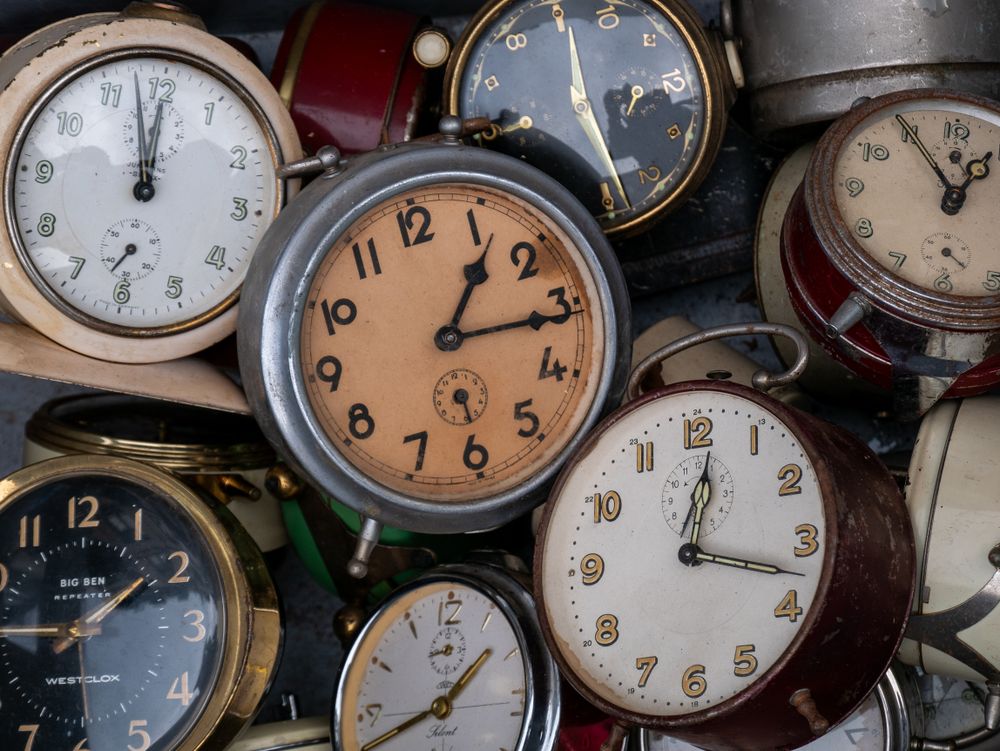
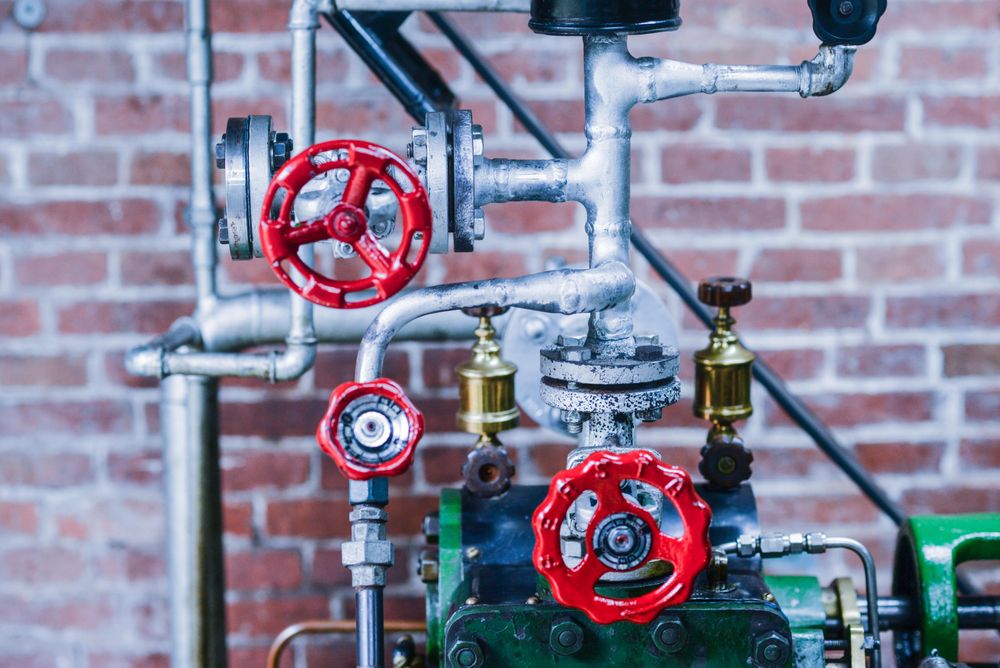
Real metal looks best of all: brass plumbing fittings, old lamp parts, funnels, door furniture, keys and the cases of old instruments. It is also heavy and can have sharp edges, so file any rough edge smooth and keep metal props small. Old clocks and watches make tempting sources of gears, but never take apart one with a luminous dial, which may be painted with radium, and remember that a clock spring can still hold dangerous tension. Our guide to cogs, gears and machines covers both.
Plastic pipes, bottles and toys
Plastic pipe, bottles, tubs and caps make barrels, tanks and fittings, and a coat of paint hides what they were. Some people start from a toy. If a toy is shaped like a real modern gun, think carefully before painting it in realistic colours: the section on the law below explains why.
Tools, and how to use them safely
Most props need only a few tools, and each has one main danger. A few minutes of care keeps a project from ending in an injury.
Craft knives
The craft knife is the tool used most and the one that causes most cuts. The Health and Safety Executive's advice on hand knives recommends knives with retractable blades where possible, and names cutting away from the body, and the dangers of blunt knives, among the things every user should be taught. Cut on a cutting mat or a board, never on your knee; keep your other hand behind the blade, not in front of it; and change blades often, because a blunt one needs more force and slips. Make several light cuts through thick foam rather than one hard one.
Hot-glue guns
Hot glue holds foam and card quickly, but it sticks to skin and keeps burning. Use a stick or a tool, not your fingers, to press pieces together, and stand the gun on its own stand. The NHS advice for a burn is to hold it under cool running water for 20 minutes, to remove anything near the burn but leave anything stuck to it in place, and not to put creams, oils or butter on it. Go to A&E, or call 999, for a burn that is very large or deep, or one on the face.
Drills and rotary tools
A small rotary tool, a hand-held motor that spins sanding, cutting and polishing bits at high speed, is very useful for shaping foam, plastic and metal, and a drill makes holes for rivets and fittings. Both throw off dust and fragments. The Health and Safety Executive names dust and flying fragments among the hazards to the eyes, and lists safety spectacles, goggles and face shields among the protection to choose from. Costume goggles are not eye protection, however solid they look; our guide to steampunk goggles explains why. Clamp the work instead of holding it, tie back long hair, and keep sleeves, cords and chains away from anything that spins.
Paint, primer and spray cans
Many primers, spray paints and varnishes contain solvents. The Health and Safety Executive says that solvents can irritate the eyes, lungs and skin and cause headaches, nausea and dizziness, and that ventilation is always needed when they are used. Spray outdoors on a still day if you can, or in a room with the windows and doors open, follow the instructions on the can, and keep spray cans away from flames and heaters.
Painting brass, copper and rust effects
Start dark
Almost every steampunk finish starts with a dark base. Seal the prop, then paint it all over in black or a very dark brown and let it dry. The dark base is what will sit in the cracks and hollows at the end, making the piece look old and solid.
Brass
Brass is an alloy of copper and zinc, with a colour that runs from a reddish gold to a pale yellow. Over the dark base, brush a metallic gold or brass paint onto the raised parts with an almost dry brush, so the dark colour stays in the hollows. Build it up in thin layers, leaving the edges and corners brightest, because those are the places that hands would polish on a real object.
Copper
Copper is pinker and redder than brass. Use a copper metallic paint in the same way, and add a little warm brown in the shadows. Copper and its alloys grow a green layer called a patina as they age outdoors, so a touch of blue-green dabbed into the crevices, round rivets and along seams makes copper look as if it has seen weather. Keep it to the places where water would gather.
Rust
Rust forms only on iron and steel, which corrode to an orange-red or brown. Brass and copper do not rust. That small fact makes a prop look real: put rust on the parts meant to be iron, such as a riveted plate, a bolt or a heavy bracket, and patina on the parts meant to be brass or copper. Dab rust colours on with a sponge, from dark brown to orange, in streaks running downwards as water would carry it.
Wear and grime
Real objects are worn where they are handled and dirty where they are not. Brighten the handle, the trigger guard and the edges, and leave darkness in the corners. A wash of thinned dark brown paint brushed over the whole piece and wiped off at once settles into the details. Finish with a clear varnish, with good ventilation, to stop the paint rubbing off on your hands and clothes. Our guide to a costume on a budget has more ways of making cheap materials look like metal.
Lights and electronics in a prop
LEDs
A light glowing inside a prop, behind a coloured lens or through a glass tube, brings it to life. Small lights called LEDs are the usual choice, because they run cool on small batteries. An LED needs the current through it limited, usually by a small part called a resistor; without one, it can overheat and destroy itself. LEDs also work only one way round. The simplest and safest choice is a ready-made battery light or string of lights, with the battery box and switch already fitted, hidden inside the prop.
Button batteries
The small, flat button batteries used in many small lights are a serious danger to young children. The government's product safety office warns that a swallowed button battery can react with saliva to make a caustic chemical, which can burn through tissue and cause internal bleeding that can be fatal. If you think a child has swallowed one, take them straight to A&E, even if they seem well. Make sure any battery compartment in a prop is screwed shut, and keep spare batteries out of reach.
Rechargeable lithium batteries
Rechargeable lithium batteries hold a lot of energy in a small space. The government's safety message on e-bikes and e-scooters says that large lithium-ion batteries can pose a risk of serious fire or explosion in some circumstances, though they can be used safely, and its advice applies to any of them: use only the charger the maker recommends, unplug it when charging has finished, and never modify or tamper with the battery. Electrical Safety First's advice on power banks adds: do not charge overnight or while you are out of the house, charge uncovered in a well-ventilated space, and stop using a battery at once if it smells, sparks, smokes, swells or cracks. Do not put lithium batteries in the household bin or the ordinary recycling, where a crushed one can start a fire; take them to a battery or electrical recycling point.
For a prop, that means using a ready-made, sealed battery pack or power bank with its own charger, rather than wiring loose cells together, and taking it out of the prop to charge it.
Never mains
Never build mains electricity into a prop you carry. Anything that plugs into the wall belongs in a lamp built to the proper standard, and our guide to steampunk lamps and lighting explains the rules.
Prop weapons and the law
This section is a plain summary of the law in Great Britain as it is written on legislation.gov.uk and gov.uk. It is not legal advice.
What counts as an imitation firearm
The Firearms Act 1968 defines an imitation firearm as any thing which has the appearance of being a firearm, whether or not it can fire anything. A painted plastic ray gun, a wooden pistol or a resin revolver can all count, if they look like a gun.
Carrying one in public
Under section 19 of the Act, it is an offence to have an imitation firearm with you in a public place without lawful authority or a reasonable excuse, and it is for the person carrying it to prove the excuse. The Act's meaning of a public place includes any road and any other place the public are allowed into at the time, whether they pay or not. So a street, a station, a park and a ticketed event can all be public places in law.
The police are plain about the risk. Their public advice says that all calls to the police involving firearms are treated as if the gun were real, and that someone waving an imitation could find themselves surrounded by armed officers pointing real weapons at them. A passer-by cannot tell from across a street that your pistol is made of foam.
Realistic imitation firearms
The Violent Crime Reduction Act 2006 goes further for imitations that look real. Under section 36, it is an offence to make a realistic imitation firearm, to change an imitation firearm so that it becomes one, to sell one, or to bring one into Great Britain. Section 37 gives defences where the imitation is only for a museum or gallery, for theatre performances and rehearsals, for making films or television programmes, or for historical re-enactments organised by people who hold public liability insurance, as the regulations under the Act set out.
Section 38 says what realistic means: an imitation so realistic that it cannot, for all practical purposes, be told apart from a real modern firearm. It does not count as distinguishable if only an expert could tell, or only by close examination or by trying to load or fire it. What matters is its size, its shape and its main colour. The regulations say a size is unrealistic only if it is smaller than 38 millimetres high and 70 millimetres long, and a colour is unrealistic only if it is bright red, bright orange, bright yellow, bright green, bright pink, bright purple or bright blue, or if the imitation is made of see-through material. The Act also leaves out of its meaning of a real firearm any gun whose look would identify it as of a design and mechanism first dating from before 1870.
For a prop maker, that means two things. A fantastical brass ray gun with fins and a glass tank is unlikely to be mistaken for a modern firearm, but repainting a brightly coloured toy gun shaped like a modern pistol in black or grey could turn it into exactly what section 36 forbids. And none of these points changes section 19: even a prop that is plainly not realistic can still look like a gun to a frightened passer-by.
Young people
Under section 24A of the Firearms Act 1968, it is an offence to sell an imitation firearm to anyone under 18, and for someone under 18 to buy one.
Blades, swords and canes
Under section 139 of the Criminal Justice Act 1988, which applies in England and Wales, it is an offence to have any article with a blade or a sharp point in a public place, except a folding pocketknife with a cutting edge no longer than 3 inches; the government's guidance adds that lock knives are not covered by that exception. A court can accept a good reason, such as work, religious reasons or national costume. The government gives the maximum penalty for an adult carrying a knife or weapon illegally as 4 years in prison, an unlimited fine, or both.
Some weapons are banned outright, whatever the reason, among them a sword with a curved blade of 50 centimetres or more, a swordstick (a hollow walking stick or cane with a blade inside), a knuckleduster, and a blade hidden inside something that looks like an everyday object. Weapons over 100 years old are exempt, except flick knives and gravity knives. A steampunk cane should be just a cane, and a sheath on a belt should hold something blunt and obviously fake, or nothing.
The plain rules
- Make it unmistakably a prop. Paint a prop gun in bright colours, or give it brass, copper and glass in shapes no real gun has. Never make it look like a modern firearm.
- Carry it covered. Take it to and from an event in a closed bag or case, and bring it out only inside the event, where the event's rules allow.
- Never point it at anyone, even in fun or for a photograph, and never wave it about in public.
- Leave blades at home. A blade, even a blunt one, has no place on a costume in public.
Taking props to events
Every event sets its own rules
Steampunk gatherings are friendly places to show off a prop, and many people make one specially. Every event sets its own rules on props and costume weapons, and the venue may have rules of its own, so read them before you go and follow what the organisers say on the day. Our guide to steampunk events in the UK explains where to find them, and our guide to what to wear to your first event covers the rest of the outfit.
Getting there
Pack the prop in a bag, a box or a case that hides it completely, and keep it hidden on the train, the bus and the walk from the car park. The journey is the time when a prop is most likely to frighten someone who does not know there is an event nearby, and when the law on carrying it in public matters most.
In a crowd
A large prop needs room. Carry it close to your body, mind the people behind you when you turn, and put it down safely rather than lean it where it can fall. Keep it out of the way at tables and on stairs. If someone asks to hold it, hand it over carefully; if a child asks, a parent should say yes first.
A repair kit
Props break. A small kit of glue, tape, a spare battery and a few cable ties in your bag can save a day. Put your name and phone number inside the prop, in case it is left behind. Our guide to the finishing touches covers holsters, belts and the other accessories that carry a prop.