
Steampunk books came first. Before there were steampunk costumes, conventions or films, there were novels about Victorian inventors, time machines and airships, and the word steampunk itself was made up to describe a handful of them. Reading the books is the best way to understand where the style's ideas came from: why the machines are made of brass, why the cities are smoky, and why so many heroes are inventors.
This guide starts with how steampunk began on the page, then goes through the Victorian writers behind it, the first steampunk novels of the 1980s, the novels written since 1990, books for younger readers, and graphic novels, and it ends with where to start. Each book is named with its author and the year it was first published. Where we mention a prize, it is as the prize's own website lists it. We say nothing about prices or where to buy, and we do not review the books; we describe what they are about so you can choose.
Where steampunk began on the page
A word made up in a letter
The word steampunk was coined by the American writer K. W. Jeter in a letter to Locus, the magazine of the science fiction world, published in its April 1987 issue. Jeter had written Morlock Night, a novel set in Victorian London, and he noticed that Tim Powers and James Blaylock were writing similar books. In the letter he suggested, half as a joke, that fantasies set in the age of steam needed a group name, and offered one modelled on cyberpunk, the name then given to novels about computers and hackers. The joke stuck. Our guide to where steampunk came from tells the whole story.
Books that were steampunk before the word
Once the word existed, readers began to see the style in older books. The Steampunk article on Wikipedia, which gathers what historians of the genre say, names several. Percival Leigh's story The Aerial Burglar (1844) has a steam-powered flying machine. Keith Laumer's Worlds of the Imperium (1962) and Ronald W. Clark's Queen Victoria's Bomb (1967) are counted among the forerunners too, along with a novel by Harry Harrison of 1973. In 1980 the writer Richard A. Lupoff and the artist Steve Stiles made a comic strip, The Adventures of Professor Thintwhistle and His Incredible Aether Flyer, which the same article counts among the early steampunk works.
What makes a book steampunk
A steampunk book usually has three things. It is set in the nineteenth century, or in a world that feels like it. It has machines that the real nineteenth century never built, or built only in small numbers: airships everywhere, mechanical computers, walking engines, clockwork people. And it treats those machines as part of daily life, with the soot, noise and danger that go with them. A Victorian novel with no impossible machine is a historical novel; a futuristic novel with no Victorian feeling is science fiction. Steampunk sits where the two overlap, and our guide to what steampunk is explains the three ingredients in more detail.
Michael Moorcock and Christopher Priest
Two British writers of the 1970s are often counted among the first steampunk novelists. Michael Moorcock's The Warlord of the Air (1971), the first book of his trilogy A Nomad of the Time Streams, sends an Edwardian soldier, Oswald Bastable, into an alternative 1973 in which the First World War never happened, the old empires still rule, and the skies belong to their airships. It is widely considered one of the first steampunk novels. Christopher Priest's The Space Machine (1976), subtitled A Scientific Romance, joins H. G. Wells's The Time Machine and The War of the Worlds into one story, in which two Victorians in a time machine end up on Mars just as the Martian invasion begins.
The Victorian books behind it: Verne, Wells and others
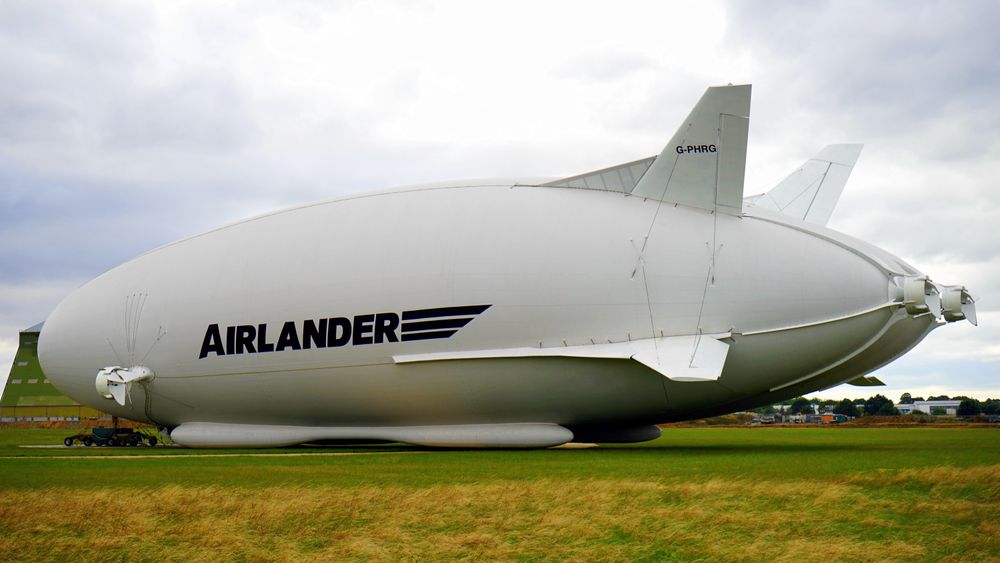
Jules Verne
Jules Verne was born in Nantes, in France, in 1828 and died in Amiens in 1905. With his publisher Pierre-Jules Hetzel he produced a long series of adventure novels known as the Voyages extraordinaires, most of them first published in instalments in Hetzel's magazine. Five Weeks in a Balloon (1863) crosses Africa by balloon. Journey to the Centre of the Earth (1864) climbs down the crater of Snæfellsjökull, a volcano in Iceland. From the Earth to the Moon (1865) fires travellers at the Moon from a giant cannon, the Columbiad. Twenty Thousand Leagues Under the Seas (1870) gave the world Captain Nemo and his submarine, the Nautilus. Around the World in Eighty Days (1872) races Phileas Fogg round the globe by steamer and train. The Mysterious Island (1874) brings Nemo back, and Robur the Conqueror (1886) has a vast flying machine.
Why Verne matters to steampunk
Verne's heroes are engineers, scientists and explorers, and his books take the machines seriously, explaining how they are built, how they are powered and what they can do. That is the steampunk attitude exactly. Captain Nemo in particular, a brilliant and angry inventor living outside the law in a machine of his own design, is the model for countless steampunk characters, and the Nautilus is the model for countless steampunk machines. Many readers come to Verne after the films and are surprised by how much more there is in the books.
H. G. Wells
H. G. Wells was born in Bromley, in Kent, in 1866 and died in London in 1946. Several of his early novels were known as scientific romances. The Time Machine (1895) sends a Victorian inventor into the far future. The Island of Doctor Moreau (1896), The Invisible Man (1897) and The War of the Worlds (1898), in which Martians in three-legged fighting machines land near Woking in Surrey and reach London, followed quickly. When the Sleeper Wakes (1899) wakes a Victorian in a future London, The First Men in the Moon (1901) reaches the Moon in a glass-lined steel sphere steered by blinds of cavorite, a substance that blocks gravity, and The War in the Air (1907) imagines war fought by airships.
Where Verne is an optimist about machines, Wells is often a worrier. His time traveller finds that the comfortable Victorian world has split, far in the future, into two kinds of people, and his Martians show what it feels like to be on the losing side of better technology. Steampunk borrows both moods: the excitement of invention from Verne, and from Wells the sense that progress comes with a price.
The dime novels
In America, cheap popular fiction had its own machines. Edward S. Ellis's The Steam Man of the Prairies (1868), described as the first American science fiction dime novel, has a teenage inventor, Johnny Brainerd, riding across the prairies in a carriage pulled by a giant steam-powered man. It is one of the books steampunk writers and readers point to as an ancestor, along with Mary Shelley's Frankenstein.
Reading them today
The books of Verne and Wells are old enough to be free to read online. Project Gutenberg, a library of out-of-copyright books, has The Time Machine and an English translation of Twenty Thousand Leagues, both marked as public domain in the United States; check the rules where you live. Many films were made from them too: see our guide to the best steampunk films.
The first steampunk novels of the 1980s
K. W. Jeter
Morlock Night (1979) was Jeter's sequel to The Time Machine. In it the Morlocks, the underground creatures of Wells's far future, build a time machine of their own and come back to threaten Victorian London, which is saved with the help of King Arthur and Merlin. Infernal Devices (1987), the first book of his George Dower trilogy, is the other Jeter novel most often counted as steampunk.
Tim Powers
Tim Powers's The Anubis Gates (1983) sends an English professor, Brendan Doyle, back to 1810 to hear the poet Samuel Taylor Coleridge give a lecture. Kidnapped by a group of magicians, he is stranded in the London of the early nineteenth century among beggars' guilds, a body-swapping werewolf and a plot to bring the gods of ancient Egypt back to the city. It is earlier than Queen Victoria's reign, but it set the tone for much that followed. The Philip K. Dick Award, an American science fiction prize, lists it as its winner for 1983.
James Blaylock
James P. Blaylock's Homunculus (1986) is a comic adventure set in Victorian London, the second book of a loose trilogy, whose hero is the scientist and explorer Langdon St. Ives. It is listed as the Philip K. Dick Award winner for 1986. Blaylock went on writing about St. Ives for many years, and the character is a good example of what steampunk did with the Victorian gentleman inventor.
What these books share
All three writers were Americans, and all three wrote about a Victorian London that was stranger and more dangerous than the real one. Their books are funny, crowded and full of invention. They are less about machines than many later steampunk novels, and more about the fun of an imagined nineteenth century. That spirit is still at the heart of the style.
Steampunk novels since 1990
The Difference Engine
The Difference Engine (1990), by William Gibson and Bruce Sterling, is the novel that made many readers notice steampunk. Its idea is that Charles Babbage's mechanical computers were really built and changed the world: in London in 1855, Britain is going through an Industrial Revolution unlike the real one, and historical figures play different parts, with Lord Byron leading the country. It was published in Britain by Victor Gollancz and was nominated for the Nebula Award for Best Novel.
The 1990s and 2000s
Paul Di Filippo's The Steampunk Trilogy (1995) collects three short novels, Victoria, Hottentots and Walt and Emily; the Steampunk article on Wikipedia calls it the first work of fiction with steampunk in its title. In Britain, George Mann's The Affinity Bridge (2008) began his Newbury and Hobbes series, steampunk adventures set in Victorian England. The anthology Steampunk (2008), edited by Ann and Jeff VanderMeer, gathered stories old and new and is a good way to sample many writers at once; Extraordinary Engines (2008), edited by Nick Gevers, is another collection from the same year.
Gaslamp, silkpunk and other names
As the style grew, writers found new names for corners of it. Gaslamp fantasy, a term coined by Kaja Foglio of Girl Genius below, describes Victorian-style stories that lean towards magic and romance. Silkpunk is a newer name, which the Steampunk article on Wikipedia gives to Ken Liu's Dandelion Dynasty series, begun in 2015, and Neon Yang's Tensorate series, begun in 2017. Looking for these names as well as steampunk will find many more books.
Boneshaker, Soulless and Spring-Heeled Jack
Cherie Priest's Boneshaker (2009), the first of her Clockwork Century series, is set in an alternative Seattle during the American Civil War, where a giant drilling machine has torn up the city and released a poisonous gas. The Locus Awards, given by Locus magazine, list it as the best science fiction novel of 2010. Gail Carriger's Soulless (2009), the first of the five books of The Parasol Protectorate, is a comedy of manners set in a Victorian London where vampires and werewolves are part of society, with an umbrella-carrying heroine, Alexia Tarabotti. English writer Mark Hodder's The Strange Affair of Spring-Heeled Jack (2010), the first of six steampunk novels in his Burton and Swinburne series, is listed as the Philip K. Dick Award winner for 2010.
From music to novels
Steampunk now crosses between forms. Clockwork Angels (2012), the last studio album by the Canadian rock band Rush, told a steampunk-inspired story, and the writer Kevin J. Anderson turned it into a novel the same year, followed by Clockwork Lives (2015).
Books for younger readers
Northern Lights
Philip Pullman's Northern Lights (1995), called The Golden Compass in North America, is the first book of His Dark Materials. Lyra Belacqua grows up among the scholars of an Oxford in another world, where every person's soul walks beside them as an animal companion, and travels north by airship and balloon to rescue her friend. The Carnegies, the British prize for children's books, list it as their Carnegie Medal winner for 1995. It is not usually called steampunk, but its airships, scholars and brass instruments have made it a favourite with steampunks.
Mortal Engines
Philip Reeve's Mortal Engines (2001), the first book of the Mortal Engines Quartet, is set long after a terrible war, in a world where whole cities roll across the land on wheels and swallow smaller towns. Its London is a Victorian-style city run by guilds. It was written for young adults, and Reeve followed it with Larklight (2006), illustrated by David Wyatt, a comic space adventure for younger readers in which a brother and sister live in a house orbiting the Moon in an alternative Victorian age.
Airborn and Leviathan
Canadian writer Kenneth Oppel's Airborn (2004) follows Matt Cruse, a fourteen-year-old cabin boy on a passenger airship, the Aurora, in search of strange flying creatures. Scott Westerfeld's Leviathan (2009), illustrated by Keith Thompson, retells the First World War with walking war machines on one side and living, bred creatures on the other, including the whale-shaped airship of its title. The Locus Awards list it as the best young adult book of 2010.
Hugo Cabret
Brian Selznick's The Invention of Hugo Cabret (2007) is a book of about 530 pages and nearly 300 pictures, which its author describes as neither quite a novel nor a picture book. In 1930s Paris, twelve-year-old Hugo secretly keeps the clocks of a railway station running and tries to repair a clockwork figure left by his father. It is a gentle first step into the style for confident young readers.
Graphic novels and comics
Luther Arkwright and Grandville
The British artist Bryan Talbot's The Adventures of Luther Arkwright began as a serial in the underground comic Near Myths in 1978 to 1980. Its hero moves between parallel worlds, and most of the story happens in an England where the Civil War never ended; it is often described as one of the first steampunk comics. Talbot returned to the style with Grandville (2009), in which a badger detective of Scotland Yard, Archie LeBrock, investigates a murder in a Paris of steam vehicles, automatons and airships, in a world where France won the Napoleonic Wars and almost every character is an animal.
The League of Extraordinary Gentlemen
Alan Moore and Kevin O'Neill's The League of Extraordinary Gentlemen began in 1999. In 1898, Mina Murray gathers famous figures of Victorian fiction, among them Allan Quatermain, Captain Nemo, Dr Jekyll and the Invisible Man, to protect the British Empire. It did a great deal to make steampunk popular, and it was loosely made into a film in 2003.
Girl Genius
Phil and Kaja Foglio's Girl Genius began in print in 2001 and moved online in 2005. Its heroine, Agatha Heterodyne, discovers she belongs to a famous family of mad scientists, called Sparks, in an alternative Europe of airships and strange creations. Kaja Foglio called it gaslamp fantasy rather than steampunk. It won the Hugo Award for Best Graphic Story three years running, in 2009, 2010 and 2011, as the Hugo Awards' own history pages record. Our guide to steampunk art and artists looks at illustration more widely.
Where to start
If you want the originals
Begin with The Time Machine, which is short, and then Twenty Thousand Leagues Under the Seas or Around the World in Eighty Days. Read with a sense of when they were written: these are Victorian books, with Victorian attitudes, and part of the fun of steampunk is seeing how later writers answered them.
Reading a series in order
Many steampunk novels are the first of a series: Mortal Engines of a quartet, Soulless of five books, Boneshaker of the Clockwork Century, Spring-Heeled Jack of six. Start with the first, because each book builds on the world and the characters of the one before. Anthologies are the exception, and the best place to dip in and out until you find a writer you want more of.
If you want a steampunk novel
The Anubis Gates and Homunculus show where the genre began; The Difference Engine is the serious, clever one; Soulless is the comedy; and Boneshaker is the adventure. For the London of the style, and the real city behind it, see our guide to Victorian London.
For younger readers and families
Larklight and The Invention of Hugo Cabret suit younger readers; Mortal Engines, Airborn, Leviathan and Northern Lights suit older children and teenagers. Several were filmed, and our guide to animated steampunk films and series covers the animated side.
Finding more
Public libraries are the cheapest way to try a writer before committing to a series, and librarians can order books from other branches. Look for alternative history, gaslamp fantasy, Victorian fantasy and scientific romance as well as steampunk. If the characters inspire you, our guide to steampunk names and characters shows how to build one of your own.