A steampunk film puts the nineteenth century on screen with machines it never had: a submarine that crosses the oceans in the 1860s, an airship ruling the skies, a time machine built in a London laboratory, a whole city rolling on wheels. Steampunk movies run from a French trick film of 1902 to big modern action films, and many of the best steampunk sci-fi movies were made long before the word steampunk existed. They are where many people first saw the look, and they are still one of the best ways to understand it.
This guide explains what makes a steampunk film, then goes through the films made from the novels of Jules Verne and H. G. Wells, live-action steampunk films, a short look at animation, Victorian adventure and mystery films with the look, and television series, and it ends with a few films for a first evening. Each film is named with its year and director. Where we give an age rating, it is the one the British Board of Film Classification (BBFC) showed on its own website when we checked on 12 November 2026. Ratings can change and can differ between versions, so check again before watching with children. We do not say where to watch anything.
What makes a film steampunk
A machine at the centre of the story
Most steampunk films are built around one great machine. It might be a submarine, an airship, a time machine, a flying castle or a city on wheels, and it is designed as if someone had built it with the tools of the 1800s: riveted plates, brass fittings, pressure gauges, great wheels and pistons, and a furnace somewhere inside. The film lingers on it, showing how it moves, who works it and what it can do. Often the machine matters as much as any character.
A world that looks like the nineteenth century
The setting is usually Victorian or Edwardian, in Britain, Europe or the American West, or an invented world that looks like one. Even films set far in the future can count, if their world is built like the past. What the films share is a question: what if the Victorians had built this? The machines are impossible, but the clothes, the streets and the manners belong to the age of steam. Our guide to what steampunk is explains the ingredients in more detail.
Films made before the word
The American writer K. W. Jeter coined the word steampunk in a letter to Locus magazine in April 1987, and our guide to where steampunk came from tells that story. Many of the films below are older than that. They are counted as steampunk now because they shaped what the style looks like. Disney's Nautilus of 1954 is a good example: its art director, Harper Goff, designed the submarine, and he and Walt Disney based its design on the interior of the Forth Bridge, the railway bridge across the Firth of Forth in Scotland completed in 1890. A real Victorian engineering wonder became the look of a fictional submarine, and that is steampunk in a sentence.
A period costume is not enough
A film full of top hats and carriages is a period film unless something impossible is going on. Equally, a film with one strange gadget in an otherwise ordinary setting is a fantasy with a gadget. The films in this guide have both halves: the nineteenth-century world and the machines that should not be in it.
Films from the books of Verne and Wells
Jules Verne and H. G. Wells wrote the stories that steampunk keeps returning to, and film-makers have adapted them since the earliest days of cinema.
The first trip to the Moon
A Trip to the Moon (Le Voyage dans la Lune), written, directed and produced by Georges Méliès in France in 1902, is one of the most famous early films. Inspired by Verne's From the Earth to the Moon (1865) and its sequel Around the Moon (1870), it follows a group of astronomers fired to the Moon in a capsule from a giant cannon. They explore, escape from the Moon's inhabitants and return home. The film was largely forgotten after Méliès retired and was rediscovered around 1930. Méliès himself turns up as a character in Hugo, further down this guide.
The great Hollywood adaptations
20,000 Leagues Under the Sea (1954), directed by Richard Fleischer for Walt Disney Productions, is the film that fixed Captain Nemo in many people's minds. James Mason plays Nemo, with Kirk Douglas, Paul Lukas and Peter Lorre, and the story begins in 1868 with rumours of a sea monster attacking ships in the Pacific. It won two Academy Awards, for art direction and for special effects, and its designs were echoed nearly fifty years later in Disney's animated Atlantis: The Lost Empire, which shares much of the same design language.
Around the World in 80 Days (1956), directed by Michael Anderson and produced by Mike Todd, stars David Niven, Cantinflas and Shirley MacLaine, and won five Academy Awards, among them Best Picture. Journey to the Center of the Earth (1959), directed by Henry Levin with James Mason again, begins in Edinburgh in 1880, where a geology professor is handed a piece of volcanic rock that starts the adventure; the BBFC rates it U. The Time Machine (1960), produced and directed by George Pal, stars Rod Taylor as an inventor in Victorian England who builds a machine that carries him into the far future. Its time-lapse effects, showing the world changing around him as he travels, won the Academy Award for special effects.
Master of the World (1961), directed by William Witney from a screenplay by Richard Matheson, combines Verne's Robur the Conqueror (1886) and its sequel Master of the World (1904). Vincent Price plays Robur, an inventor who sails the skies in his airship, the Albatross, determined to force the world's nations to give up war. Mysterious Island (1961), directed by Cy Endfield and filmed partly at Shepperton Studios, follows prisoners in the American Civil War who escape in a balloon and land on an island of giant animals, made by Ray Harryhausen's stop-motion animation; it is rated U. Harryhausen also animated First Men in the Moon (1964), a British film directed by Nathan Juran from Wells's novel of 1901, with a screenplay by Nigel Kneale; it is rated U too.
A film that looks like an engraving
One of the most unusual of all is Invention for Destruction (Vynález zkázy, 1958), a Czechoslovak film directed by Karel Zeman and known in English as The Fabulous World of Jules Verne. It is based mainly on Verne's novel Facing the Flag (1896), and it mixes live actors with several kinds of animation to recreate the line engravings by Édouard Riou, Léon Benett and others in the original editions of the books. Zeman's crew used hard rubber rollers to paint engraving-like lines onto the scenery and costumes, so the whole film looks like a moving page from a Victorian book.
Wells himself, and later versions
Time After Time (1979), written and directed by Nicholas Meyer, makes H. G. Wells the hero: Malcolm McDowell plays Wells, who uses his time machine to chase Jack the Ripper into the twentieth century. The Time Machine (2002) was directed by Simon Wells, the author's great-grandson, with Guy Pearce, and moves the story from London to New York. Around the World in 80 Days (2004), directed by Frank Coraci with Jackie Chan and Steve Coogan, strays far from the novel on purpose and fills it with things that do not belong to the period; the BBFC rates it PG.
Live-action steampunk films
Inventors and wobbling machines
Chitty Chitty Bang Bang (1968), directed by Ken Hughes from Ian Fleming's children's novel, with a screenplay co-written by Roald Dahl, stars Dick Van Dyke as Caractacus Potts. The hero's elaborate inventions were designed by Rowland Emett, the British cartoonist who built gentle, funny machines long before steampunk had a name. The BBFC rates it U. Terry Gilliam's Brazil (1985) is a cousin rather than a member of the family: a dark comedy set in a world that relies too much on badly maintained and rather whimsical machines.
Dream machines and mechanical spiders
The City of Lost Children (1995), directed by Marc Caro and Jean-Pierre Jeunet, with costumes by Jean Paul Gaultier, is a French fantasy about Krank, a being who cannot dream and who steals the dreams of children with a machine in his laboratory on an abandoned oil rig. Its rusty, crowded look is one of the most distinctive in this guide. Wild Wild West (1999), directed by Barry Sonnenfeld, adapts the 1960s television series. Will Smith and Kevin Kline play two government agents in the American West trying to protect President Ulysses S. Grant from a mad scientist, and the film is full of gadgets, among them a giant mechanical spider. The BBFC rates it 12. Our guide to steampunk robots, animals and insects has more on that spider.

Victorian heroes together
The League of Extraordinary Gentlemen (2003), directed by Stephen Norrington, is based loosely on the comic by Alan Moore and Kevin O'Neill. Set in 1899, it gathers Allan Quatermain, played by Sean Connery in his last live-action cinema role, Captain Nemo, Mina Harker and other characters from Victorian fiction, and sends them to Venice in Nemo's Nautilus. It is rated 12A at the cinema and 12 for home viewing.
Airships over Oxford, Paris and London
The Golden Compass (2007), written and directed by Chris Weitz from Philip Pullman's novel Northern Lights (1995), follows Lyra from Jordan College, Oxford, to the far North, partly in the hot-air balloon of the aeronaut Lee Scoresby. It was filmed at Shepperton Studios and on location in Oxford, Greenwich and Chatham's Historic Dockyard, and it is rated PG. Martin Scorsese's Hugo (2011), from Brian Selznick's book The Invention of Hugo Cabret, follows a boy living alone in a Paris railway station in the 1930s, his late father's automaton and the film-maker Georges Méliès. It is rated U, which makes it one of the best steampunk films for a family.
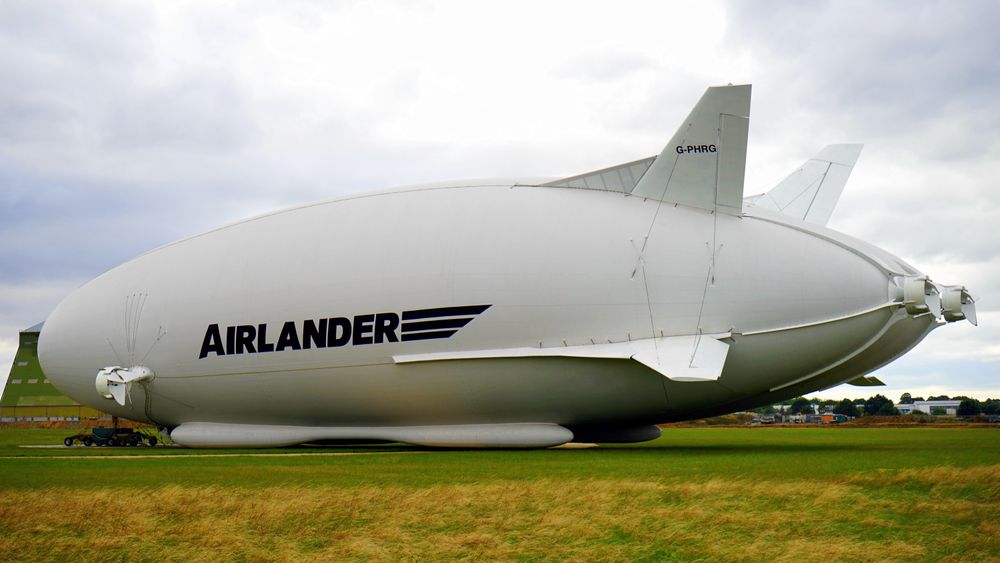
The Three Musketeers (2011), directed by Paul W. S. Anderson, adds airships to Alexandre Dumas's novel of 1844, built from schematics by Leonardo da Vinci. Because it is set in the seventeenth century, long before the age of steam, its inventions are usually called clockpunk, one of steampunk's related styles. Mortal Engines (2018), directed by Christian Rivers and written by Fran Walsh, Philippa Boyens and Peter Jackson from Philip Reeve's novel of 2001, is set more than a thousand years in the future, when cities are mounted on wheels and the great city of London hunts down smaller towns. Its airships, walkways and engine rooms are pure steampunk. It is rated 12A at the cinema and 12 for home viewing. Our guide to steampunk airships looks at the flying machines in these films.
Animated steampunk films
Animation has done as much as live action to spread the look, because an animator can draw any machine without having to build it. Hayao Miyazaki's Castle in the Sky (1986), rated PG, has air pirates, a military airship and a flying city. Katsuhiro Otomo's Steamboy (2004), also PG, follows a boy inventor from Manchester to London. Miyazaki's Howl's Moving Castle (2004), rated U, has a castle that walks across the country. From the West, Disney's Atlantis: The Lost Empire (2001), directed by Gary Trousdale and Kirk Wise, and Treasure Planet (2002), directed by John Musker and Ron Clements, borrow from Verne and Stevenson, and the French film April and the Extraordinary World (2015) imagines a Paris where science stood still. Our guide to animated steampunk films and series covers them all properly, with the television series too.
Victorian adventure and mystery films with a steampunk look
Some films are not steampunk in their story, but their look, their gadgets or their inventors have made them favourites with steampunks.
Sherlock Holmes
Sherlock Holmes (2009), directed by Guy Ritchie, stars Robert Downey Jr. as Holmes and Jude Law as Dr Watson. It is set in London in 1890, where Holmes and Watson investigate Lord Blackwood, who seems to have risen from the dead. Rachel McAdams plays Irene Adler and Mark Strong the villain. It is rated 12A at the cinema and 12 for home viewing. The sequel, Sherlock Holmes: A Game of Shadows (2011), also directed by Ritchie, sends Holmes and Watson across Europe after Professor Moriarty.
Magicians and an inventor
The Prestige (2006), directed by Christopher Nolan, who wrote it with his brother Jonathan from Christopher Priest's novel of 1995, is set in Victorian London. Hugh Jackman and Christian Bale play rival stage magicians, each trying to create the better illusion of a man moved instantly from one place to another, and David Bowie plays the inventor Nikola Tesla. It is rated 12A at the cinema and 12 for home viewing.
Monster hunting
Van Helsing (2004), written and directed by Stephen Sommers, is a tribute to the Universal horror films of the 1930s and 1940s. Hugh Jackman plays the monster hunter, who fights Dracula, Frankenstein's monster, Mr Hyde and werewolves with the help of Friar Carl, a weapons inventor. It belongs to the gothic side of the style, where steampunk shades into horror and the Victorian Gothic. It is rated 12A at the cinema and 12 for home viewing.
Television series
The Wild Wild West
The Wild Wild West, an American series that ran on the CBS network from September 1965 to April 1969, is the great ancestor of steampunk on screen. Created by Michael Garrison and set during the presidency of Ulysses S. Grant (1869 to 1877), it follows two Secret Service agents, James West, played by Robert Conrad, and Artemus Gordon, played by Ross Martin, a brilliant inventor of gadgets and a master of disguise. They travel in their own train, the Wanderer, which carries everything from a stable car to a laboratory, and they face villains with absurd plans to take over the world. Its mix of Victorian setting and Verne-like technology has led several steampunk websites to call it a pioneering influence.
Westerns, clockwork and detectives
The Adventures of Brisco County, Jr., created by Jeffrey Boam and Carlton Cuse, ran for 27 episodes on the Fox network from 1993 to 1994. Bruce Campbell plays a Harvard-educated lawyer turned bounty hunter in the American West of 1893, in what is often called a weird western, a western with strange science in it. In Britain, the Doctor Who episode The Girl in the Fireplace, written by Steven Moffat and first shown on BBC One on 6 May 2006, has the Doctor saving Madame de Pompadour from clockwork androids in eighteenth-century France. The androids wear carnival masks, and they have been praised as some of the most memorable villains of the modern series.
Murdoch Mysteries, a Canadian drama first shown in January 2008, based on Maureen Jennings's novels, follows Detective William Murdoch in Toronto from 1890. In some episodes he improvises a crude early version of an invention that only came much later, which has been described as bringing steampunk into the series.
Victorian London, dark and strange
Penny Dreadful, created by John Logan for Showtime and Sky and shown from 2014 to 2016, is a horror series that begins in London in 1891 and draws on characters from Victorian Gothic fiction, among them Dorian Gray, Victor Frankenstein and his creature, and Dracula. It is gothic rather than steampunk, but it is often watched by the same people. The Nevers, created for HBO and first shown in April 2021, is set in Victorian London and follows a group, mostly women, called the Touched, who suddenly gain unusual abilities. One of them, Penance Adair, can see electrical energy and is a gifted inventor.
Films for a first evening
If you have never watched a steampunk film, these give a good idea of the range. The rating after each is the BBFC's, from its own website.
- Hugo (2011), Martin Scorsese. U. A railway station full of clocks, an automaton, and the history of early cinema. A good choice for all the family.
- Chitty Chitty Bang Bang (1968), Ken Hughes. U. An inventor, his flying car and Rowland Emett's machines. A musical, light and funny.
- Journey to the Center of the Earth (1959), Henry Levin. U. A Victorian professor and his expedition underground, starting in Edinburgh.
- Castle in the Sky (1986), Hayao Miyazaki. PG. The animated film that has nearly the whole look: airships, pirates, a mining town and a floating city.
- Wild Wild West (1999), Barry Sonnenfeld. 12. Gadgets, trains and a mechanical spider, played for laughs.
- Mortal Engines (2018), Christian Rivers. 12A at the cinema, 12 for home viewing. London on wheels, and some of the best steampunk design of recent years.
- Sherlock Holmes (2009), Guy Ritchie. 12A at the cinema, 12 for home viewing. Holmes and Watson in London in 1890.
What the ratings mean
The BBFC says a U film is suitable for audiences of all ages, though not every U film is aimed at children. A PG film is suitable for general viewing, and should not generally unsettle a child of about eight, though some scenes may be unsuitable for more sensitive children. A 12A at the cinema or a 12 at home means the film is not generally suitable for children under 12. No one younger than 12 may see a 12A film at the cinema unless an adult goes with them, and no one younger than 12 may rent or buy a 12-rated video. The BBFC's site also gives short notes on what each film contains, which are worth reading before a family evening.
Watching for ideas
Watching steampunk films with a notebook is one of the best ways to plan a costume or a room. Look at how the costume designers combine a plain Victorian base with a few strong pieces, and how the set designers age their metal. Our guide to steampunk fashion shows how to build an outfit, and our guides to steampunk books and steampunk games carry on where the films leave off.