Steampunk feels old because it borrows from the nineteenth century, but the word itself is younger than many of the people who wear the style. This guide tells the steampunk origin story in order: the Victorian era and its machines, the writers who imagined what those machines might become, the airships that seemed to make the dream real, the letter that gave the style its name, and the way it grew from a handful of novels into clothes, gatherings and a worldwide following.
The Victorian age and its machines
Queen Victoria reigned from 1837 to 1901, and her reign saw Britain change faster than in any century before it. Steampunk is built on the machines of that age, so it is worth knowing what they were.
Railways
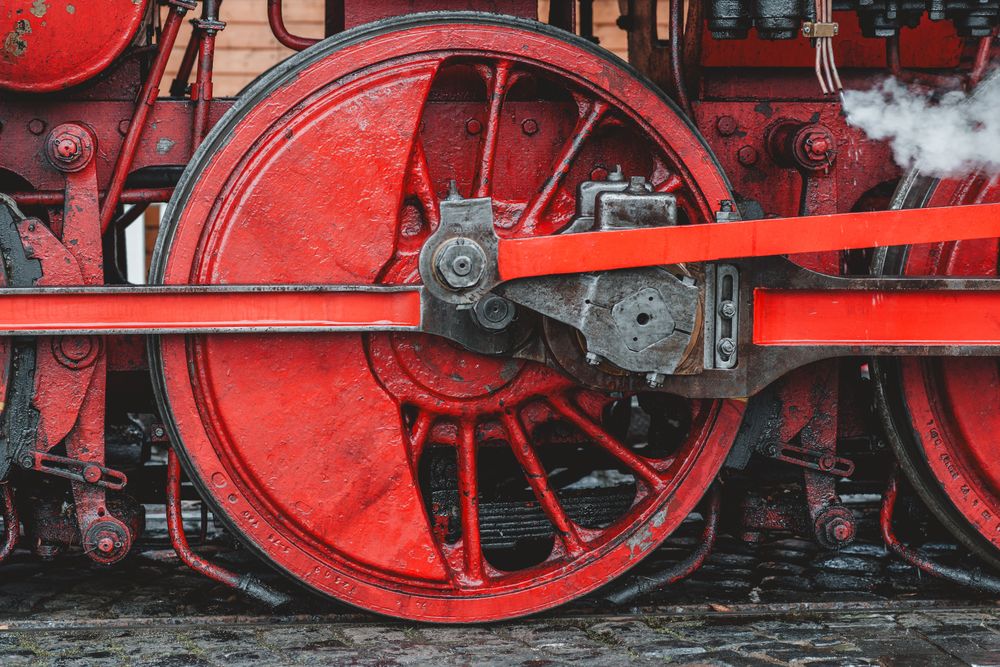
Eight years before Victoria came to the throne, a locomotive called Rocket, designed by Robert Stephenson and built in Newcastle upon Tyne, won the Rainhill trials of 1829. The trials were held to choose the engines for the Liverpool and Manchester Railway, which opened in 1830. Rocket was the only locomotive to complete them. Within a few decades railways ran across the country, and the steam locomotive, with its boiler, pistons and great driving wheels, became the most familiar machine in Britain. Rocket itself survives and is cared for by the Science Museum Group.
The Great Exhibition
In 1851 Britain put its machines on show. The Great Exhibition of the Works of Industry of All Nations opened in Hyde Park on 1 May and closed on 11 October. It was housed in the Crystal Palace, a building of iron and glass designed by Joseph Paxton, and the V&A, whose collections began with objects bought from it, records more than six million visitors. Machinery was one of its four main sections. The idea of a great hall full of gleaming engines, instruments and inventions is still one of the strongest images in steampunk.
The thinking machines
The Victorian machine that matters most to steampunk never ran in its own lifetime. Charles Babbage announced his plan for a mechanical calculating machine, the Difference Engine, in 1822, and in 1834 he conceived a more ambitious one, the Analytical Engine, which would have been steam-powered and about the size of a small locomotive. In 1843 Ada Lovelace published her notes on it, including a method for the machine to calculate a series of numbers, often called the first published computer program. Neither engine was finished. The Science Museum in London built Babbage's later design, Difference Engine No. 2, completing the main part in 1991 for the 200th anniversary of his birth and adding its printer in 2002. It works. A steam-driven computer is one of the central ideas of steampunk, and it has its roots in a real Victorian plan.
Electric light
By the end of the century even the light was changing. Joseph Swan, working on Tyneside, developed an incandescent electric lamp independently of Thomas Edison in America and at about the same time. When the Savoy Theatre opened in London in 1881, it was described as the first public building in the world lit entirely by electricity, with about 1,200 of Swan's lamps. The bare glowing bulb that hangs in so many steampunk rooms is a Victorian invention.
It is worth remembering how all this felt at the time. Victorians were proud of their machines and sure that more wonders were coming, but they were also uneasy about smoke, noise, dangerous factories and the speed of change. Steampunk keeps both feelings. It loves the brass and the steam, and it often tells stories about what happens when invention runs ahead of good sense.
Jules Verne's balloons and submarines
If the Victorians built the machines, Jules Verne imagined what they might do next. Verne was born in France in 1828 and died in 1905, and with his publisher, Pierre-Jules Hetzel, he produced a long series of adventure novels known as the Voyages extraordinaires.
The first was Five Weeks in a Balloon (1863), in which Dr Samuel Fergusson and two companions cross Africa by hydrogen balloon, from Zanzibar in the east to Senegal in the west, using his own invention to rise and fall without losing gas. More journeys followed quickly: Journey to the Centre of the Earth in 1864 and From the Earth to the Moon in 1865.
The book that matters most to steampunk is Twenty Thousand Leagues Under the Seas (1870). Its submarine, the Nautilus, belongs to the mysterious Captain Nemo, and Verne describes it in detail: double-hulled, about seventy metres long, powered by electric batteries, and fitted out inside like a Victorian gentleman's house, with a library and a salon. Its mix of engineering and comfort is exactly the steampunk idea.
Verne kept returning to flight. In Robur the Conqueror (1886) a club of balloon enthusiasts insists that the future belongs to craft lighter than air, until the inventor Robur arrives in the Albatross, a flying machine held up by many spinning propellers. Around the World in Eighty Days, first published as a serial in 1872, added the image of the punctual English gentleman racing the clock by train and steamship. Between them, these books gave steampunk its balloons, its submarines and its sense of adventure.
What made Verne so useful to steampunk was his care with detail. He did not simply say that a machine existed; he explained how it was built, how it was powered and what it was like to live inside. His heroes are engineers, scientists and explorers who solve problems with knowledge and nerve. That combination of practical invention and romantic adventure is still the heart of the style.
H. G. Wells and the time machine
Where Verne was an optimist about machines, the English writer H. G. Wells was often a worried one. Wells was born in Bromley, Kent, in 1866 and died in London in 1946, and in a few years at the end of the century he wrote a run of short novels that still shape science fiction.
The first was The Time Machine (1895). A Victorian inventor, known only as the Time Traveller, builds a machine that carries him forward to the year 802,701, where humanity has split into the gentle Eloi and the underground Morlocks. Wells describes the machine as made partly of nickel, partly of ivory and partly of rock crystal, with a brass rail. It is the original steampunk vehicle: a handmade device of polished materials, built by a gentleman in his own laboratory.
The others followed fast: The Island of Doctor Moreau (1896), The Invisible Man (1897), The War of the Worlds (1898), in which Martians land near Woking in Surrey and attack England in huge fighting machines on tripod legs, and The First Men in the Moon (1901). Later, in The War in the Air, serialised in 1907 and published as a book in 1908, Wells imagined fleets of German airships bombing New York. The Morlocks themselves came back nearly a century later, when K. W. Jeter wrote them into Victorian London in Morlock Night (1979), one of the books that would give steampunk its name. Our guide to steampunk books follows the writers who came after.
Wells gave steampunk something Verne did not: a sense of unease. His machines are wonderful, but they show the people using them things they would rather not know, about the future, about power and about themselves. Much of the darker steampunk, with its smoky cities and dangerous inventions, comes from Wells rather than Verne.
The great airships, and why they still fascinate
The airship is the single most recognisable image in steampunk, and it has a real history.
The first powered airship flew in France on 24 September 1852. Henri Giffard rose from the Hippodrome in Paris in a hydrogen craft driven by a single-cylinder steam engine he had built himself, and landed at Trappes, about 17 miles away. According to the Science Museum Group, the flight counted as a success, but the engine was not strong enough to turn and fly back against the wind. It was, quite literally, a steam-powered airship.
The rigid airship, with a metal frame holding its gas bags, followed in Germany. The first Zeppelin, LZ 1, flew from a floating hangar on Lake Constance on 2 July 1900. Over the next three decades airships grew into the largest flying machines of their day.
Britain built its own. The R101 was built at the Royal Airship Works at Cardington in Bedfordshire and first flew on 14 October 1929. On 5 October 1930, on its first overseas voyage, bound for Karachi in India, it crashed near Beauvais in France. Of the 54 people on board, 48 died. The disaster effectively ended Britain's airship programme, and its rival, the R100, was broken up and sold for scrap in 1931. Seven years later, on 6 May 1937, the German Hindenburg caught fire while landing at Lakehurst, New Jersey, and 36 people died. Newsreel cameras filmed the landing, and the disaster ended the age of the passenger airship.
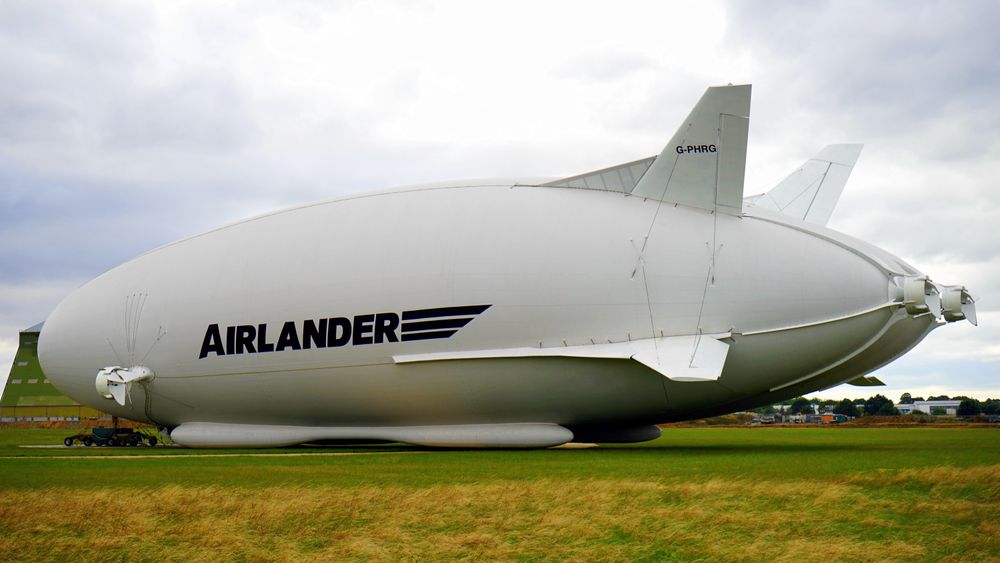
Why do they still fascinate? Partly because they were so large and so graceful, and partly because they failed. The airship is a technology that really existed, carried passengers in comfort across oceans and then vanished. That makes it the perfect symbol for steampunk's future that never came.
The airship also gave steampunk one of its favourite characters. The airship captain or aviator, in a leather coat, flying goggles and gloves, is one of the most popular outfits at any gathering, and sky pirates, airship crews and floating cities appear again and again in steampunk books, films and games. Our guides to the real airships and steampunk airships tell both sides of the story.
The letter to Locus magazine in April 1987
For most of the twentieth century there were stories with a Victorian flavour and strange machines, but no single name for them. Michael Moorcock's The Warlord of the Air (1971), with its airships in an alternate early twentieth century, is one that later readers count among the forerunners.
In the 1980s three friends who had met as students in California were writing novels set in a Victorian past full of impossible inventions: K. W. Jeter, Tim Powers and James Blaylock. Jeter's Morlock Night had appeared in 1979, Powers's The Anubis Gates in 1983 and Blaylock's Homunculus in 1986. In a letter printed in the April 1987 issue of Locus, the magazine of the science fiction and fantasy world, Jeter suggested that Victorian fantasies like these might become the next big thing if they had a collective name, and offered one: steampunk.
The word was a joke. A few years earlier, a darker kind of computer-age science fiction had become known as cyberpunk, after a short story of that name by Bruce Bethke, published in 1983. Jeter swapped the computers for steam. The Encyclopedia of Science Fiction thinks it almost certain that he invented the word himself, and that he meant it as a label for what he, Powers and Blaylock were already doing. The same year saw his own Infernal Devices, another Victorian fantasy of clockwork and strange machines.
What the three friends' books had in common was London. Each is set in a nineteenth-century city that feels like the London of Charles Dickens, crowded, foggy and full of odd characters, and each lets something impossible loose in it: time travellers, magic, monsters or machines that should not exist. The Encyclopedia of Science Fiction describes the city in Blaylock's book as almost a character in its own right. That idea, a real Victorian place with something invented running through it, is still the simplest description of a steampunk story.
The Difference Engine and the 1990s
The book that took the word beyond a small circle came in 1990. The Difference Engine, by William Gibson and Bruce Sterling, two of the writers best known for cyberpunk, imagines a Victorian Britain in which Babbage's machines were built and changed everything. The main story is set in London in 1855, in an Industrial Revolution very different from the real one, and Ada Lovelace appears as a character. It was shortlisted for the Nebula Award, one of the main prizes in science fiction.
Through the 1990s the list of steampunk books grew slowly. Paul Di Filippo's The Steampunk Trilogy (1995) may be the first book to carry the word in its title. At the end of the decade, Alan Moore and Kevin O'Neill began The League of Extraordinary Gentlemen (1999), a comic that gathers heroes from Victorian novels into a team serving the British Empire in 1898. Its film version followed in 2003 and brought the look to a much larger audience.
Animation had been carrying the look in parallel. Hayao Miyazaki's Castle in the Sky, made in Japan in 1986, a year before the word existed, is full of airships, sky pirates and a floating city, and it already has the whole look: the brass, the propellers and the workshops. The animated films that followed in the 2000s, among them Katsuhiro Otomo's Steamboy (2004), set in an alternate Victorian Britain, showed how well the style suited the screen.
From books to costumes, conventions and the internet
In the 2000s steampunk moved off the page. The Encyclopedia of Science Fiction finds little sign of wide use of the word before about 2006, then a rapid change. By around 2007 it also meant a style of retro clothing with goggles and clockwork accessories. By 2008 there were conventions devoted to it in the United States, and the first big British gatherings followed soon after. By the early 2010s it was being described as a way of life, in the way that punk and goth are.
The internet made that growth possible. Makers could share photographs of a converted computer keyboard, a brass lamp or a pair of hand-built goggles, and others could copy and improve on them. Clothes and props were made at home from old watches, plumbing fittings and leather offcuts, which suited a style that values things that look handmade. Films and games spread the look again; the Encyclopedia names Martin Scorsese's Hugo (2011) as one example of how far the influence reached. Philip Reeve's novel Mortal Engines (2001), in which London has become a city on wheels, was made into a film in 2018, the same year the Polish game Frostpunk put players in charge of a steam-heated city in a frozen alternate 1886.
Museums took notice too. From 13 October 2009 to 21 February 2010, the Museum of the History of Science in Oxford held what it calls the world's first museum exhibition of steampunk art. Curated by the American artist and designer Art Donovan, it showed work by 18 artists from around the world beside the museum's own historic scientific instruments, and drew more than 70,000 visitors.
Steampunk in Britain today
Steampunk has a special place in Britain, because so much of what it borrows is still here. The steampunk Victorian era is, after all, a British one, and you can see its real machines and buildings without leaving the country.
Rocket is kept by the National Railway Museum in York, part of the Science Museum Group. Babbage's Difference Engine No. 2, built from his own drawings, belongs to the Science Museum in London. The Great Exhibition's legacy lives on in the V&A, which grew from it. The two enormous airship sheds at Cardington, where the R101 was built, still stand in Bedfordshire and are Grade II* listed buildings. In London, St Pancras station still pairs its great single-span iron train shed, opened in 1868, with George Gilbert Scott's Gothic red-brick hotel in front of it, the steampunk mix of engineering and ornament in one building. Victorian railway stations, iron bridges, pumping stations and Gothic Revival town halls supply the backdrop for photographs and gatherings across the country. Our guide to Victorian London walks through the city that so many steampunk stories are set in.
Beyond the famous places, much of the steampunk world survives close to home. Preserved steam railways run old locomotives on restored lines, Victorian pumping stations keep their great beam engines, and town museums hold clocks, instruments and tools from the period. For anyone interested in the style, seeing a real steam engine at work, with its pistons moving and its brass polished, is one of the best ways to understand what steampunk is borrowing and why it loves the look so much.
Above all, steampunk in Britain is something people do together. Steampunks meet at weekends in towns with Victorian streets and old railway buildings, dressed as the explorers, inventors and aviators of a century that never quite happened. See our guide to UK events for where they gather. For what the style is and how to start, begin with our guide to what steampunk is, and for how it differs from the history it borrows, see steampunk, gothic and Victorian.
From a steam engine at Rainhill in 1829 to a letter in Locus in 1987, steampunk has always been a conversation between the real nineteenth century and the one people wish they could visit. That conversation is still going on.