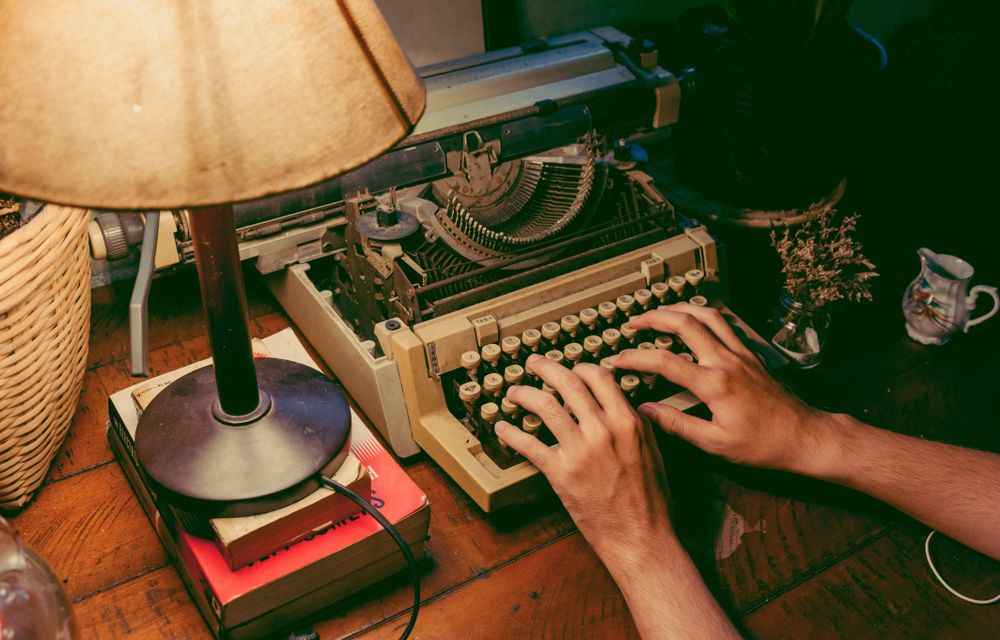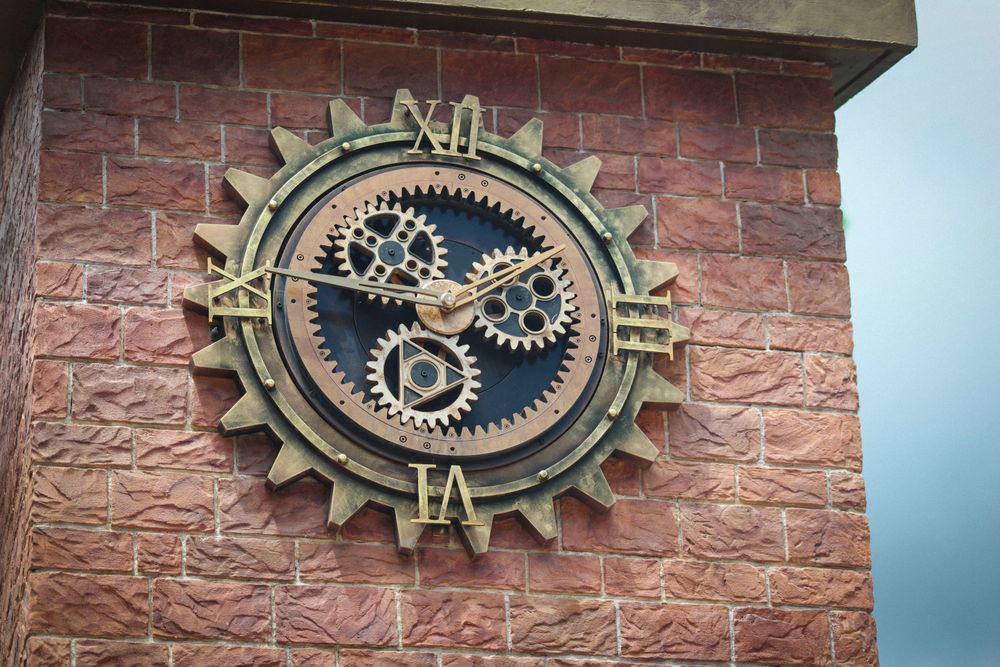
Steampunk art is the picture of a world that never existed: Victorian streets under airships, inventors in brass goggles, clockwork animals and engines with every gear on show. Steampunk artwork turns up as oil paintings, digital paintings, book covers, comics, sculptures built from old watch parts, and whole rooms dressed as machines. Search for steampunk images and you will find thousands.
This guide opens our section on art and making. It explains what steampunk art looks like, the Victorian engravings and technical drawings behind it, painting and digital art, sculpture and assemblage, illustration in books and comics, where to see the real things for yourself, and what to know before buying or hanging steampunk wall art. It names artists only for what they are on record as having made, and it names nothing to buy.
What steampunk art looks like
The subjects
Most steampunk art shows one of three things. The first is the machine: an airship, a walking engine, a submarine, a locomotive or a strange contraption of pipes and dials, drawn with care so that you can see how it might work. The second is the person: an explorer, an inventor, an aviator or a lady adventurer, dressed in Victorian clothes with goggles, gauntlets and tools. The third is the place: a city of chimneys and iron bridges, a workshop at night, a laboratory full of glass and brass. The best pictures combine all three and tell a story.
The colours and the light
The colours are the colours of the style itself: brass, copper, leather, dark wood, soot and smoke, with a little deep red, bottle green or navy. Our guide to the steampunk aesthetic explains why those materials matter. The light is usually warm and low, from a lamp, a furnace or a sunset through smoke, and it catches on polished metal. Many steampunk pictures look as if they were painted by gaslight, because the century the style imagines was lit by flame.
A picture with a cog stuck on
Not every picture with a gear in it is steampunk art. A modern scene with a few cogs scattered across it, or a fantasy warrior with a pair of goggles added, borrows the decoration without the idea. Good steampunk art starts from a question: what if the Victorians had built this? The machine is drawn as if someone had to make it with the tools of the 1800s, from riveted plates, cast iron, wood and brass, and it is powered by steam, springs or clockwork. That is what separates it from science fiction set in space, and from simple fantasy.
The Victorian art behind it: engravings and technical drawings
Wood engraving
Much of what steampunk art looks like comes from the way the Victorians printed pictures. Wood engraving is a way of making a print in which the artist cuts a picture into a block of wood, and the ink sits on the parts left uncut. The English engraver Thomas Bewick developed the method at the end of the eighteenth century. He cut into the hard end grain of the wood with a fine tool called a burin, instead of cutting the softer side grain with a knife, and that let him make far finer lines. Because the blocks were made the same height as printers' type, a picture could be set on the page alongside the words and printed thousands of times.
That made the illustrated magazine possible. The Illustrated London News, founded by Herbert Ingram, a printer and bookseller from Nottingham, published its first issue on Saturday 14 May 1842, and that first issue carried 32 wood engravings. Punch printed its cartoons the same way. Artists in London worked up rough sketches sent in from the scene, and the close lines, cross-hatching and dramatic contrasts of black and white became the look of news in Victorian Britain. From 1860 photographs could be transferred onto the wood to be engraved, and improvements to the halftone process in the early 1900s finally made the craft unnecessary for reproducing pictures.
The pictures in Verne's books
Jules Verne's novels, the source of so many steampunk machines, were published by Pierre-Jules Hetzel with illustrations drawn by staff artists and cut as wood engravings. The French painter and illustrator Édouard Riou illustrated six of Verne's novels, among them Five Weeks in a Balloon and Journey to the Centre of the Earth. For Twenty Thousand Leagues Under the Seas, Riou drew the pictures for the first eleven chapters and Alphonse de Neuville drew the rest. The deluxe editions came in gilded and coloured bindings, with richly decorated covers, made for the Christmas and New Year market. Those engravings of balloons, submarines and strange machines are still the pictures many people have in mind when they think of Verne. Our guide to where steampunk came from tells the story of the books themselves.
Technical drawings and blueprints
The other parent of steampunk art is the engineer's drawing. Victorian engineers drew their machines precisely, in plan, from the side and in section, so that someone else could build them. In 1822 William Farish published a paper, On Isometrical Perspective, which first set out formally a way of drawing an object so that its three directions are shown equally, the method still used for many technical drawings. In 1842 the scientist Sir John Herschel introduced the process that gave us the blueprint: copies of drawings with white lines on a blue ground, widely used for more than a century.
The finest example of what a drawing could hold is Charles Babbage's. He designed his Difference Engine No. 2, a calculating machine, between 1847 and 1849, and it was not built in his lifetime. The Science Museum completed the calculating section in 1991, for the two hundredth anniversary of his birth, and added the printing mechanism in 2002, the first working Babbage engine built to his original drawings. That archive holds almost all of the surviving technical material on his calculating machines, including drawings of the engine, and thousands of images from it can be seen on the museum's collection website. Steampunk art borrows the look of those sheets: the fine lines, the measurements, the notes in the margin and the cut-away view that shows the workings inside. Our guide to how to draw steampunk shows how to use the same methods yourself.
Painting and digital art
Painters of the machine age
Victorian painters were already fascinated by machines. J. M. W. Turner's Rain, Steam and Speed, The Great Western Railway, painted and first shown in 1844, has a steam train rushing towards the viewer through rain across the Maidenhead Railway Bridge, which Isambard Kingdom Brunel designed and which was finished in 1838. A hare runs along the track ahead of it, though it is now very hard to see. The painting is in the National Gallery in London. Its blur of steam, light and speed is a long way from a neat technical drawing, and steampunk painters use both.
An older painting shows how much light can do. Joseph Wright of Derby's An Experiment on a Bird in the Air Pump, from 1768, shows a lecturer at night drawing the air out of a glass vessel that holds a white cockatoo, while a single candle lights the faces of the family watching. It is in the National Gallery's collection. That glow of one light on faces and glass, with darkness all round, is exactly the mood of a steampunk laboratory.
Steampunk painting now
Steampunk painters work in oils, acrylics, watercolour, ink and coloured pencil, and many mix them. A favourite approach is to paint as if the picture were itself old: warm browns and golds, a cracked or aged surface, a frame that looks like part of a machine. Portraits of invented characters are common, as are cityscapes and imagined machines shown as if in a catalogue, with a label underneath.
Digital art
Most of the steampunk images people find online today were made on a computer. A digital painter works with a drawing tablet and a pen, painting in layers on screen, and the results can look like oil paint, ink or anything in between. Much of the best is concept art, the pictures drawn while films, games and animated series are being designed, and book covers. Pictures produced by computer programs from typed descriptions can get the machines wrong, with gears that cannot turn and pipes that lead nowhere.
What makes good steampunk wall art
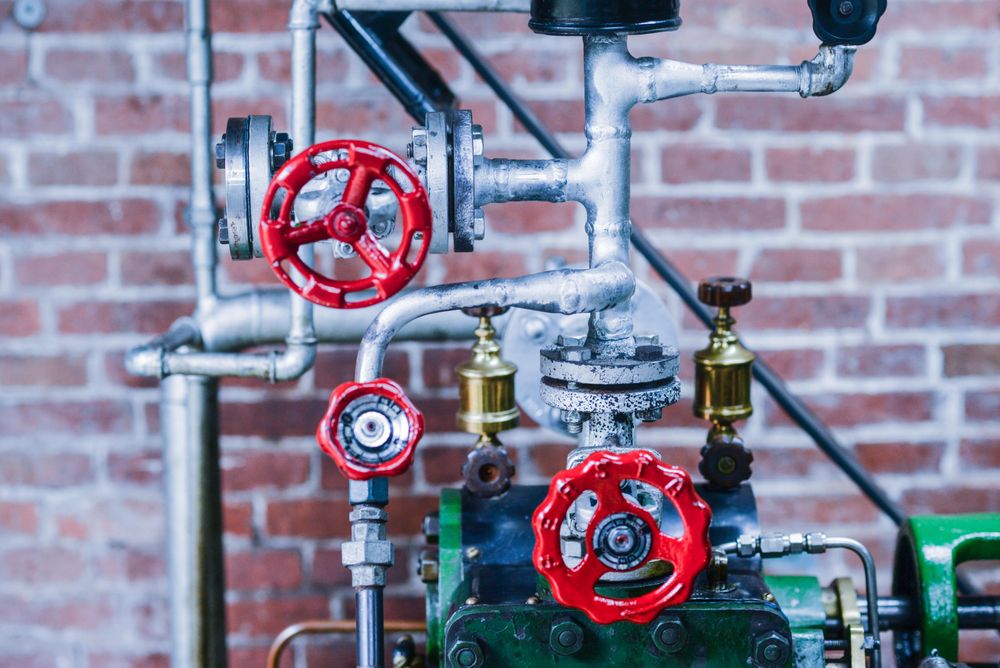
Steampunk wall art for a room should work at a distance as well as close up. A picture with a strong shape, such as the outline of an airship, a great wheel or a figure against the light, reads from across a room, and the detail rewards anyone who comes nearer. Warm colours sit well with the brass, leather and dark wood of a steampunk room, and a frame in dark wood or old gold suits the period. Old maps and engravings work as well as paintings. Our guide to decorating a room in steampunk style has more on hanging pictures with the rest of a room.
Sculpture and assemblage
Assemblage
Assemblage is art made by fixing real objects together, usually onto a base or into a frame, so that they stand out from it in three dimensions. It is related to collage, which does the same with flat materials. Artists had used found objects for decades before the word took this meaning in the early 1950s, when the French artist Jean Dubuffet called a series of his collages of butterfly wings assemblages d'empreintes. Pablo Picasso's cubist constructions of about 1912 to 1914 are early examples.
Much steampunk sculpture is assemblage. Old watch movements, keys, valves, light bulbs, typewriter keys, door furniture and scrap brass are fitted together into insects, birds, figures, lamps and imaginary instruments. Our guide to steampunk robots, animals and insects explains how to make a small creature this way.
A warning for anyone collecting parts: never take apart a watch or clock with luminous numbers or hands made before the 1970s. The glowing paint may contain radium, which has a half-life of about 1,600 years. An old dial left intact is usually little risk, but taking one apart can free flakes of paint that can be breathed in or swallowed.
Rowland Emett
Britain's great maker of steampunk-like machines worked long before the word existed. Rowland Emett, born in London in 1906, drew cartoons for Punch from 1939 into the 1950s, many of them of strange, wobbling little trains. For the Festival of Britain in 1951 his drawings became a working railway, the Far Tottering and Oyster Creek Branch Railway, one of the festival's most popular attractions. He went on to build kinetic sculptures, machines that move, and he designed the inventions of Caractacus Potts for the film Chitty Chitty Bang Bang (1968). He was appointed OBE in 1978 and died in 1990. His machines, with their gentle humour, are some of the most charming mechanical art ever made.
A station built as a submarine
One of the largest pieces of steampunk art is a railway station. In October 1994, to mark two hundred years of the Conservatoire national des arts et métiers, a Paris institution of science and industry with a museum of its own, the platforms of line 11 at Arts et Métiers station on the Métro were redesigned by the Belgian comics artist François Schuiten. Instead of the usual tiles, the walls are covered in riveted copper plates, large cogs hang from the ceiling, and portholes along the platforms open onto small displays of objects from the museum's collections. The effect is of standing inside a submarine out of Jules Verne.
Illustration in books and comics
Albert Robida
The French illustrator, caricaturist and novelist Albert Robida (1848 to 1926) drew the future as a Victorian saw it. His books Le Vingtième Siècle (1883), La Guerre au vingtième siècle (1887) and La Vie électrique (1890) imagined inventions woven into everyday life, with all the changes they would bring, from mass tourism to pollution. One of his inventions, the téléphonoscope, was a flat screen that brought news, plays and lessons into the home at any hour. His crowded, busy drawings of the future, full of invention, are among the closest things the nineteenth century made to steampunk art.
W. Heath Robinson
The English cartoonist and illustrator William Heath Robinson (1872 to 1944) drew elaborate machines built to do simple jobs. They run on steam from kettles warmed by candles or spirit lamps, they are held together with pulleys and knotted string, and they are tended by solemn, balding men in spectacles. His name entered the English language: a Heath Robinson machine is an absurdly complicated contraption, and the Oxford English Dictionary's earliest example of the phrase dates from 1917. During the Second World War one of the machines built at Bletchley Park to help break German codes was named Heath Robinson after him.
Grandville
The French caricaturist J. J. Grandville, the working name of Jean Ignace Isidore Gérard (1803 to 1847), drew animals with human bodies, dressed in the clothes of the day, to make fun of Parisian life. His Un autre monde (1844), a book of strange transformations and imagined wonders, is often counted his masterpiece. His animals dressed as people are an ancestor of the steampunk animal in a waistcoat, and our guide to robots, animals and insects follows them further.
Comics
Comics took steampunk art furthest. The League of Extraordinary Gentlemen, written by Alan Moore and drawn by Kevin O'Neill, first published in 1999, gathers characters from Victorian novels, among them Captain Nemo and Allan Quatermain, into a team in 1898. Bryan Talbot's Grandville, first published in 2009, imagines a world in which France won the Napoleonic Wars, peopled mostly by animals, with steam-powered vehicles and automatons; Talbot has said it was inspired by the work of J. J. Grandville and Albert Robida. Girl Genius, by Phil and Kaja Foglio, began as a comic in 2001 and moved online in 2005. Kaja Foglio coined the phrase gaslamp fantasy for it, and it won the Hugo Award for best graphic story three times, in 2009, 2010 and 2011. In Belgium, François Schuiten and the writer Benoît Peeters have drawn Les Cités obscures, a series of imagined cities and their strange architecture, since 1983. Our guide to steampunk books covers the novels.
Seeing it for yourself: museums and shows
Museums of science and industry
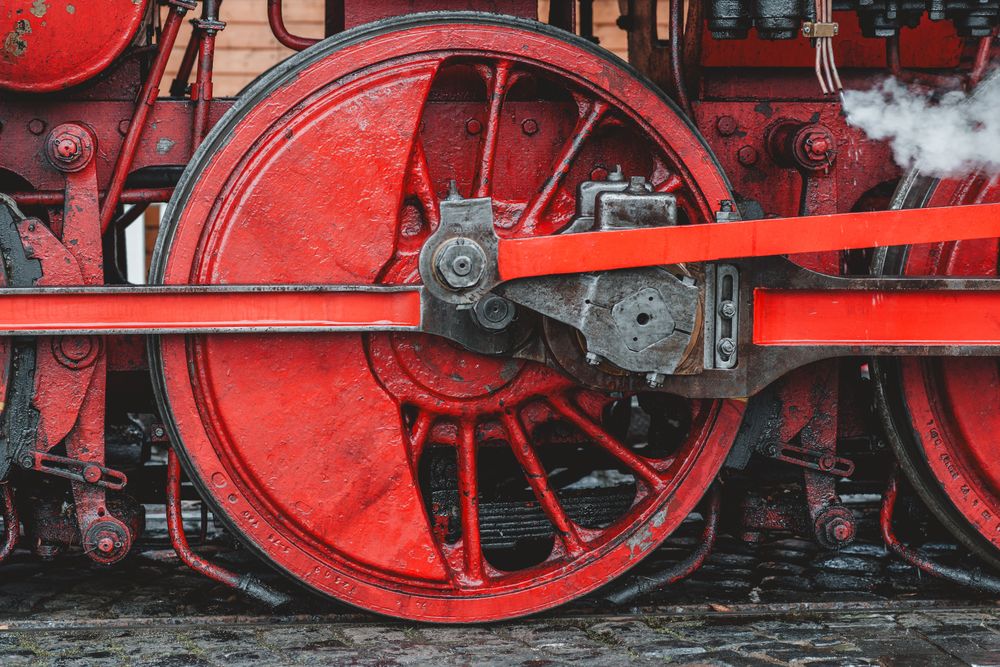
The best place to start is with the real machines that steampunk artists study. Museums of science, industry and transport keep engines, instruments, clocks and models in their permanent collections, and many show them working. The Power Hall at the Science and Industry Museum in Manchester, for example, is a free working gallery of engines from the nineteenth and early twentieth centuries, among them the Pender, a steam locomotive that carried holidaymakers on the Isle of Man in the 1870s, with one side cut away to show its workings. Take a sketchbook: drawing a real engine teaches more than any picture of one.
Prints, drawings and illustrators
Great museums hold far more prints and drawings than they can hang. At the V&A in London, prints and drawings can be seen in the Prints and Drawings Study Room by appointment: an individual visitor can ask to see up to five objects, found first in the museum's online collection, with at least two weeks' notice. The Heath Robinson Museum, in Pinner Memorial Park in north-west London, opened in October 2016 and holds nearly a thousand of his original artworks; its permanent exhibition follows his career from his student days in the 1890s to his wartime drawings.
Shows and gatherings
Exhibitions of steampunk art come and go, and their dates belong to the galleries and museums that hold them, so check their own websites. Steampunk gatherings often have makers and artists showing their work, and talking to the person who made a piece is one of the pleasures of going. Our guide to steampunk events in the UK covers where steampunks meet.
Collecting art and prints
Originals, prints and posters
An original is the one painting, drawing or sculpture the artist made. A print is one of many copies, and a good one, made carefully and in a numbered edition, is the usual way to own a picture by an artist you admire without buying the original. A poster is a cheaper copy made in large numbers. Before buying, ask whether it is an original or a copy, how it was printed, and how many were made.
Other people's pictures are their copyright
Every steampunk picture was made by someone, and in the UK copyright protects it automatically, with no need to register. Copyright covers original artistic works, including illustration and photography, and it lasts, for artistic work, until 70 years after the artist's death. Without permission from the copyright owner, nobody else may copy the work, hand out copies, show it in public, adapt it or put it on the internet. The Intellectual Property Office, the government office responsible for copyright, says that the vast majority of images on the internet are likely to be protected by copyright. So steampunk images found in a search are not free to copy, print, put on a T-shirt or use in your own work, however easy it is to save them.
Buying a picture does not buy its copyright. A sale or transfer of copyright needs a written, signed document, so owning a painting or a print gives you the object, not the right to make copies of it. If you would like to use a picture, ask the artist; many are glad to be asked and will say what they allow.
Old engravings
Victorian engravings from magazines and books are some of the most rewarding things for a steampunk collector, because they are the real source of the style. Most of their makers died long ago, so their copyright has usually run out. The Intellectual Property Office's view is that a faithful digital copy of an old work is unlikely to have a new copyright of its own, though a modern photograph or book can still have rights of its own in its layout and text, so check before copying anything from one.
Looking after a picture
Prints and drawings on paper fade, and the Institute of Conservation warns that light damage builds up over time and cannot be undone. Hang them out of direct sunlight, behind glass or acrylic that filters out ultraviolet light. Avoid outside walls, where condensation and mould can form behind a frame, and the space above a radiator, which dries the air and draws dirt. Ask the framer for a mount of museum or conservation board, and never mend a tear with sticky tape, which creeps into the paper and stains it; a paper conservator can advise on damage. For making your own steampunk pictures, see our guides to drawing steampunk and to steampunk wallpaper, backgrounds and fonts.