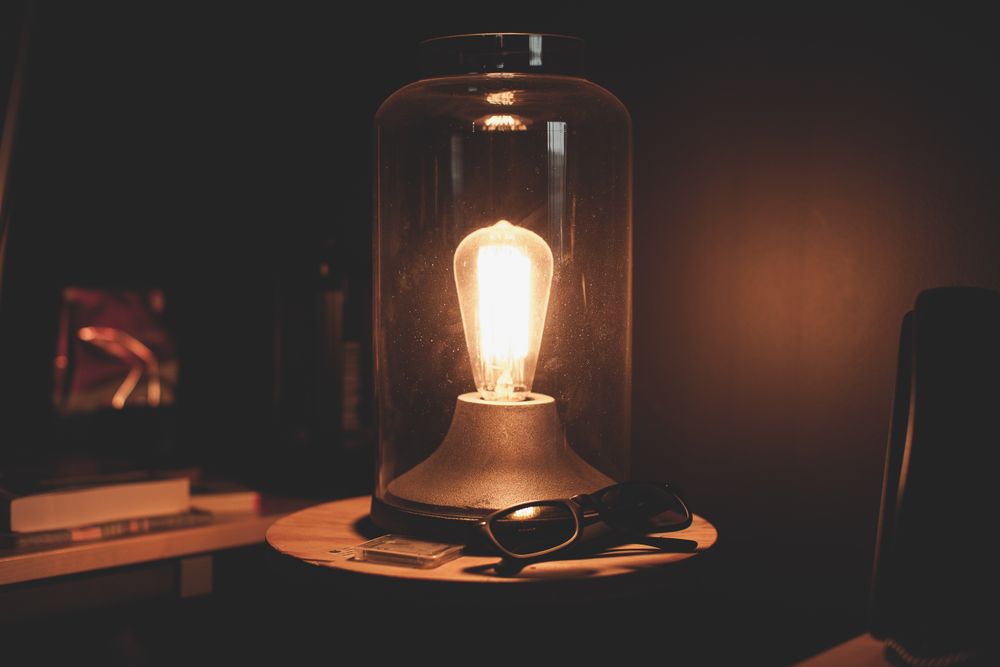
Steampunk lamps are where the style comes home. A steampunk lamp built from iron pipe and brass taps, with a bare filament bulb glowing on top, is often the first steampunk thing people make or buy for a room, and a single warm steampunk light can change the feel of a whole space. Steampunk lighting covers everything from a table lamp on a desk to steampunk ceiling lighting hung from pipes, a wall light on a valve-wheel bracket and a floor lamp on a tripod.
This guide opens our section on home and decor. It explains why light matters so much in a steampunk room, where the filament bulb came from, the pipe, cage and jar lamps the style is known for, ceiling lights, wall lights and floor lamps, how to choose bulbs by brightness and colour, how to stay safe with wiring, plugs and home-made lamps, and how to light a whole room. It names no lamps to buy.
Why light matters in a steampunk room
A room lit by flame
For most of the Victorian age, rooms were lit by flame: candles, oil lamps and then gas. Gas lighting came early. The engineer William Murdoch lit his own house in Redruth, in Cornwall, with gas in 1792. In 1804 Frederick Winsor demonstrated gas lighting on the stage of the Lyceum Theatre in London, the Gas Light and Coke Company was founded in 1810 after a bill passed Parliament, and on 31 December 1813 Westminster Bridge was lit by gas. Gas light was bright, and indoors its heat could be hard to bear; in theatres, actors and audiences complained of the escaping gas. The gas mantle was invented by the Austrian chemist Carl Auer von Welsbach in 1891.
Victorian interiors, with their dark wood, heavy fabrics and patterned walls, were lived in by the light of flames. Our guide to Victorian architecture and interiors describes the rooms themselves.
What warm light does for the look
The materials of steampunk are brass, copper, leather and dark wood, and every one of them looks its best under warm, low light, which picks out the shine on metal and deepens the brown of wood and leather. A bright, cold light from a single ceiling fitting does the opposite: it flattens everything and makes brass look yellow and cheap. Pools of light, with shadow between them, make a room feel like a workshop or a study at night. Our guide to the steampunk aesthetic explains why those materials matter so much.
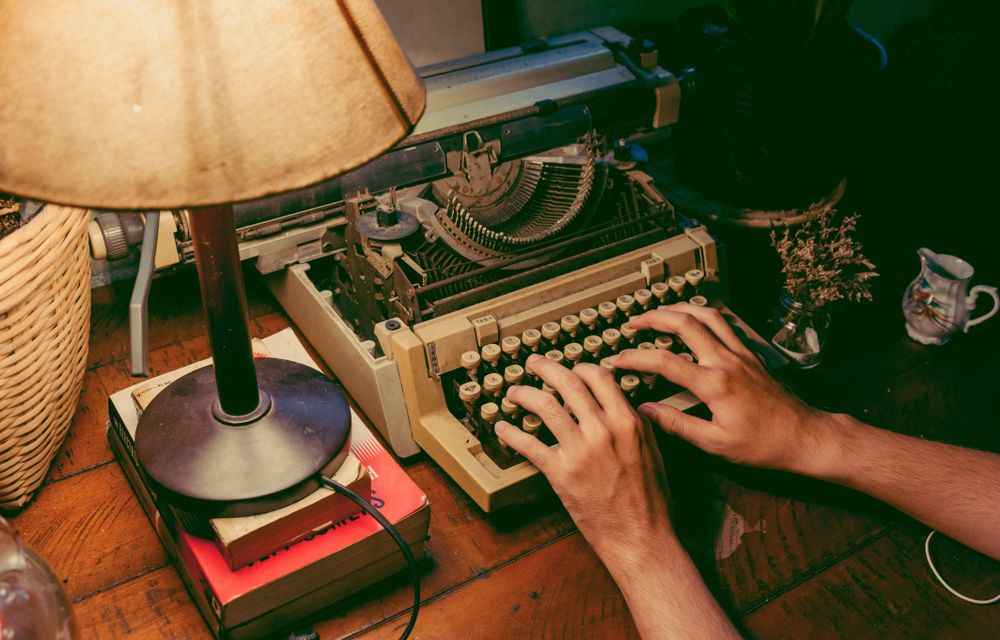
Light has a colour, measured in kelvin, and the lower the number, the warmer and more orange the light. A candle flame is about 1,850 kelvin, and an ordinary old-fashioned bulb about 2,400. Daylight is far higher, at 5,000 to 6,500 kelvin. Oddly, the light we call warm is the light with the lower number. A steampunk room wants light near the candle end of that scale.
The Edison bulb and the filament look
Swan and Edison
The electric bulb with a glowing thread inside it was invented on both sides of the Atlantic at about the same time. Joseph Swan first showed his lamp to the Newcastle upon Tyne Chemical Society on 18 December 1878, when it failed after a few minutes; he showed it working on 17 January 1879, and to an audience of more than seven hundred on 3 February 1879. In America, Thomas Edison's first successful test, on 22 October 1879, lasted thirteen and a half hours, and his team later found that a filament of carbonised Japanese bamboo could last more than 1,200 hours. In 1883 Swan's company merged with Edison's to form the Edison and Swan United Electric Light Company, known as Ediswan. Our guide to where steampunk came from tells how the Savoy Theatre was lit with Swan's lamps in 1881.
The first lamps in a house
One of the first houses with electric light was Cragside in Northumberland, the home of the engineer William Armstrong, which the National Trust describes as the first place in the world lit by hydroelectricity. Carbon arc lamps were put into its gallery in 1878, and in 1880 its library had what the Trust calls the first domestic installation of Swan's bulbs, though Swan's own house in Gateshead had them first. The bulbs sat on top of cloisonné vases adapted as lamps, and those vases still stand on the library bookcases: a Victorian ornament turned into a lamp, which is exactly what many steampunk lamps are today.
Why the old bulbs went
Filaments of tungsten arrived in 1904, and for the next century the incandescent bulb, with its wire heated until it glowed, lit almost every home. It was very wasteful: less than 5 per cent of the power used by a typical tungsten bulb comes out as visible light, and most of the rest leaves as heat. In Britain, most higher-energy halogen bulbs began to be phased out in 2018, the sale of most halogen bulbs for general household use was banned from September 2021, and fluorescent tubes followed from September 2023. The government says LED bulbs use up to 80 per cent less power and last five times longer than traditional halogen bulbs.
The filament look today
What steampunk loves about the old bulb is that its workings are on show: a clear glass globe with the glowing filament inside. Most bulbs made in that style today are LED filament bulbs, first produced in 2008. Each filament is a string of tiny LEDs on a narrow, see-through strip, coated so that the light comes out near-white, typically at about 2,700 kelvin, and arranged to look like the wire in an old bulb. They come in the old shapes, from round globes to teardrops and long tubes, with clear or amber-tinted glass, and they fit ordinary lamp holders.
Pipe lamps, cage lamps and jar lamps
Pipe lamps
A pipe lamp is made from lengths of iron, steel or copper pipe and their fittings, the elbows, tees and joints a plumber uses, screwed together into a stand or an arm with a bulb at the top. Red or brass valve wheels and small gauges are added for show, and some lamps use a tap-shaped switch. The base is often a block of dark wood. Pipe lamps look heavy and industrial, like a corner of an engine room, and they are the lamp most people picture when they hear the words steampunk lamp.
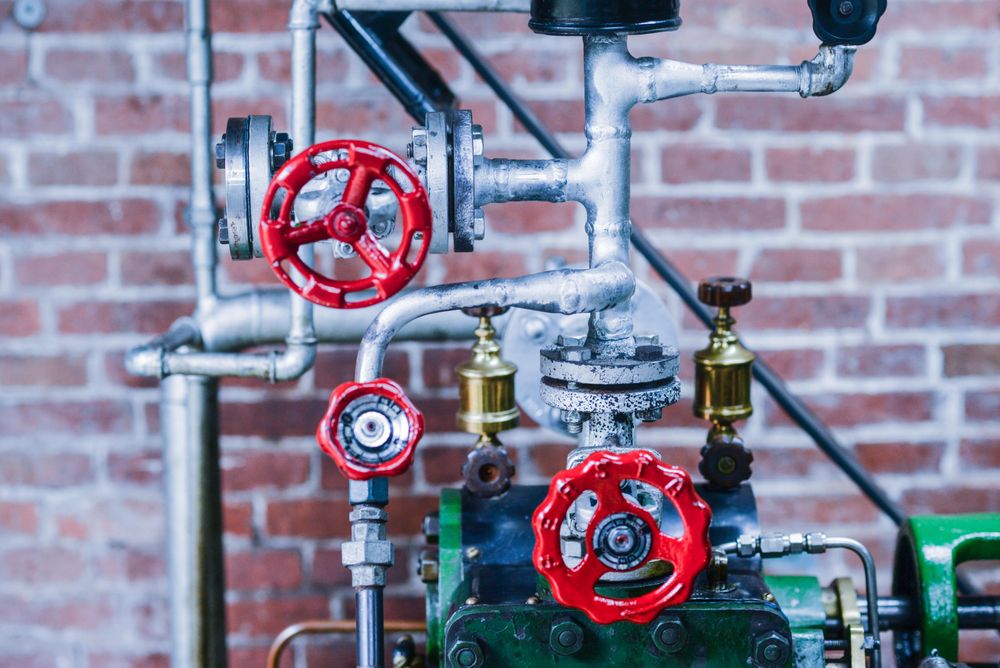
Iron pipe is heavy, and its threads can be sharp, so a pipe lamp needs a broad, solid base that will not tip when the flex is pulled. And because it is made of metal, it has to be wired with care, as the safety section below explains.
Cage lamps
A cage lamp puts the bulb inside a wire guard, like the guarded lamps of workshops and engine rooms, where a bare bulb could be knocked and broken. The cage throws a pattern of thin shadows on the walls and ceiling, and in brass or black metal it looks both practical and decorative. Cage lamps work as table lamps, wall lights and ceiling pendants.
Jar lamps
A jar lamp hangs or stands a filament bulb inside a glass jar, so that the glow seems to be kept in a bottle like a specimen in a laboratory. A closed jar traps heat, so it suits an LED filament bulb, which runs far cooler than an old one. Electrical Safety First's rule for every lamp applies here: never use a bulb over the power rating recommended for the lamp.
Lamps from other things
Steampunk makers turn almost anything into a lamp: an old camera, a pressure gauge, a stack of gears, a brass fire extinguisher, a ship's lantern, a pile of old books. As the vases at Cragside show, the Victorians did the same with their own ornaments. Our guide to steampunk furniture, shelves and ornaments has more on the objects themselves.
Ceiling lights, wall lights and floor lamps
Ceiling lights
Victorian ceilings had their own lights. A gasolier, a word made from gas and chandelier, was a branched ceiling fitting that looked much like a chandelier, but with hollow arms that carried gas to the burners, and many candle chandeliers were converted to gas. When electric light came, the electric versions were called electroliers, and for a time some fittings used both, with gas jets pointing up and bulbs hanging down.
Steampunk ceiling lighting borrows from that, and from the factory. A cluster of filament bulbs hanging on fabric-covered flex at different heights, a frame of black pipe branching across the ceiling with a bulb at the end of each arm, or a single large cage pendant over a table all suit the style. Hang bulbs at different heights, keep the lowest well above head height where people walk, and use warm, dimmable bulbs so the ceiling never glares.
Wall lights
A steampunk wall light can look like an old gas bracket, a single light on a short arm fixed to the wall, made with a pipe arm, a valve wheel, a cage or a small glass shade. Wall lights give the low, side-on light that makes brick, wood panelling and shelves of objects look their best, and a pair either side of a fireplace, a mirror or a bed is a classic arrangement.
Floor lamps
A floor lamp, which in Britain is often called a standard lamp, lights a corner or a reading chair. Steampunk versions stand on a tripod of pipe or wood, like a surveyor's instrument, or rise from a heavy base with an arm that swings out over the chair. Because they are tall, they need a wide, steady base, and their flex should run along the wall rather than across the floor where someone will trip on it.
Table and desk lamps
A table lamp on a sideboard or a desk lamp with an adjustable arm gives light just where it is needed. For reading or close work, choose a brighter bulb and a shade or hood that keeps the bulb out of your eyes; a bare filament bulb at eye level is lovely to look at but tiring to read by.
Choosing bulbs: LED filament bulbs and colour
The fitting
First check which fitting the lamp takes. The bayonet cap, pushed in and turned, is the most common light bulb fitting in the UK. The Edison screw, patented by Thomas Edison in 1881, screws in; the letter E stands for Edison, and the number after it is the width in millimetres, so an E27 is about 27 millimetres across and an E14 about 14. Both come in a wide and a narrow size, so read the lamp or the old bulb before you buy.
Brightness: lumens, not watts
Watts measure how much power a bulb uses, not how bright it is, so an LED bulb is chosen by its lumens, the measure of light it gives out. The rules on lighting set out which LED brightness may be claimed as equal to an old bulb:
| An old bulb of | Is matched by an LED giving about |
|---|---|
| 15 watts | 136 lumens |
| 25 watts | 249 lumens |
| 40 watts | 470 lumens |
| 60 watts | 806 lumens |
| 75 watts | 1,055 lumens |
| 100 watts | 1,521 lumens |
A steampunk room rarely needs the bright end of that table. Several bulbs of 250 to 470 lumens spread round a room usually look far better than one very bright one in the middle of the ceiling.
Colour
The colour of a bulb's light is printed on the box in kelvin. Smart Energy GB advises choosing about 2,700 kelvin for a warm light like the old bulbs. For a steampunk room, 2,700 kelvin or lower is right, and amber-tinted filament bulbs give a deeper, more golden glow, nearer to candlelight. Bulbs of 5,000 kelvin and above, sold as cool white or daylight, look bluish and sit oddly with brass. Use the same colour in every bulb in a room, because two different whites side by side look like a mistake.
Dimming
LED bulbs are sold as dimmable or not dimmable, and only a dimmable one should go on a dimmer switch. Dimming is one of the best tools a steampunk room has, because the same lamps can light a room for reading in the evening and glow softly later on. Some cheaper LED bulbs flicker, which you may notice at low light or on a phone camera, so buy from a reputable shop and try one bulb before buying a set.
Safety: wiring, plugs and making your own
Lights wired into the house
Ceiling lights and most wall lights are wired into the house itself, and in England that work comes under Part P of the Building Regulations, which requires any electrical work in a home to be designed and installed to protect people from fire and electric shock. Some of it is notifiable, which means the local authority's building control must be told before it starts, or the work must be done by an electrician registered with one of the government-approved schemes, who can certify it. The IET lists the notifiable work in England as a new circuit, a replacement consumer unit (the fuse box), and any addition or alteration to a circuit in a special location, such as a room with a bath or shower. Wales has made its own building regulations since 2014, Scotland has its own building standards, and Northern Ireland has no equivalent rule. For a new ceiling light, a new wall light, or anything in a bathroom, a registered electrician is the safe choice.
Plug-in lamps
A lamp that plugs into a socket is not part of the house's wiring, but it has its own rules, set out by the charity Electrical Safety First:
- Every lamp must have a UK three-pin plug and a fuse. The plug should be marked BS 1363 and the fuse BS 1362.
- Table lamps and standard lamps take a 3 amp fuse.
- In the plug, the brown wire goes to live, the blue to neutral, and the green and yellow to earth, and the cord grip should hold the outer cover of the cable firmly with both screws tight.
- Never use a bulb over the power rating recommended for the lamp.
- Keep lamps away from curtains, paper, bedding and anything else that burns.
- Switch off and unplug a lamp before changing a bulb, and let the bulb cool for a few minutes first.
- Stop using a lamp if its flex or plug is damaged, or if the plug or socket shows burn marks, buzzes or feels hot.
- An RCD, a safety device fitted in the fuse box or in a plug, protects you from electric shock if a product is faulty; if your home has none, an RCD plug gives that protection at one socket.
Electrical Safety First also advises buying lamps from a reputable shop rather than a third-party seller online, and avoiding second-hand lamps, because you cannot know their history. An old lamp you love is worth having checked, and if need be rewired, by an electrician before it goes back into use.
Making your own lamp
The metal that makes a pipe lamp look so good is also what makes it risky. A lamp with a metal body has to be built either so that it is properly earthed, or so that it is properly double insulated, and getting that wrong can leave the metal live. In 2022 the government's product safety service reported on a wall lamp that had been sold marked as Class II, the double-insulated kind, though it was built as Class I and needed an earth, and found it a serious risk of electric shock.
So the safest way to make a steampunk lamp is to make the body yourself and leave the wiring to someone competent: build the pipework, the base and the decoration, and ask an electrician to fit the lamp holder, the flex, the switch and the plug, and to test it. Inside a prop or a model, where a mains lamp is not needed, small battery-powered LED lights avoid the problem altogether. Our guide to making steampunk props safely covers the tools and the workshop.
Lighting a whole room
Several lights, not one
The most important step is to stop relying on one light in the middle of the ceiling. A steampunk room looks best with several smaller sources at different heights: a wall light or two, a floor lamp in a corner, a table lamp on a sideboard, a jar lamp on a shelf. Each makes its own pool of light, and the shadows between them give the room its depth. Leave the ceiling light dimmed low, or off.
Light for each job
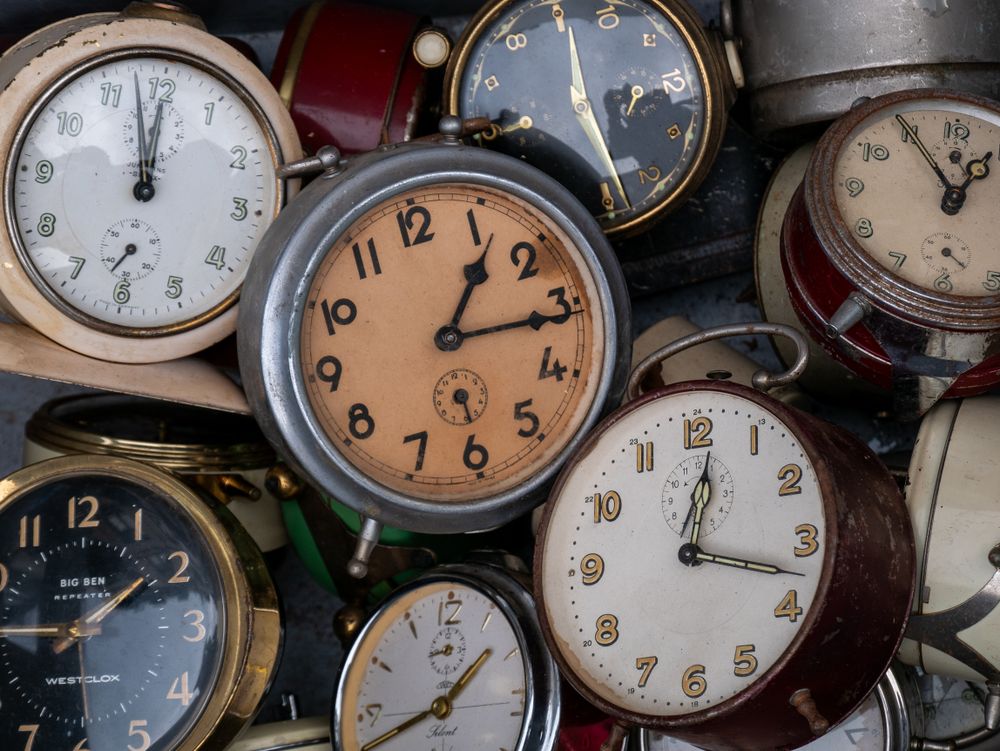
Think of three kinds of light. Background light lets you move about safely and see the room. Light for a task, such as a desk lamp or a lamp by a reading chair, is brighter and close to where you work. Accent light picks out one thing: a wall of exposed brick, a shelf of gauges, a clock face, a picture. Our guide to steampunk clocks has ideas for the clocks themselves, and lighting one from the side makes its gears stand out.
Keep it warm and even
Use the same colour of bulb throughout, at 2,700 kelvin or lower, and put as many lamps as you can on dimmers. Hide the bright point of each bulb from where you sit, with shades, cages or tinted glass, unless the filament itself is the decoration. Let the light fall on the materials of the style, brass, copper, leather, brick and dark wood, rather than on bare white walls.
Candles and real flame
Candles and oil lamps look wonderful in a steampunk room, and they are the light the Victorians really lived by. Never leave a real flame burning in an empty room, keep it well away from fabric, paper and anything hanging, and think about battery candles for shelves, high places and anywhere near children or pets.
For the rest of the room, from the walls and floors to the colours and the furniture, see our guide to decorating a room in steampunk style, and for the gears and machines that fill it, our guide to cogs, gears and machines.