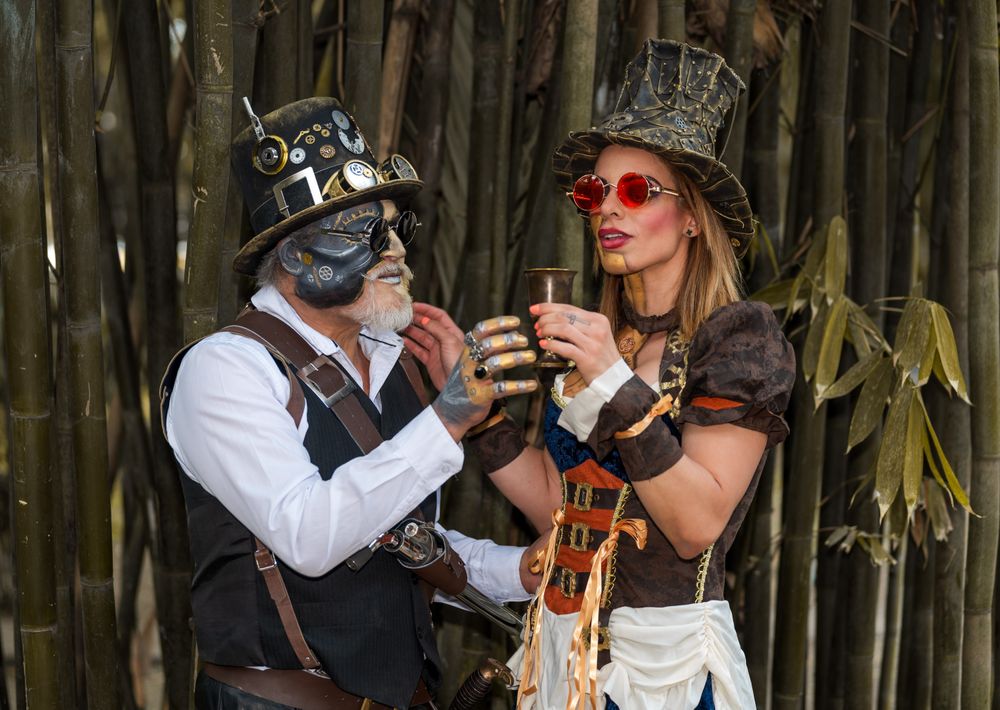
A steampunk wedding is a wedding dressed in the style of steampunk: the clothes of the Victorian age, with the brass, leather and clockwork of an imagined age of airships and inventors added on top. For some couples that means a whole day in costume, guests and all. For others it is a single touch inside an otherwise ordinary wedding: a steampunk wedding outfit for the groom, a pair of goggles on the bride's hat, or a cake decorated with cogs.
This guide goes through it in the order you would plan it: what such a wedding is, the bride's dress, the groom's suit, the wedding party and the guests, the rings, flowers and cake, the kinds of place that suit the style, and how to keep the whole day elegant rather than letting it turn into a fancy dress party. It names no venues, sellers or prices, because those depend on where you live and what you want to spend.
What a steampunk wedding is
Steampunk asks what the world would look like if the future the Victorians imagined had really arrived: airships in the sky, brass machines in every workshop, and everyone still dressed for 1880. A steampunk wedding borrows that world for a day. It starts from the real Victorian wedding, which gave us a surprising number of the customs still followed today, and then adds the machinery.
The Victorian wedding behind it
When Queen Victoria married Prince Albert in the Chapel Royal at St James's Palace on 10 February 1840, she wore a white satin dress trimmed with a deep flounce of lace, and a wreath of orange blossom over her veil instead of a tiara. Pictures of the royal bride spread through newspapers, fashion plates and printed music, and the V&A notes that for first-time brides who could afford it, a white wedding dress became the norm. Before 1840, brides had commonly married in red, pink, blue, brown and even black. So a steampunk wedding that reaches back to the Victorians has a whole age of wedding customs to draw on, and plenty of freedom in how it does so.
How much steampunk
It helps to decide early how far you want to go, because that decision shapes everything else. There are roughly three levels.
- A touch. An ordinary wedding with a few steampunk details: a pocket watch for the groom, cog cufflinks, a brass brooch in the bouquet, a cake with a clock face.
- A theme. The couple and the wedding party dress in steampunk, the room is dressed to match, and guests are invited to join in if they wish.
- The whole world. Everyone in costume, a story for the day, perhaps characters for the couple such as an airship captain and an inventor, and a place chosen because it looks the part.
The legal side does not change
Costume changes nothing in law. In England and Wales, GOV.UK explains that you must both be 18 or over, not already married or in a civil partnership, and not closely related. You give notice at your local register office at least 29 days before the ceremony. A civil ceremony can take place at a register office or at a venue approved by the local council, and a religious wedding can take place at a registered religious building. A registrar must carry out or be present at a civil ceremony, there must be at least two witnesses, and a civil ceremony can include readings, songs or music but nothing religious. The rules are different in Scotland and Northern Ireland, so check the guidance for where you are marrying.
The bride's dress
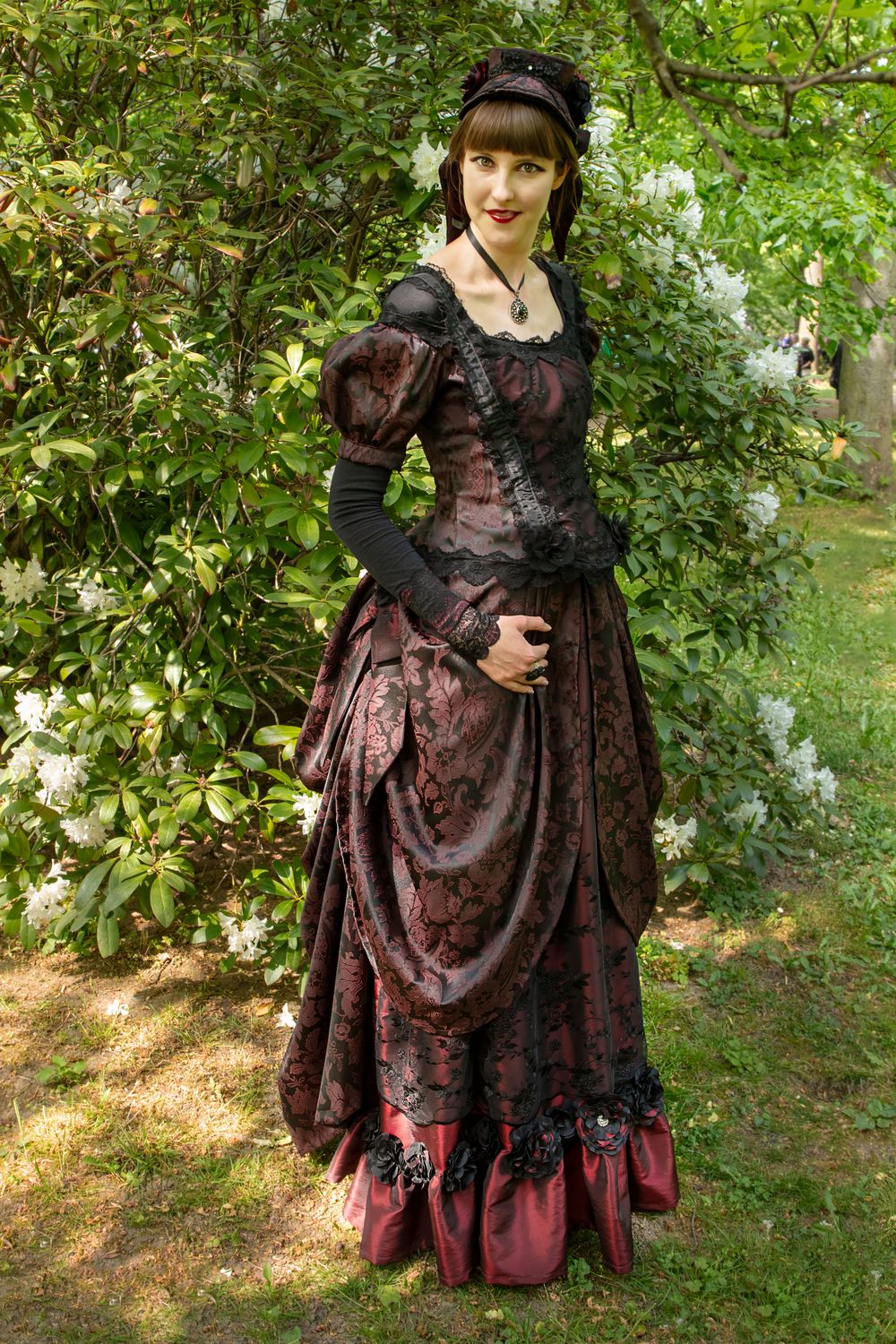
The bride's dress is usually where a steampunk wedding begins. Steampunk bridal gowns range from a white Victorian-style gown with a single brass detail to a full costume in copper and burgundy with a corset on the outside. Both are equally steampunk. What matters is that the dress has a Victorian shape and one or two of the workings on show.
White, ivory or a colour
Queen Victoria's dress was of heavy silk satin woven in Spitalfields, in East London, and its lace was made by hand by lacemakers in the Devon village of Beer. The V&A explains that she wanted to support the British lace industry, whose workers were struggling against machine-made cloth, and that white was the best colour to show the handmade lace off. Her dress has since turned cream, because silk yellows with age.
Not every Victorian bride wore white. The V&A notes that many women, especially those with less money, went on choosing coloured or patterned dresses because they were more practical, and the museum's record of a white dress of 1865 adds that widows, older brides and less well-off women often chose coloured gowns that could be worn for Sunday best long after the wedding. So a steampunk bride in ivory, champagne, gold, copper, burgundy or deep green is following a real Victorian habit, not breaking one.
The shape
Any of the Victorian shapes will do. A fitted bodice with a high lace neck and long sleeves is the most formal. A gown gathered up at the back over a bustle gives the silhouette most people recognise as Victorian. A bodice cut like a corset, with boning and lacing, gives the steampunk look in one piece. Our guide to steampunk dresses and skirts goes through each shape in detail, and our guide to Victorian fashion for women shows how the real dresses changed decade by decade.
The steampunk details
The workings are what turn a Victorian gown into a steampunk one. A corset worn over the dress, in leather, brocade or satin, with buckles at the front. Brass or bronze buttons. A small top hat pinned at an angle with a short veil falling from it, in place of a tiara. Lace gloves, or a single fine gauntlet. A chatelaine at the waist, the Victorian clasp hung with small chains, carrying a tiny watch or a key. Goggles are a matter of taste: on the brim of a bridal hat they look playful, over the eyes they look like fancy dress.
A bride who wears a corset wears it for many hours, through the ceremony, the photographs, the meal and the dancing. It should never be laced so tight that breathing or moving is hard. Lace it so that you can breathe deeply, sit, eat and dance, and loosen it or take it off if you feel faint. Wear it for a few hours at home well before the day. Our guide to corsets and waistcoats explains how to choose one.
Something old, something new
The rhyme about something old, something new, something borrowed and something blue fits a steampunk wedding neatly. The Phrase Finder traces it in print to 1871, and calls the line about a silver sixpence in the shoe a late Victorian addition. A grandmother's brooch, a borrowed pocket watch and a blue ribbon on the bustle would carry the rhyme and the style at the same time.
Boots and shoes
Laced or buttoned boots under a long gown are a steampunk signature, and a short glimpse of them as the bride walks is part of the look. Choose a low, steady heel and wear them in, because a wedding day is long and ends on a dance floor.
The groom's suit
The groom has the easier task, because Victorian men's formal dress already looks steampunk with very little help.
The frock coat and the morning coat
The frock coat is a fitted coat with a skirt reaching to just above the knee and a high waist seam. It was popular from the 1830s to the 1910s, became accepted as formal daytime dress around the 1850s, and was worn for business, for funerals and for weddings. Prince Albert is usually credited with making it popular, and the double-breasted version was called a Prince Albert. From the 1880s the morning coat, cut away at the front into tails, slowly took its place, and by the Edwardian years it had become the standard formal daytime coat.
Morning dress is still fairly common at British weddings today: a morning coat, a waistcoat and striped or checked trousers, usually held up with braces, with a top hat as the traditional hat. For a wedding the waistcoat is often a contrasting colour such as dove grey, buff or camel. A frock coat is still occasionally worn at weddings, mainly by the wedding party, to give the day a Victorian flavour. Either coat is a perfect start for a steampunk groom.
Making it steampunk
Take the coat in a warmer colour than black, such as brown, charcoal, deep green or burgundy, or keep it black and let the waistcoat carry the colour. A brocade waistcoat in copper, gold or plum is the single strongest piece. Add a cravat or a wide tie, a pocket watch on a chain across the waistcoat, leather gloves, and polished boots rather than shoes. A top hat or a bowler can take a pair of goggles on the brim, or stay plain for the ceremony and gain its goggles for the evening.
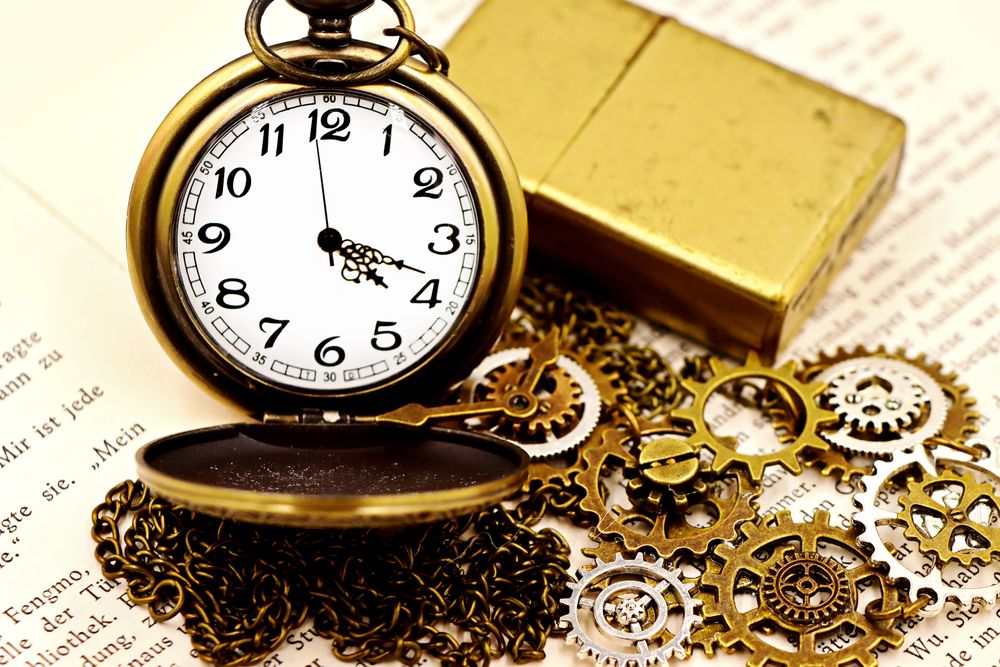
A character helps, as it does for any steampunk outfit. An airship captain wears a military-style coat with a double row of brass buttons and braid at the cuffs. An inventor keeps to waistcoat and shirtsleeves for the evening, with a pair of goggles pushed up on the forehead. A gentleman explorer wears tweed and a leather harness. Our guide to men's steampunk outfits goes through each in detail, and our guide to steampunk watches and pocket watches covers the one accessory almost every steampunk groom wears.
Bridesmaids, best men and guests
The bridesmaids
Queen Victoria had twelve bridesmaids, all daughters of peers, and she designed their dresses herself; they were white, like her own. A steampunk wedding party can be just as coordinated, or much freer. One approach is to dress the bridesmaids in one colour, perhaps a deep green, burgundy or copper, and let each choose her own steampunk details. Another is to give each a different character, an aviator, an explorer, an inventor, held together by a shared colour or fabric. Bridesmaids need the same comfort as the bride: shoes they can stand in, and corsets, if they wear them, laced loosely enough to breathe, sit and eat.
The best man and the groomsmen
Matching waistcoats or matching cravats tie the groom's party together without making them look like a uniform. Pocket watches make a good gift from the groom, and are useful on a day that runs to a timetable. The best man, who usually keeps the rings, might carry them in a small brass box or a watch case.
Children in the wedding party
Page boys and flower girls look charming in small waistcoats, little bowler hats and plain long dresses with a sash. Keep their clothes simple and comfortable, with nothing long enough to trip on and no small, loose parts for the very young.
The guests
Guests need to know what is expected, and they need to know that nobody minds if they come as they are. Say it plainly on the invitation: Victorian or steampunk dress is welcome, and ordinary wedding clothes are equally welcome. A short line of ideas helps people who have never dressed in the style: a waistcoat and a pocket watch, a long skirt and a lace blouse, a pair of goggles on a hat. Many guests who would never wear a full costume will enjoy adding one piece. Never make costume a condition of coming, and never comment on what anyone chose.
If you expect guests to bring props, such as toy ray guns, swords or staffs, check the venue's own rules first and pass them on. Many places have rules about anything that looks like a weapon. Our complete guide to steampunk fashion is a good page to send guests who want to know where to start.
Rings, flowers and the cake
Rings
The Victorians had a taste for jewellery with a meaning, and their best-known engagement ring has one. The V&A records that Prince Albert gave Queen Victoria a ring in the shape of a serpent, set with an emerald, as her engagement ring. The museum's notes on a serpent necklace of the late 1830s explain that a snake swallowing its own tail stood for eternity, and that the serpent was at its most fashionable in jewellery in the 1840s. A serpent ring is a gentle way to give a steampunk wedding a true Victorian root.
Steampunk rings themselves usually lean on the look of metal and mechanism: a gear-shaped band, mixed golds, a setting with tiny rivets, or a plain band in a warm metal. Because a wedding ring is worn every day for years, ask a jeweller which metals will stand up to daily wear, and keep the brass and the cogs for the ring box or the cufflinks. Our guide to steampunk jewellery covers the rest of the jewellery box.
Flowers
The Victorians took flowers seriously. The language of flowers, in which each flower carried its own message, flourished in Victorian England, and Robert Tyas's book The Sentiment of Flowers, first published in 1836, was still being reprinted in 1880. Orange blossom crowned Queen Victoria's own wreath. English Heritage tells how myrtle came to Osborne, her house on the Isle of Wight, in a posy from Albert's grandmother in 1845, and how the first known use of Osborne myrtle in a royal bouquet was at the wedding of their eldest daughter, Princess Victoria, in 1858. Myrtle has long stood for love and innocence, and many royal brides have carried a sprig of it since.
A steampunk bouquet can use real flowers in deep reds, creams and russets, dried flowers and grasses, or feathers. It can carry a brass brooch, a small key or a tiny watch face wound into the stems. Buttonholes for the men work well as a single flower with a small cog or a twist of copper wire. A bouquet of brooches, or of flowers made from paper, fabric or leather, lasts long after the day and suits the style.
The cake
The tiered wedding cake is itself a Victorian invention. The cake for Prince Leopold's wedding in 1882 is usually counted as the first wholly edible one built in separate tiers, held up by icing that set hard enough to stack, and pillars between the tiers came about twenty years later. White icing, made with costly refined sugar, was a display of wealth.
A steampunk cake builds on that. Tiers in ivory, bronze and chocolate, cogs and gears made of sugar paste, a clock face showing the time of the ceremony, piped lace on the sides, or a small airship floating above the top tier. Anything on the cake that is not meant to be eaten, such as a metal topper, should be clearly separate and taken off before the cake is cut.
Places that suit the style
The place does half the work. A room with the right bones makes a steampunk wedding look natural; a room without them needs far more dressing. Before setting your heart on anywhere, check that it can legally hold your ceremony. For a civil ceremony in England and Wales, that means a register office or a venue approved by the local council; for a religious wedding, a registered religious building. Your local register office can tell you which places near you are approved. If a place you love is not approved, you can marry at the register office and hold the celebration there afterwards.
Kinds of place to look for
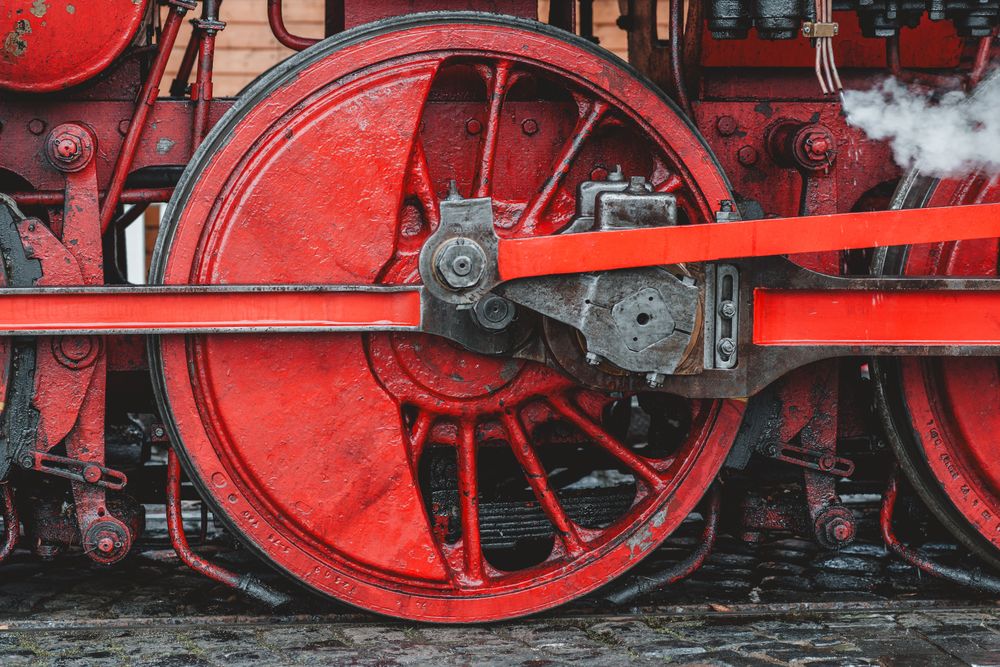
- A railway. A heritage railway, with its steam engine, Victorian station buildings and platform clocks, is about as steampunk as a real place can be. Our guide to steampunk trains, cars and machines explains why the railway sits at the heart of the style.
- A museum of industry or science. Engine halls, beam engines and galleries of old machines make an extraordinary backdrop for photographs.
- A mill or an engine house. Exposed brick, iron columns, wooden floors and great wheels and belts are the steampunk room before anyone has decorated it.
- A Victorian civic building. Town halls, libraries and corn exchanges built in the nineteenth century often have panelled rooms, tiled floors and ornate ironwork.
- A glasshouse or conservatory. Iron and glass, in the spirit of the great Victorian exhibition halls, with plants and soft light.
- A Gothic Revival church. For a religious wedding, a Victorian church in the pointed, medieval style gives the darker, more romantic side of steampunk.
Dressing an ordinary room
If the place itself is plain, a few things carry the look: warm lamps with filament bulbs, old maps and globes, clocks set to the time of the vows, piles of old books, a leather suitcase for cards, brass candlesticks, and table names taken from airships, inventors or Victorian engines. Read the venue's rules on candles and naked flames before planning any.
Keeping it elegant
The line between a beautiful steampunk wedding and a costume party is thinner than it looks. A few habits keep the day on the right side of it.
Choose restraint
One good brass detail looks deliberate. Twenty glued-on cogs look like a craft table. Give each person in the wedding party a few pieces that suit their character, and stop. The same goes for the room: a handful of strong pieces, well lit, look far better than every surface covered in gears.
Keep to one palette
Choose two or three colours for the whole day, such as ivory, copper and deep green, or black, burgundy and brass, and let the clothes, flowers, cake and room all follow them. A shared palette makes very different outfits look as though they belong to the same story.
Spend on fabric, not decoration
Good plain cloth, well fitted, looks more expensive than cheap cloth covered in trimmings. Wool, velvet, brocade, silk and leather photograph beautifully. Thin shiny satin and printed cogs do not.
Plan for a long day
A wedding lasts from the morning to late at night. Shoes that have been worn in, corsets that allow a full breath, coats that can come off for the dancing, and hats pinned firmly against the wind make the difference between enjoying the day and enduring it.
Keep the vows at the centre
Steampunk is a frame for the day, not the point of it. The best steampunk weddings are the ones where guests remember the couple first and the brass second. Dress the day in the style you love, and let the people in it carry it.